TL;DR: Foods for sun protection — cooked tomatoes, carrots, leafy greens, fatty fish, citrus, and green tea — supply antioxidants that may support your skin’s own defenses against UV stress. In studies, that support built gradually over about ten weeks of steady eating. No food replaces sunscreen, shade, or protective clothing.
Somewhere between the sunscreen aisle and your feed, you’ve probably seen the claim: you can “eat your sunscreen.” It sounds lovely — a bowl of tomatoes standing in for SPF.
The truth is quieter, and more useful.
Certain foods for sun protection — cooked tomatoes, leafy greens, carrots, citrus, fatty fish, green tea — may support your skin’s own defenses from within. Not as a shield, but as a steady backup you build one meal at a time.
Small steps, all year round. Sunscreen still leads; your plate can help.
Can Food Really Replace Sunscreen?

No — no food, drink, or supplement can replace sunscreen. Foods for sun protection may support your skin’s own defenses over time, but they don’t block UV rays. Sunscreen, shade, and protective clothing do the real protective work. Think of food as a helpful teammate, not a substitute.
Why “eat your sunscreen” took off
The idea is appealing because it feels natural and doable. Food is something you can control, and building resilience from within sounds kinder than reapplying lotion every two hours.
There’s a real kernel here — nutrients do support skin. The trouble starts when a supportive habit gets promoted into a replacement. That swap can leave skin underprotected on the days it matters most.
What actually blocks UV
Reliable protection comes from tools designed and tested for the job11,18:
- Broad spectrum sunscreen, including mineral options made with zinc oxide
- Protective clothing, wide-brimmed hats, and sunglasses
- Shade and timing, especially during midday hours when UV rays peak
Everything on your plate works beneath this layer — supporting, never substituting.
What Are the Top Foods for Sun Protection?
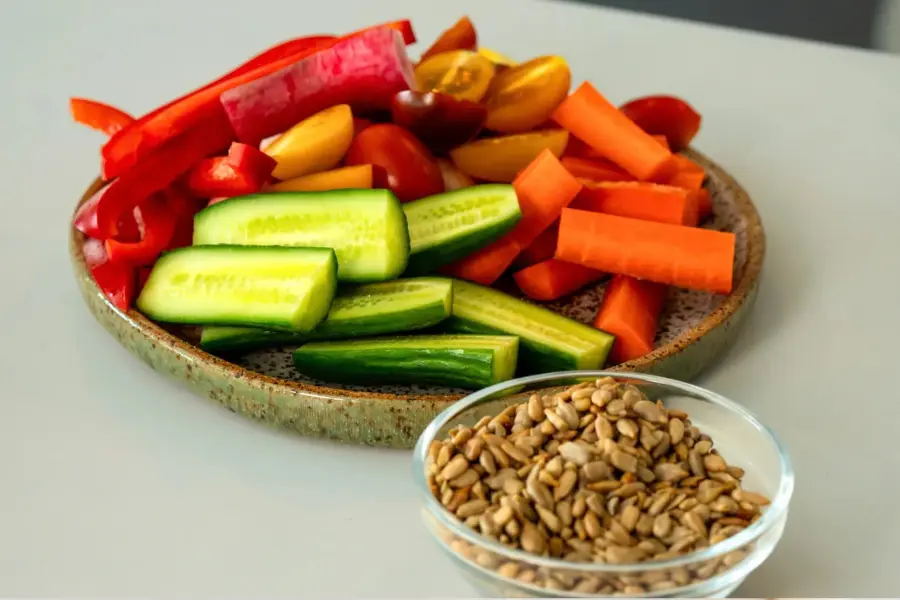
Colorful foods carry the compounds skin may use to cope with sun stress. Cooked tomatoes bring lycopene; carrots and sweet potatoes bring beta carotene; leafy greens add lutein; fatty fish and walnuts add omega-3 fatty acids; citrus and bell peppers add vitamin C; green tea adds polyphenols. Together, they may support your skin’s natural defenses and overall skin health.
Tomatoes and watermelon
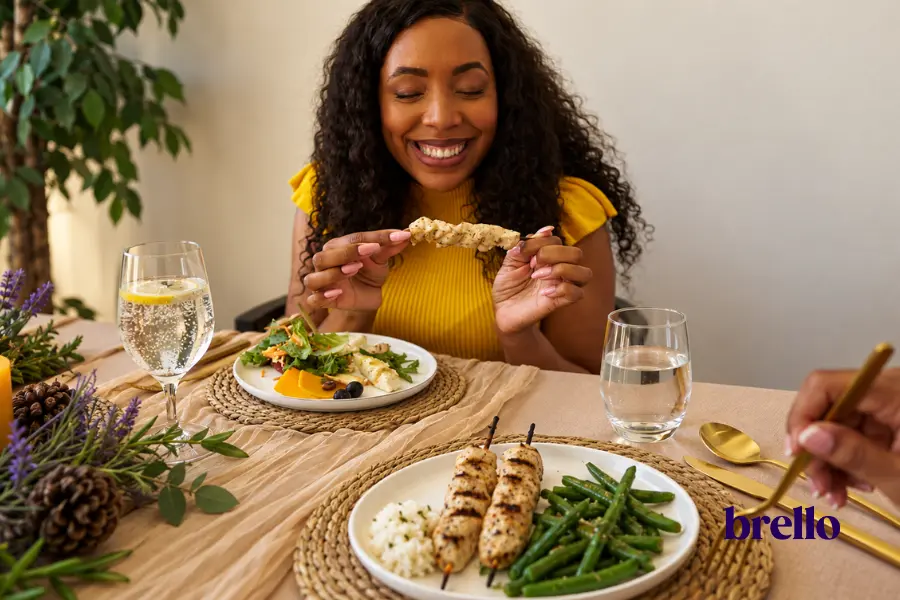
Tomatoes are rich in lycopene, an antioxidant that builds up in skin and may help it cope with UV-related stress2. Cooking tomatoes makes lycopene easier for your body to absorb, and pairing them with healthy fats like olive oil can help even more5. Watermelon and pink grapefruit carry lycopene too — and watermelon is one of the most hydrating fruits around.
Carrots and sweet potatoes
Carrots and sweet potatoes are packed with beta carotene, an orange pigment your body converts to vitamin A9. Skin uses vitamin A for its normal renewal process. Like most carotenoids, beta carotene accumulates gradually, which is why steady eating matters more than a single big salad3.
Leafy greens
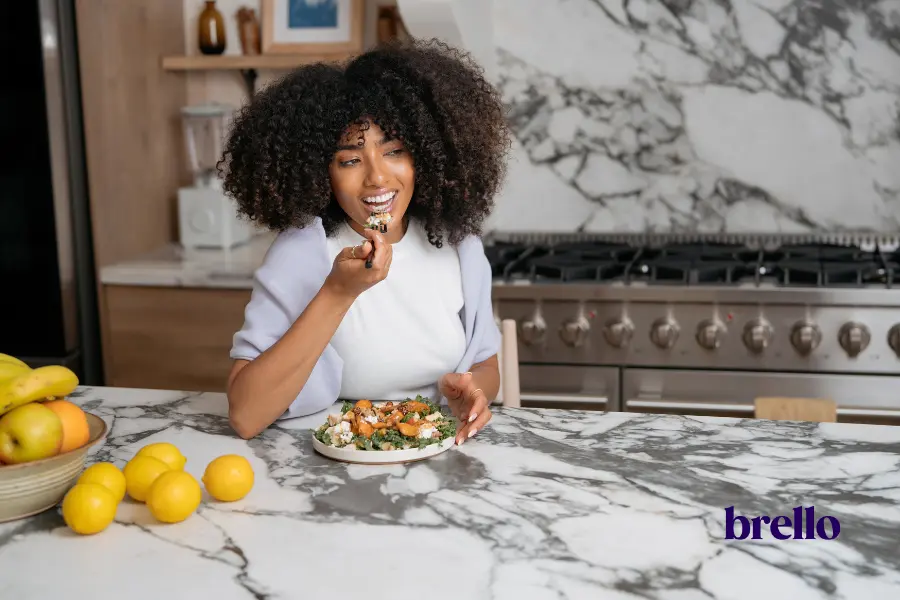
Spinach and kale provide lutein and zeaxanthin, two antioxidants that may help support skin cells under oxidative stress5. A handful of greens most days is a low-effort way to keep these compounds in rotation.
Fatty fish, walnuts and chia seeds
Fatty fish like salmon supply omega-3 fatty acids, which may support the skin’s response to inflammation after sun exposure6. Walnuts and chia seeds offer plant-based omega-3s. These fats also fit naturally into an anti-inflammatory eating pattern.
Citrus, bell peppers and berries
Citrus fruits, bell peppers, and berries deliver vitamin C, a nutrient your body uses to make collagen and manage free radical damage8. Vitamin E — found in nuts, seeds, and olive oil — often works alongside it10. Together they cover a lot of everyday antioxidant ground — especially as collagen changes with age.
Green tea
Green tea contains catechins, a family of polyphenols. In some studies, green tea catechins were linked with less UV-related redness in skin7. Sip it because you enjoy it; consider any skin support a possible bonus.
How Long Does It Take for Food to Support Your Skin?
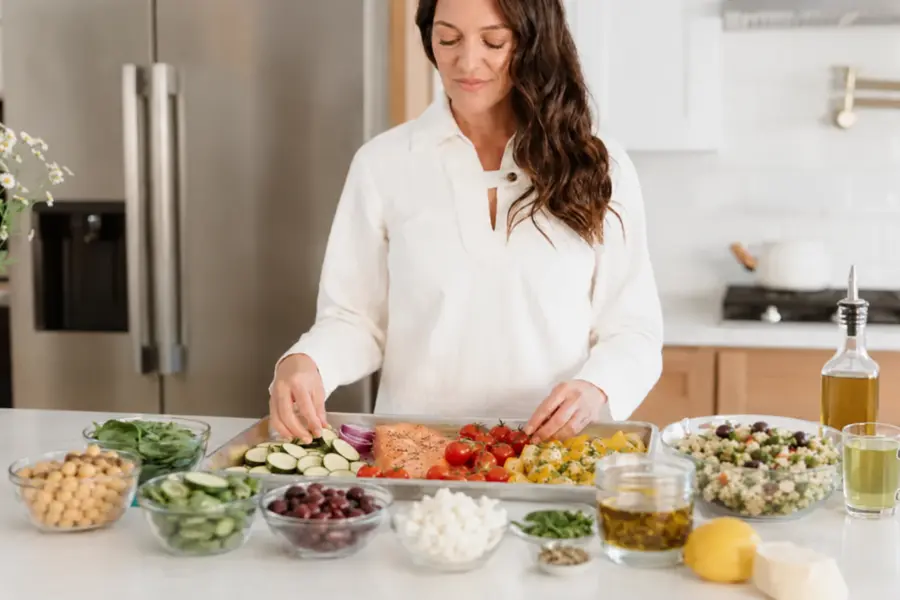
In research, food-based skin support built gradually — typically over about ten weeks of consistent eating, not overnight3,4. Studies measure how easily skin turns red under controlled UV light, and the effects are modest. A single tomato salad before the beach can’t protect you; a steady routine may quietly help.
That timeline comes from studies of carotenoid-rich foods. In one small ten-week study, people who ate tomato paste with olive oil daily showed meaningfully less redness from lab-controlled UV exposure than those who didn’t1.
What the studies actually measured
Researchers usually test a small patch of skin under controlled UV light and measure redness the next day2,5. Less redness suggests supported defenses — it does not mean the skin took no stress. These studies are typically small and short, so the honest summary is: promising, modest, and slow.
That’s not a reason to skip the tomatoes. It’s a reason to treat them as a routine, and to keep the sunscreen right where it is.
Does Hydration Help Protect Skin From the Sun?
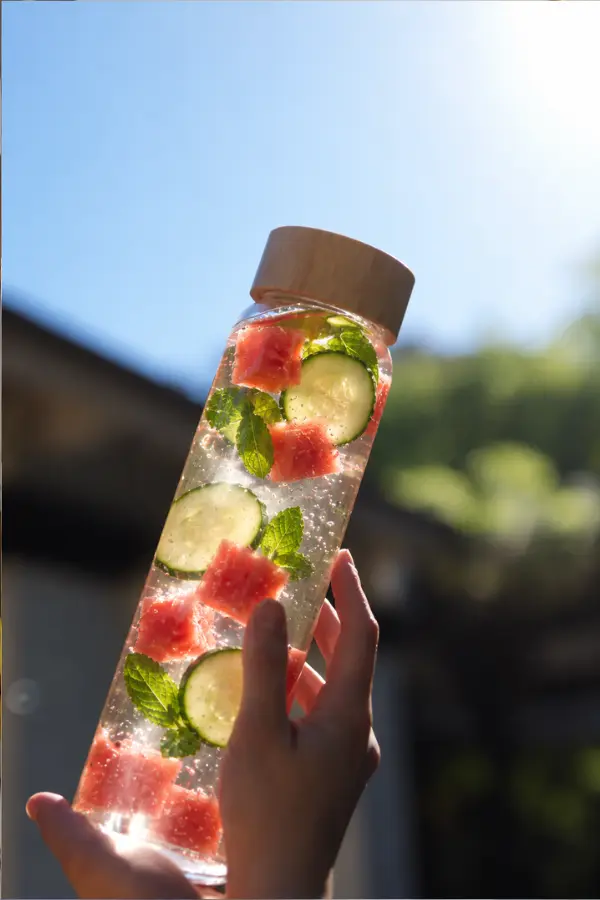
Water doesn’t block UV rays, so hydration isn’t sun protection. It still matters: hot, sunny days drain fluids, and well-hydrated skin tends to stay more comfortable and resilient. Water-rich foods like watermelon and cucumber can help you stay ahead on long outdoor days.
Hydration supports your skin’s elasticity and moisture from the inside, and it helps your whole body cope with heat12. Consider it the background habit that makes every other skin habit work a little better — separate from, and never a stand-in for, UV protection.
What Does a Skin-Supportive Day of Eating Look Like?
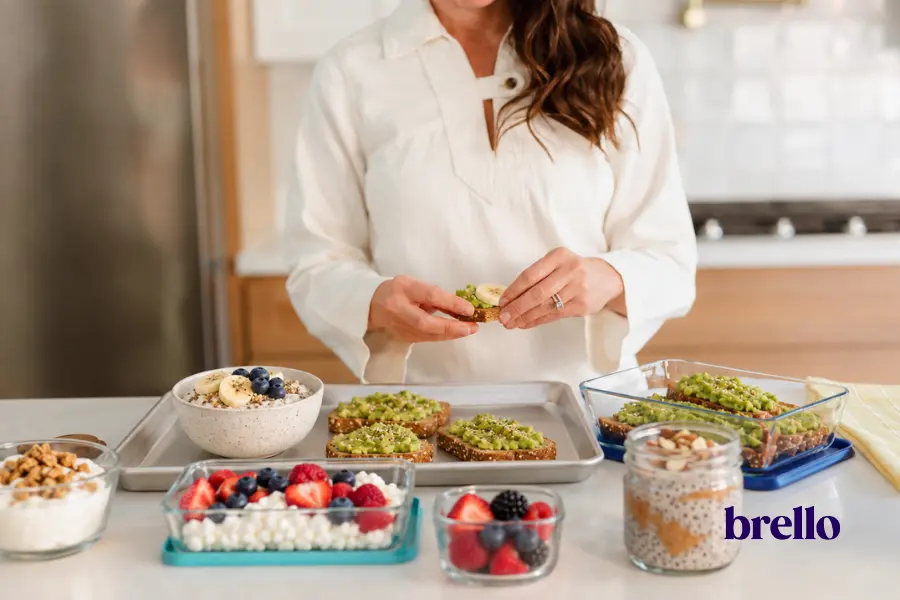
A skin-supportive day looks like ordinary good eating built from whole foods, with color at every meal: berries or citrus in the morning, a leafy-green lunch with olive oil, a cooked-tomato dinner, and green tea or water alongside. Small, repeatable choices matter more than any single “super” food.
Small swaps to consider
- Stir a spoonful of tomato paste into weeknight sauces and soups — a small step toward Mediterranean-style meal prep
- Dress salads with olive oil so carotenoids absorb better
- Keep fruit-and-nut snacks where you’d normally reach for packaged ones
- Trade one soda for green tea or water on outdoor days
Patterns that may work against your skin
Some habits can quietly push the other way. Diets heavy in added sugar and refined grains have been linked with processes that may affect how skin ages14. Long stretches of fried food, or frequent alcohol, can leave skin feeling drier and more reactive13.
No food is off-limits here — this is about defaults, not rules. One small pairing habit helps too: keep your sunscreen somewhere visible each morning, and let your meals be the slower, quieter layer of support underneath. More ideas live in our guide to everyday ways to support skin health.
What Should You Eat After Too Much Sun?

After too much sun, food can’t undo UV stress — but it can support recovery. Drink extra water, eat normal balanced meals with enough protein, and lean on vitamin C-rich produce. Skip alcohol while skin recovers13, and step out of the sun so healing can begin.
Sunburned skin pulls fluid toward the surface, which is why extra water helps12. Skin repair also runs on protein and micronutrients, so a recovery day is a day for real meals — not a cleanse8.
- Helpful: water and hydrating foods, balanced plates with protein, citrus and berries, a cool shower, moisturizer, and covering up
- Worth skipping: alcohol, more midday sun, and restrictive eating while your skin is healing
Most sunburns settle with time and gentle care. Significant blistering, or feeling unwell after sun exposure, deserves prompt attention13.
You don’t have to navigate this journey alone. Brello may offer a path to a provider review with healthcare providers who may help determine a supportive next step for your routine. See what options may be available to support the steady, skin-friendly habits you’re building this season.

Take The
First Step
with Brello
Final Thoughts
Caring for your skin was never really about one perfect beach day. It’s about the quiet ways you look after yourself in ordinary weeks — the meals, the water, the hat by the door.
This week, try one thing: stir a spoonful of tomato paste into whatever sauce you’re already making.
Whether the season finds you outside every day or mostly at a window, your routine can hold both sunscreen and a colorful plate — two healthy aging habits that work quietly together. Neither has to be perfect. They just have to keep showing up.
Frequently Asked Questions
Can you eat your sunscreen instead of wearing it?
No. Certain foods may support your skin’s own defenses over weeks of steady eating, but no food or supplement blocks UV rays. Sunscreen, shade, and protective clothing remain the tools that actually protect. Food works best as the quiet habit underneath them.
Are cooked tomatoes better than raw for sun-supporting nutrients?
Often, yes. Cooking tomatoes makes their lycopene easier to absorb, and adding a healthy fat like olive oil helps further5. Tomato paste and sauce are two of the most concentrated everyday sources — a small spoonful goes a long way.
Does drinking water prevent sunburn?
No — hydration doesn’t block UV rays or prevent sunburn. Water supports skin comfort and your body’s ability to handle heat, and it helps recovery if you’ve had too much sun12. For actual protection, look to sunscreen, clothing, and shade.
Do I still get vitamin D if I wear sunscreen?
Generally, yes. Sunscreen reduces UV exposure but doesn’t eliminate vitamin D production in everyday use15. Foods like fatty fish, eggs, and fortified options can also contribute vitamin D — so protecting your skin doesn’t mean going without16.
What did people use before sunscreen existed?
Mostly physical barriers: clothing, wide-brimmed hats, shade, and various mineral or plant pastes. Modern broad spectrum sunscreen wasn’t invented until the twentieth century. Today’s layered approach — sunscreen plus clothing, shade, and supportive habits — offers far more reliable protection than anything historical.
Is a “base tan” a safe way to prepare for the sun?
No. A tan is a sign that skin has already experienced UV stress — it’s a response to damage, not preparation for it17. Skipping the base tan and leaning on sunscreen, shade, and steady skin-supportive eating is the kinder path for your skin.