TL;DR A GLP-1 workout plan can start smaller than you think: two short strength sessions a week, regular walks, gentle mobility, and real rest. Public guidelines suggest building toward about 150 minutes of moderate activity weekly. On low-energy days, a shorter version still counts, and progress can show up as everyday strength and comfort.
“I know I should be working out. But where do I even start — and what if I’m too tired?”
If that sounds familiar, you’re not alone. A GLP-1 workout plan isn’t about hours at the gym or a six-day split. For many women, it starts with a couple of short strength sessions, some walking, and real rest.
Start smaller than you think.
Your energy may change from day to day, so a plan that bends with it can be easier to keep. Small, steady steps still add up.
What Should a GLP-1 Workout Plan Include?
A GLP-1 workout plan typically blends strength training, everyday cardio like walking, gentle mobility, and rest. Public guidelines suggest adults build toward about 150 minutes of moderate activity a week, plus muscle-strengthening activity on at least two days1,2. Many beginners start below that and build up over several weeks.
Think of your week as four simple pieces:
- Strength training for your major muscle groups3
- Cardio you can do at a comfortable, steady pace
- Mobility and balance to help you move with ease
- Rest days so your body can recover
Strength training — the anchor of your week
Strength training means working your muscles against resistance, like bodyweight, resistance bands, or dumbbells. It makes a strong anchor for your week because it supports everyday strength. Compound moves, like squats and rows, work several joints and muscles at once, so a short session can cover a lot6.
Cardio that counts
Cardio is any activity that raises your heart rate at a steady pace, like brisk walking, cycling, or swimming. Moderate effort means you can talk but not sing4. Short bouts can add up, so three 10-minute walks may count toward your week just like one longer walk1,2. A beginner walking workout plan can help you structure those days.
Mobility, balance, and rest
Mobility and balance work, like gentle yoga, wall Pilates, or stretching, can help you feel steadier and move more comfortably8. Rest days matter just as much. They give your body time to recover between strength sessions, which can help you return to your next workout feeling ready rather than worn down.
What Does a Simple Weekly GLP-1 Workout Plan Look Like?
A simple GLP-1 workout plan can include two short strength days, two or three walking days, one mobility day, and at least one full rest day. Each day has a full version and a shorter version, so you can choose what fits your energy before you start. Both versions count as showing up.
Here’s a sample beginner week you can adjust to your schedule:
| Day | Focus | Full version | Short version |
|---|---|---|---|
| Monday | Strength | Starter session (5 moves, 1 set each), about 20 minutes | 3 moves, 1 set, about 10 minutes |
| Tuesday | Walk | 20–30 minute walk | 10-minute walk |
| Wednesday | Mobility | 15–20 minutes of yoga, Pilates, or stretching | 5 minutes of gentle stretching |
| Thursday | Strength | Starter session, about 20 minutes | 3 moves, 1 set, about 10 minutes |
| Friday | Walk or ride | 20–30 minutes of walking or cycling | 10 minutes of light movement |
| Saturday | Your choice | A longer walk, a class, or an active outing | A short stroll |
| Sunday | Rest | Full rest | Full rest |
Strength days work well with at least one day in between6. If your week looks different, you can move days around and keep the same pattern.
Your starter strength session
A starter strength session can be just five whole-body moves, one set each, with 8 to 12 slow, controlled reps5,6. Stop each set while your form still feels steady. Start with a 3- to 5-minute warm-up, like marching in place, and finish with light stretching.
- Squat — sit-to-stand from a chair, or a goblet squat holding a light dumbbell
- Glute bridge — lying on your back, press through your heels to lift your hips
- Push-up — against a wall or kitchen counter
- Row — with a resistance band or a light dumbbell
- Core hold — a plank on your knees, or a dead bug
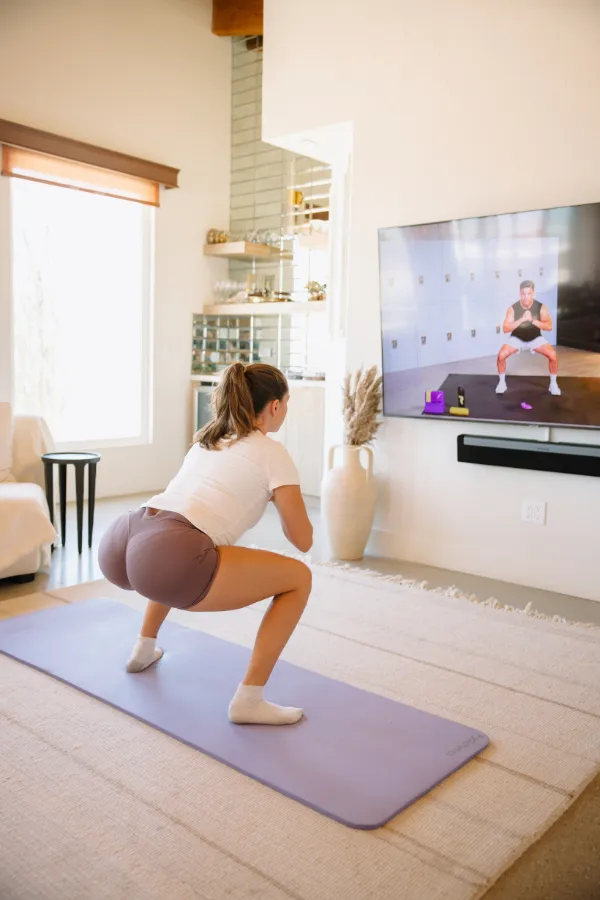
No gym? Try it at home
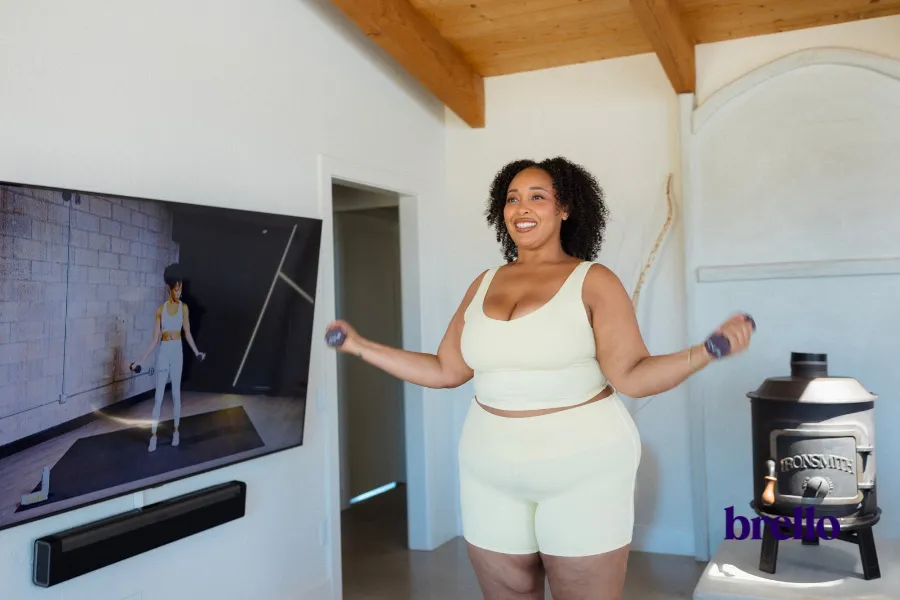
You can follow this plan at home with your bodyweight, a resistance band, and a sturdy chair. A pair of light dumbbells may add variety later. Walks can happen anywhere, and many yoga or Pilates classes are available online. The right setting is the one that makes it easier for you to keep going.
How Often Should You Lift Weights on a GLP-1?
Many beginners can start with two strength sessions a week on non-consecutive days. Research suggests even one set of several whole-body moves can build strength when you are new to lifting5. Over time, you might add a second set or a third short session if your recovery and energy allow.
That’s good news if a three-to-six-day program feels like too much. Two sessions also lines up with public guidelines for muscle-strengthening activity1.
What “one set” looks like
One set is a group of repetitions done back to back, like 10 squats in a row, before you rest. For beginners, one set per move is often a reasonable start. Choose a weight or band that feels challenging by the last few reps but still lets you keep good form the whole way through.
Why Does Strength Training Matter for Women?
Strength training helps you build and keep strength for everyday tasks, like carrying groceries, climbing stairs, and getting up from a chair8. For women in midlife, weight-bearing, strength, and balance exercises can also support bone health and help prevent falls7,8. It’s less about how you look and more about how you move.
Many women notice their priorities shift with age. Feeling steady on stairs, lifting a suitcase, or playing on the floor with kids or grandkids can matter more than any number.
Muscle, bones, and balance in midlife
Bone and balance health are worth more attention as you get older8. Weight-bearing activities, like walking, plus strength exercises and simple balance practice, can each play a role7. For more ideas, see our guide to strength training for women over 50. Standing on one foot while holding a counter, or walking heel to toe, are gentle ways to add balance work to your week8.
How Can You Work Out on Low-Energy Days?
On low-energy days, it can help to choose your workout version before you begin: the full plan, a shorter version, or a rest day. A 10-minute walk or one round of your strength moves still counts1. Taking a day off is okay too. The goal is to keep the habit going, not to push through.
Try this short check-in before you start:
- Feeling like yourself? Do the full version.
- A little tired, but okay? Do the short version — fewer moves, one set, lighter resistance, longer rests.
- Wiped out or unwell? Rest, and pick up again tomorrow or the next day.
Missed a workout? Skip the catch-up and return to the next one on your plan.
Fueling and hydration around workouts
What you eat and drink can affect how you feel during a workout. On days you’re eating lighter, a small snack with some protein, like yogurt, eggs, or a smoothie, may help you feel steadier. Curious about protein more broadly? Here’s how to think about protein on a GLP-1. Sipping water before and after you move can help, too. Lighter eating days can be good days for gentler workouts.

What Are Joint-Friendly Swaps for Common Moves?
If a move bothers your joints, you can usually make it gentler instead of skipping strength work — low impact strength training is built around that idea. Try a higher chair before a deeper squat, a wall push-up before a floor push-up, or a supported step-up before a lunge. Cycling or water exercise can stand in for walking on days your knees or hips feel achy9.
| Move | Gentler version | Next step up |
|---|---|---|
| Squat | Sit-to-stand from a higher chair | Goblet squat with a light dumbbell |
| Push-up | Wall push-up | Counter, then floor push-up on knees |
| Lunge | Supported step-up onto a low step | Split squat holding a counter |
| Walking | Stationary bike or water walking | Brisk walk or gentle hills |
| Plank | Plank against a counter | Plank on knees |
If a move causes sharp pain, stop and try an easier version or a different exercise9.
How Can You Progress and Notice Everyday Wins?
Progress usually means asking a bit more of your muscles over time, which is called progressive overload6. You might add a few reps, then a second set, then slightly more weight, one change at a time. You can also notice wins like easier stairs or steadier chair rises, which show progress in daily life.
Here’s one way to build over 12 weeks. Move to the next stage when the current one feels manageable, not just because the calendar says so6.
| Weeks | Strength focus | Cardio and recovery |
|---|---|---|
| 1–2 | 2 sessions, 1 set of each move, learn good form | 10–20 minute walks, at least 1 rest day |
| 3–4 | Add reps (up to about 12–15) before adding weight | Add a few minutes to some walks |
| 5–8 | Add a second set to some moves, or slightly more resistance | Build toward about 150 minutes a week |
| 9–12 | Keep 2 sessions; consider a third short one if recovery allows | Keep rest days; mix in a class you enjoy |
Everyday wins to notice
Everyday wins are the small changes you feel in daily life as you get stronger. Keep a simple log of your moves, reps, and how each session felt, so you can look back and see steady progress. Over a few weeks, you may notice changes like these:
- Climbing stairs feels less tiring
- Getting up from a chair feels steadier
- Carrying groceries or laundry feels more comfortable
- You can do more reps at the same effort
- You sleep or recover better after workouts
How Can You Stay Consistent When Life Gets Busy?

Consistency often comes from making workouts smaller and more predictable. Schedule short sessions like appointments, keep a home backup for busy days, and restart without trying to make up missed days. Many women find that a class or a workout buddy makes it easier to show up.
A few ideas that may help:
- Pick two set times each week for strength, and protect them
- Keep a band or dumbbells somewhere you’ll see them
- Have a 10-minute “backup” version ready for travel or tight days
- Try a beginner class where someone shows you the moves
- Celebrate the habit, not just the workout (how long habits take to form)
Common mistakes to avoid
Many common mistakes come from doing too much, too soon. Jumping into a six-day plan, skipping rest days, or chasing soreness can make it harder to stay consistent. All-or-nothing thinking is another one. A short workout on a busy day still keeps your routine going.

Take The
First Step
with Brello
Final Thoughts
Moving your body during a GLP-1 routine is less about a perfect program and more about feeling capable in your everyday life — on the stairs, with the groceries, on the floor with the people you love.
This week, you might pick two days and try the starter session once, even the short version.
Some weeks may look like the full plan, and others may look like a walk and a rest day. Both can count as steady progress.
Frequently Asked Questions
Is walking a good exercise while on a GLP-1?
Yes, walking can be a great part of your week. Brisk walking counts as moderate activity, and short walks can add up toward the roughly 150 minutes a week that public guidelines suggest1,4. Pairing walks with two strength days can give you a more balanced plan.
Is two days of strength training enough to start?
For many beginners, two days is a reasonable place to start. Public guidelines suggest muscle-strengthening activity at least twice a week, and research suggests even single-set routines can build strength in people new to lifting1,5. You can add more over time if it feels right.
How many rest days should you take each week?
Many beginner plans include one or two full rest days each week, which is a common and reasonable approach. Rest days give your body time to recover between strength sessions6. Light movement, like a gentle walk or stretching, can also fit on rest days if it feels good.
Can you get stronger while on a GLP-1?
Yes, many people can build strength with regular strength training, steady progression, and enough rest5,6. Starting with light resistance and adding reps, sets, or weight over time can help you keep progressing. Results vary from person to person.
Can you follow a GLP-1 workout plan at home?
Yes. A home plan can use bodyweight moves, a resistance band, a sturdy chair, and light dumbbells. Pair those strength sessions with walks and online yoga or Pilates, and you have a full week without a gym.
What is the 3-3-3 rule for workouts?
The 3-3-3 rule is an informal fitness idea with a few versions. One common version means doing three exercises for three sets, about three times a week. It isn’t an official guideline, and many beginners start with fewer sets and build up.