Sleep and skin health are closely linked: quality sleep gives the body’s skin time in repair mode at night, when blood flow rises and the skin barrier may better hold hydration1,11. Most adults are encouraged to aim for around seven to nine hours, though consistency tends to matter as much as the total hours2,3,4. Beyond skin, adequate sleep brings many health benefits3,4.
If your skin has been looking a little dull lately, sleep might be part of the picture. The link between sleep and skin health is real, but it’s gentler and more practical than most articles make it sound1. You don’t need a perfect routine — you just need a few small steps that actually fit your life.
Some nights are easier than others. That’s okay.
In this guide, you’ll find a calm look at how sleep affects healthy skin, what a good sleep environment can look like, and what to try when falling asleep feels hard.
The content provided is for informational purposes only and should not be construed as medical advice; it is not a substitute for professional medical consultation, diagnosis, or treatment.
How does sleep affect skin health?
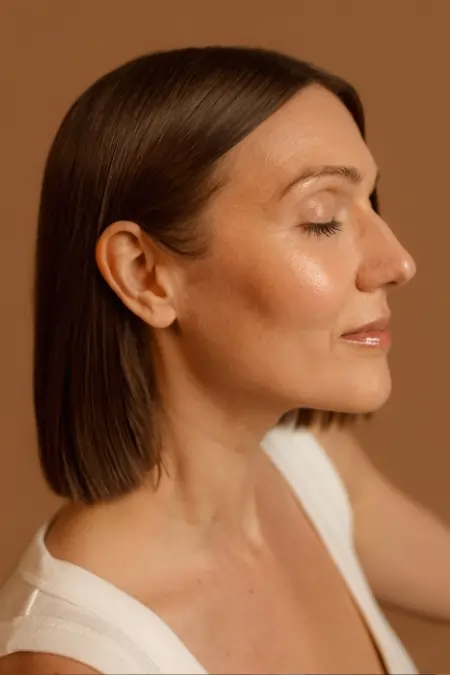
Sleep affects skin health by giving the body time to enter repair mode at night. During quality sleep, blood flow rises, growth hormone is released, and the skin barrier may better regulate hydration5,11,1. Sleep plays a quiet but steady role in maintaining healthy skin — and in supporting the immune system more broadly3.
What happens to skin during a good night’s sleep
At night, the body shifts into repair mode — a quieter window when skin cells can recover from the day. Research suggests sleep supports a number of various physiological processes that show up in how skin looks and feels1,11.
A few things tend to happen at once during a good night’s sleep:
- The skin barrier has time to settle and hold moisture1
- Blood flow to the skin rises, supporting overnight skin repair11
- The body releases growth hormone, which research has linked to processes that may support collagen production5
- The immune system has space to do its overnight work3
The body’s internal clock helps coordinate this rhythm. When sleep stays roughly consistent, those physiological processes have more space to run smoothly.
How sleep supports skin hydration and the skin barrier
Quality sleep may help the skin hold onto moisture more steadily. The skin barrier is the outer layer that keeps water in and irritants out — and research suggests poor sleep can make that barrier less effective for a while, especially against everyday environmental stressors1,10.
That’s part of why a few short nights can leave skin feeling dry, tight, or extra reactive. Adequate sleep gives the body a fairer chance to bounce back.
What does poor sleep look like on skin?
Poor sleep often shows up on skin in visible ways — dull complexion, dark circles, puffiness, increased oil production, and more frequent flare ups6,9,11. These are common signs of sleep deprivation, not signs of a specific issue. They tend to settle as quality sleep returns and the body catches up on enough rest.
Common visible signs after poor sleep
You can usually feel a rough night before you see it, but the mirror catches up quickly. Sleep loss tends to show up in the same places: under the eyes, in skin tone, and in how reactive the skin feels.
Some of the most common visible signs include6,9,11:
- A dull complexion or sallow tone
- Dark circles and puffy eyes
- Dryness from a temporarily stressed skin barrier
- Increased oil production in some people
- More noticeable redness or flare ups
- A tired-looking facial appearance overall
None of this means something is wrong. It’s just how skin tends to show wear when sleep gets short. Research on social perception even suggests that people often notice when someone hasn’t slept well — which can affect confidence on top of how skin actually feels6,7,8.
What ongoing poor sleep may mean over time
Research suggests that lack of sleep over the long run is linked to more visible signs of premature aging — things like a duller complexion, sagging skin, and slower overnight skin repair1. Insufficient sleep can also keep stress hormones elevated, which research has linked to skin barrier strain over time10.
Many factors shape how skin ages, so sleep is one piece of a larger picture — and ongoing tiredness can show up in more places than skin alone. It’s worth saying clearly: better sleep may support how skin looks, but it’s not a fix for ongoing skin concerns on its own1. Skin issues usually involve a mix of contributors, and sleep is one supportive habit among several — which is part of why a whole-person view tends to be more useful than chasing a single fix.
How can you build a calming bedtime routine?
A calming bedtime routine can support better sleep, but the kindest place to start is the morning. A regular sleep schedule built around a steady wake time may anchor the body’s internal clock more reliably than forcing an earlier bedtime3,13. From there, a quiet nighttime routine — low light, calming activities, fewer screens — can help the body wind down13.
Anchor the morning, not the night
Most sleep advice tells you to go to bed earlier. A more sustainable place to start is the morning. A steady wake time helps anchor the body’s internal clock and the natural circadian rhythm — and when the morning side stays consistent, the bedtime side often follows on its own12,13.
This reframe matters because forcing yourself to fall asleep earlier rarely works. Anchoring the wake time is gentler, lower-pressure, and easier to keep going on busy weeks — and like most habits, it can take a little while to feel routine.
What a quiet nighttime routine may look like
Once your sleep schedule is steady, a short wind-down can help the body shift into rest. The goal is calming, not perfect. Small swaps tend to work better than big rules.
A few calming activities to try13:
- Dim the lights an hour or so before bed
- Put away cell phones and other devices that emit blue light
- Try a warm shower, light reading, or journaling
- Choose a quiet activity over a stimulating one
- Aim for a roughly consistent sleep schedule, weekends included
You don’t need every item on the list. Pick one or two that feel doable, and let the rest come later. A good night’s rest builds on these small choices, not on getting them all right.
How can you set up a good sleep environment?
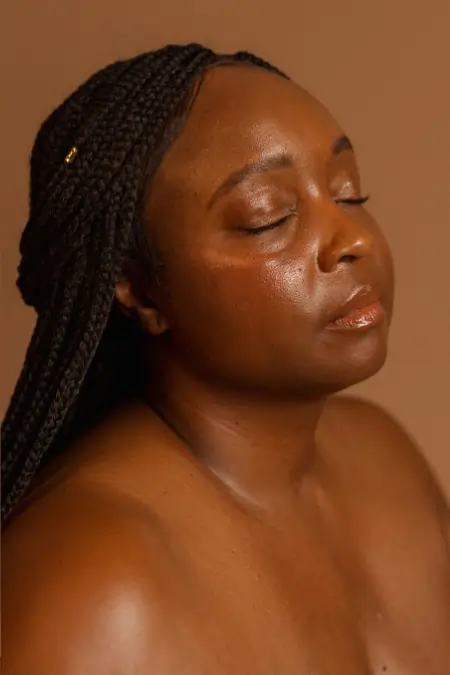
A good sleep environment is cool, dark, and quiet — and the room itself is often a bigger lever than willpower4,13. Small changes like blackout curtains, a cool temperature, and ways to reduce noise can make falling asleep less of an effort. The room sets the conditions; the body tends to follow.
A quick checklist for a quality sleep environment
You don’t need a full bedroom overhaul. A handful of small changes often does more than any single rule about screen time or bedtime. Use this as a starting checklist4,13:
- Keep the room at a cool temperature
- Use blackout curtains to limit light distractions
- Use earplugs, white noise, or other ways to reduce noise
- Keep cell phones and other devices out of arm’s reach
- Choose comfortable bedding that supports a calming feel
Pick the one that’s easiest to change first. Small wins build steady progress.
Why the room is often the lever
The room is often the lever because it lowers the friction of falling asleep before willpower has to step in13. When the space is cool, dark, and quiet — without noise and light distractions pulling you back to alert — the body has fewer reasons to stay awake. Sleep tends to come more easily on its own.
This reframe also takes some of the self-blame out of bad nights. Sleep is hard for real reasons. Caregiving, busy evenings, hormonal shifts, and rising stress levels can all get in the way. Adjusting the room is something you can usually do once and benefit from for months — which is far kinder than trying to out-discipline a stressful week.
What can you try when you can’t fall asleep?
When sleep won’t come, the way out tends to be calm and low-effort — not more trying. Sleep researchers describe racing thoughts at night as a common pathway, not a personal failure13,14. If you’ve been awake for a while, consider getting up briefly, doing a quiet activity in dim light, and returning when you feel sleepy13,14.
The “trying to sleep” loop, explained in plain language
The harder you try to fall asleep, the more keyed up the body tends to become14. That loop has a name in sleep research, and it’s surprisingly common — not a sign that something is wrong with you. Sleep deprived nights and lying awake feed each other when you push too hard against them.
Naming the loop honestly is the start of getting out of it. Once you notice it, you can stop pushing and try a softer approach instead.
A few calm steps to try in the moment
If you’ve been lying awake for what feels like a while, the goal isn’t to force sleep. It’s to step out of the loop gently. Some calm options to try13,14:
- Get out of bed if you’ve been lying awake for a while
- Move to a low-light space and do a quiet activity — reading, journaling, or slow stretching
- Avoid devices and bright screens
- Return to bed only when you feel sleepy
- Try not to make one rough night a reason to scrap the whole routine
One short night is just one short night. Tomorrow’s wake time can stay the same.
How can you keep a sleep routine going without burning out?
A sleep routine works best when it’s kind enough to come back to. One short night isn’t a reason to drop the whole routine. Steady progress over weeks tends to do more than perfect adherence over days. Small wins, low-friction swaps, and self-compassion may help the routine survive busy stretches — and support mental health along the way.
One bad night isn’t a reason to quit
Most routines don’t end because of a bad night. They end because a bad night becomes a reason to stop trying. The all-or-nothing mindset is the quiet thing to watch for, especially when stress levels are already running high.
A kinder reset usually sounds like: that was a rough one — wake time stays the same. No guilt, no overhaul. Just the next small step.
Small steps that may keep the routine alive
Steady doesn’t mean strict. The routine that lasts is usually the one with built-in flexibility, and the many health benefits of a more consistent sleep schedule tend to show up gradually3,4. A few gentle anchors:
- Keep the wake time, even after a rough night
- Skip the guilt and just start again the next evening
- Make the room a little easier to fall asleep in
- Notice small wins (one earlier bedtime, one calmer evening)
Brello shares this kind of educational information to support healthier routines, with small steps as the throughline. The same low-pressure approach applies to building healthy habits more broadly — progress that feels supportive is the kind that tends to stick.

Take The
First Step
with Brello
Final Thoughts
Sleep and skin health are connected, but the connection is gentler than the headlines make it sound. Better rest may support how your skin looks and feels, alongside many other small habits — it isn’t a fix on its own, and it doesn’t ask for a perfect routine.
Anchor the morning. Treat the room as the lever. Be kind to yourself on rough nights.
Small steps, repeated on regular days and forgiven on hard ones, tend to do more than any single rule. That’s where steady progress lives.
Frequently asked questions
Does poor sleep quality affect skin ageing?
Research suggests chronic poor sleep quality may be linked to signs of premature aging over time, including a duller complexion, sagging skin, and a less responsive skin barrier1. Many factors contribute to how skin ages, so sleep is best understood as one supportive lifestyle habit among several — not a single lever for slowing aging.
How much sleep is enough for skin health?
Adults are generally encouraged to aim for around seven to nine hours of quality sleep each night2,3. For skin health, consistency tends to matter as much as the number — sufficient sleep on a regular sleep schedule may support repair mode more reliably than catching up on weekends3,4. Quality and timing both play a role in many health benefits beyond skin alone.
Is “beauty sleep” a real thing?
“Beauty sleep” is a casual phrase, but research suggests there’s something to it. Quality sleep may support how skin looks the next day — including hydration, barrier function, and dark circles1,9,11 — and may also affect facial appearance overall6,7,8. It’s a real pattern, not a guarantee, and results vary.
Can better sleep alone clear up skin issues?
Better sleep may support how skin looks and feels, but it isn’t a fix for skin issues on its own1. Skin concerns usually involve many factors, and sleep is one supportive habit among several. If skin concerns persist or feel out of reach, sleep is a contributor, not a solo solution.
What can you try if you can’t fall asleep?
If you’ve been lying awake for a while, consider getting up briefly and doing a quiet activity in dim light — like reading or journaling — and returning to bed when you feel sleepy13,14. Avoid devices and bright screens. Racing thoughts at night are common, and the way out tends to be calm and low-effort14.
How long before sleep changes may show up on skin?
There’s no fixed timeline, and results vary. Some people notice less puffiness and a brighter look within a few good nights9, while changes tied to skin barrier function or premature aging tend to be slower1. Steady progress over weeks tends to be more meaningful than chasing a quick change.