TL;DR: How much protein should a woman eat in a day? A common starting point is the RDA of about 0.8 grams per kilogram of body weight — roughly 46 grams — but that number is a minimum, not a target. Many active, pregnant, or older women aim higher, spread across their meals.
If you’ve ever wondered how much protein a woman should eat in a day, you’ve probably found two answers that don’t quite agree. One says about 46 grams. The other says eat far more. Both are pointing at something real.
The honest version is simpler. That 46-gram figure is a floor, not a finish line. Your own range depends on your body weight, how active you are, and where you are in life.
Small shifts — a little protein at breakfast, a range instead of one perfect number — tend to go further than any strict rule.
How much protein should a woman eat in a day?

Most women can aim for a range rather than one fixed number. The recommended dietary allowance is about 0.8 grams of protein per kilogram of body weight — roughly 46 grams a day — but that figure is a floor to prevent deficiency, not a target1,3. Many women land higher, near 60 to 90-plus grams2,4.
Where you fall in that range depends on a few everyday factors:
- Body weight — larger bodies generally need more total protein.
- Activity — women who move a lot or lift often sit at the higher end.
- Life stage — pregnancy, breastfeeding, and older age can each raise needs.
So the short answer is that 46 grams keeps most women out of deficiency, while a practical daily range for many women runs higher. The rest of the sections below help you find the number that fits you.
Why is the RDA a starting point, not a personal target?
The RDA of about 46 grams is the amount that keeps most healthy women from falling short — a floor, not a goal. It was set to prevent deficiency, not to support activity, recovery, or aging3. That’s why many women choose a range above the RDA instead of treating it as the finish line.
It helps to think of two different numbers:
- The floor: ~0.8 g/kg (about 46 grams for many women) — the minimum to avoid running low.
- The practical range: often closer to 1.0–1.6 g/kg for women who are active, pregnant, or older3,5.
Neither number is a rule you have to hit exactly. They’re guardrails. Landing somewhere in your range, most days, matters more than chasing a precise total.
How do you calculate your own daily protein range?
Start with your weight and a simple bit of math. Divide your weight in pounds by 2.205 to get kilograms, then multiply by a target between 0.8 and about 1.2–1.6 grams. A 150-pound woman is about 68 kilograms, which lands near 55 grams at the low end and roughly 82 to 109 grams at the higher, more active end4.
Here’s the quick version:
- Pounds ÷ 2.205 = your weight in kilograms.
- Kilograms × 0.8 = your floor (deficiency-prevention number).
- Kilograms × 1.2 to 1.6 = the higher end many active or older women aim for.
Using 68 kilograms as an example, that’s about 55 grams as a floor and around 82–109 grams at the upper end. Pick a point in your range that feels realistic to reach with food, and adjust as your routine changes.
How much protein should you eat at each meal?
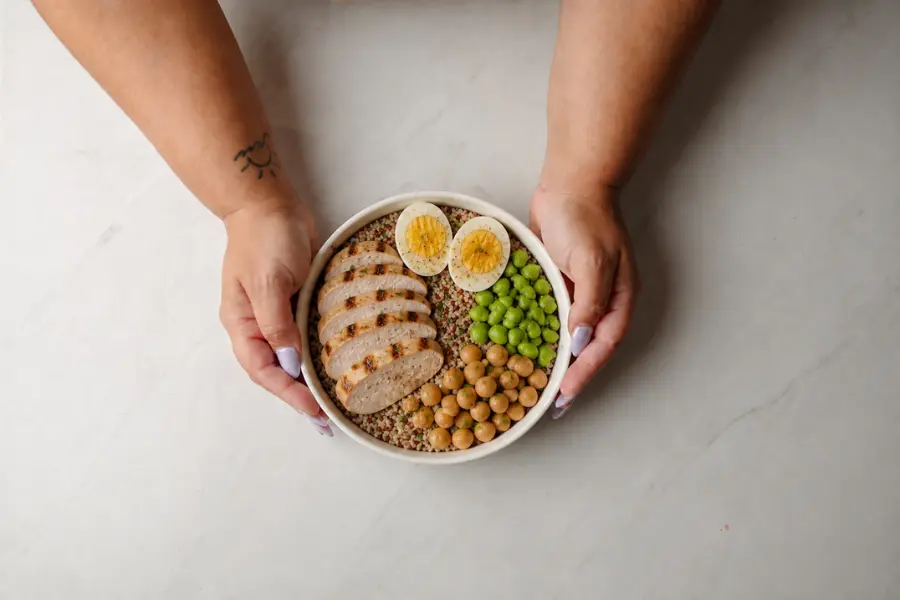
Spreading protein across the day tends to be more useful than saving it all for dinner. A common approach is roughly 15 to 30 grams per meal, and there’s little added benefit from much more than about 40 grams in one sitting2. Adding protein at breakfast is one of the simplest habits to start with. These high-protein breakfast ideas can help you build a morning meal that fits your daily range.
A simple day might look like:
- Breakfast: eggs, Greek yogurt, or cottage cheese.
- Lunch: beans, lentils, tofu, chicken, or fish.
- Dinner: a palm-sized portion of your main protein, plus vegetables.
- Snacks: nuts, milk, or a yogurt to fill small gaps.
If mornings feel light on protein, that’s usually the easiest place to start. A steadier spread across meals is often simpler to keep up than one big protein-heavy dinner.
Do a woman’s protein needs change with life stage?
Yes — protein needs shift with activity, pregnancy, and age. Active women, pregnant or breastfeeding women, and women in midlife or older age generally sit toward the higher end of the range. These are general nutrition ranges, not medical targets, and everyday food usually covers them.
Active women and keeping muscle
Women who move a lot often use more protein, commonly around 1.1 to 1.5 grams per kilogram, to support everyday recovery and help maintain muscle over time2. If you train regularly—even with an accessible routine such as low-impact strength training—aiming toward the higher part of your protein range and including some protein after activity can be a reasonable place to start.
Pregnancy and breastfeeding
Needs rise during pregnancy and breastfeeding, to around 71 grams a day as a general figure5. This is a nutrition range, not a personal plan, and it can usually be met with everyday foods. Individual needs vary, so use it as a general guide rather than a fixed rule.
Perimenopause and menopause
Keeping protein steady through midlife may help support muscle maintenance as the body changes. There’s no single magic number here — staying within your usual range, spread across meals, is a practical starting point. Frame it as general nutrition support, not a fix for any symptom.

Women over 60 and muscle maintenance
Older women often aim a little higher, commonly around 1.0 to 1.2 grams per kilogram, to help offset the natural loss of muscle that comes with age2,4. Pairing regular meals that include protein with movement—including an approachable strength-training routine for women over 50—is a steady way to support muscle maintenance over time.
What are good high-protein foods for women?
You can meet a daily protein range with everyday foods, no special products required. A 3-ounce portion of chicken or salmon has about 20 grams; a cup of milk or a half-cup of cooked beans has about 8 grams; an ounce of nuts has about 7 grams1,5. Mixing animal and plant sources makes hitting your range simpler. A little Mediterranean diet meal prep can also make balanced sources like fish, beans, yogurt, nuts, and whole grains easier to include throughout the week.
| Food | Typical serving | Protein (approx.) |
| Chicken or salmon | 3 oz cooked | ~20 g |
| Greek yogurt | 3/4 cup | ~15–20 g |
| Cooked beans or lentils | 1/2 cup | ~8 g |
| Milk | 1 cup | ~8 g |
| Egg | 1 large | ~6 g |
| Nuts | 1 oz | ~7 g |
Plant-based eaters can lean on beans, lentils, tofu, edamame, nuts, and whole grains, and simply combine a few sources across the day. Variety across the week is usually enough — no single food has to do all the work.
Can a woman eat too much protein?
For most healthy women, moderately higher protein is fine, and 100 grams a day is not automatically too much2. Intakes above about 2 grams per kilogram of body weight tend to offer little extra benefit, and very high intakes may add strain for those with existing kidney concerns2,5. Balancing protein with vegetables, whole grains, and water keeps things steady.
A few simple guardrails:
- Aim for your range, not the highest number you can reach.
- Keep protein alongside fiber, produce, and plenty of water.
- If a very high-protein pattern feels like too much, ease back toward the middle of your range.
Protein is one part of a balanced plate — not something to maximize at the expense of everything else.

Take The
First Step
with Brello
Final Thoughts
Protein isn’t really about chasing one perfect number. It’s a quiet form of support for your body — for staying steady, capable, and comfortable through each season of life.
If you want a place to start this week, add one protein source to breakfast. That single habit often does more than any complicated plan.
Whether you’re building a new routine or fine-tuning one that already works, a realistic range you can keep tends to matter more than a strict target you can’t.
Frequently asked questions
How much protein should a woman eat to lose weight?
There’s no single weight-related number, but keeping protein steady within your range can support fullness and help maintain muscle while eating fewer calories. Many women simply aim for the middle-to-higher end of their range and spread it across meals. Focus on overall balance rather than one target.
Is 46 grams of protein a day enough?
For many sedentary women, about 46 grams meets the minimum to prevent deficiency3. It may be on the low side if you’re very active, pregnant or breastfeeding, or older and working to maintain muscle. In those cases, a higher point in your range is often a better fit.
How much protein does a woman need over 50?
Many women over 50 aim a bit higher than the RDA — often around 1.0 to 1.2 grams per kilogram — to help support muscle maintenance with age2,4. Everyday foods usually cover this. Treat it as general nutrition guidance, and adjust to what feels realistic for you.
What are signs you’re not getting enough protein?
General, non-specific signs some people notice include feeling hungry soon after meals or having trouble keeping up with activity. These can have many causes and aren’t a diagnosis. If protein feels consistently low, adding a source at breakfast is a simple first step.
Is 100 grams of protein a day too much for a woman?
For most healthy women, 100 grams a day is within a reasonable range, especially if you’re active or larger-bodied2. Benefit tends to plateau at very high intakes, and those with existing kidney concerns may want to stay moderate. Balance it with produce, whole grains, and water.