TL;DR Wall Pilates for beginners is a low-impact form of Pilates that uses a wall for support and light resistance, making foundational movements easier to start at home. It can help support core strength, posture, and balance, needs little more than a wall and a mat, and works well with short, steady sessions a few times a week.
Maybe you’ve seen wall Pilates on your feed and thought, “That looks doable — but where do I even start?” If so, you’re in good company.
Wall Pilates for beginners is simply Pilates that uses a wall for support and a little resistance, which can make those first movements feel steadier and more approachable at home. You don’t need a studio, fancy gear, or any experience to try it.
Start small. A short routine a few times a week is plenty at the beginning, and you can build from there at your own pace.
What is wall Pilates, and who is it for?
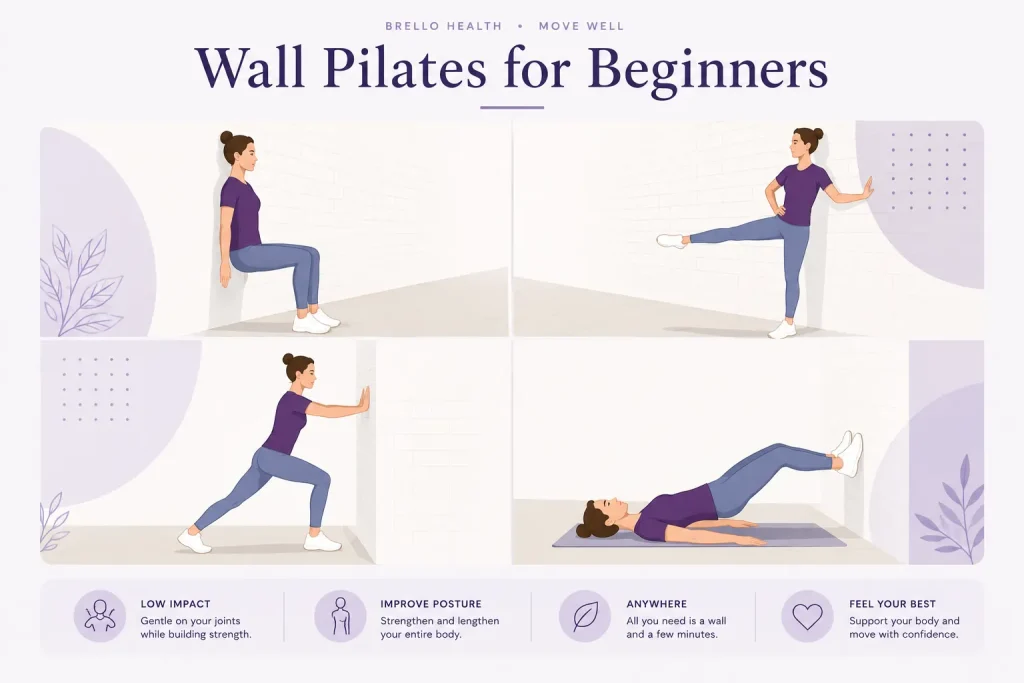
Wall Pilates is a low-impact form of Pilates that uses a wall for support and light resistance1,2. It can make foundational movements feel steadier, which is part of why it appeals to beginners. It suits many fitness levels, including people new to movement or easing back in, and can be done standing or lying down2.
The wall acts like a helpful prop. It can offer gentle feedback on your alignment and take some of the balance guesswork out of early practice.
That feedback is a big reason wall Pilates for beginners feels friendly for a first try. You get a little support while you learn the shapes and the pace.
How wall Pilates differs from mat and traditional Pilates
Wall Pilates borrows the ideas of Pilates and adds a wall for support. Traditional Pilates often uses specialized equipment, while mat Pilates uses the floor. Here’s a simple way to see it:
| Style | What it uses | Beginner feel |
| Wall Pilates | A wall for support and light resistance | Approachable; extra feedback and balance help |
| Mat Pilates | The floor and your body weight | Simple, but more balance is on you |
| Traditional Pilates | A mat plus specialized equipment | More structured; often studio-based |
Wall Pilates is not a separate, formal type of Pilates. It’s more of a friendly, modern take that can be a gentle starting point.
Is wall Pilates good for beginners?
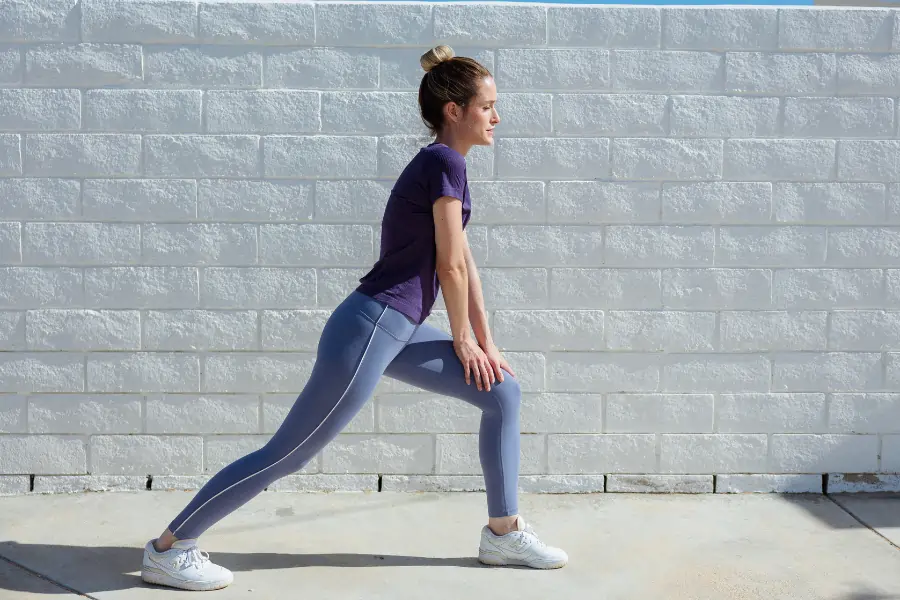
Yes — wall Pilates is often suggested for beginners because it’s low-impact, uses minimal equipment, and the wall helps with balance and alignment1,2. It can be adjusted to your comfort level, and moves can be done standing or lying down. That flexibility may feel reassuring if you’re just getting started.
Because the wall gives you something to push into and lean on, the movements can feel more controlled. You set the pace, and you can pause any time — and if you’re exploring other gentle options, low-impact cardio workouts can sit alongside a wall Pilates routine.
Who might want to ease in
Wall Pilates can be a gentle option if you’re feeling unsure about starting. A few people who often appreciate the softer entry point:
- Anyone brand new to Pilates or structured movement
- People returning after a long break
- Women over 50 who want a low-impact, at-home option, and who may also like strength training for women over 50
There’s no “right” starting point here. Meeting yourself where you are is the whole idea.
What can wall Pilates do for you (and what it can’t)?
Wall Pilates is better understood as a gentle way to support core strength, posture, and balance while building a steady movement habit — not a dramatic body transformation4,5. Many people find the wall’s feedback helps them feel more confident. Results vary from person to person, and consistency tends to matter more than intensity.
That honest framing is worth keeping in mind. A lot of online buzz treats wall Pilates like a dramatic body transformation, but people who practice it — and instructors who teach it — tend to describe it differently.
Think of it as a calm on-ramp back into movement, not a shortcut. If you’re working on making any routine stick, how to build healthy habits offers a gentle framework.
Benefits people often notice
Wall Pilates focuses on slow, controlled movement, and the wall supports your form. Over time, and with regular practice, people often mention:
- A stronger sense of core stability and control
- Steadier balance and posture awareness
- A more mindful, connected feeling during movement
These are general observations, not promises. What you notice may look a little different, and that’s okay.
What wall Pilates is not
Wall Pilates is not a weight-loss program, and it isn’t designed to “flatten” anything on a timeline. It’s a low-to-moderate movement practice, so it may not do what more vigorous exercise does for body composition3. Framing it as a gentle, repeatable habit tends to feel more realistic — and more sustainable — than expecting a dramatic change.
What equipment do you need for wall Pilates at home?
You need very little to start wall Pilates at home: a sturdy, flat wall, a bit of open floor space, and a yoga or Pilates mat for comfort. No reformer, chair, or paid app is required1,2. That low barrier is part of what makes it simple to begin in your own space, on your own schedule.
A clear stretch of wall and enough room to lie down is really all you need for day one.
Optional add-ons for later
Once the basics feel comfortable, you might add a little variety. None of these are required:
- A light resistance band for a bit more challenge
- A small cushion or ball for feedback under your back or between your knees
- Light ankle weights, only once your form feels solid
Comfortable clothing and a water bottle round things out. Keep it simple at first.
What are some beginner-friendly wall Pilates exercises?
Beginner wall Pilates exercises usually focus on the core, glutes, and legs, using the wall for support1,2. Common starter moves include wall squats, glute bridges with your feet on the wall, wall push-ups, roll-downs, and standing leg lifts. Keep every movement slow and controlled, and ease off if anything feels like too much.
You don’t need all of these on day one. Picking a few and doing them well is more useful than rushing through the whole list.
Core-focused moves
These gently wake up your center and spine:
- Wall roll-downs — stand with your back to the wall and slowly peel your spine away, one section at a time, then roll back up.
- Modified “hundreds” — lie on your back with feet on the wall, knees bent, and do small, controlled arm pumps while keeping your ribs down.
- Gentle rotations — seated near the wall, turn slowly side to side to find gentle mobility.
Lower-body moves
These use the wall for support and balance:
- Wall squats or wall sits — slide down the wall to a comfortable depth and hold, or add slow reps.
- Glute bridges (feet on the wall) — lie on your back, press your feet into the wall, and lift your hips with control.
- Standing leg lifts — face the wall, hands resting on it, and lift one leg back or to the side, keeping your hips level.
Upper-body and posture moves
These open the shoulders and support alignment:
- Wall push-ups — hands on the wall, step back, and lower in with control for a lighter push-up.
- Arm slides (“snow angels”) — back to the wall, slide your arms up and down while keeping your ribs stacked.
- Wall reaches — raise your arms along the wall without letting your lower back arch.
Aim for slow, controlled reps, roughly eight to ten of each, and stop before you feel strained. If you’d rather follow along with guided sessions, Brello Rise offers at-home movement classes.
How do you structure your first at-home wall Pilates session?
A simple first session has three parts: a short warm-up (about 3–5 minutes), a main circuit of five or six controlled moves (about 8–12 minutes), and a gentle cool-down (about 3–5 minutes). Choosing your moves ahead of time makes it easier to show up and stay consistent, which matters far more than doing it perfectly.
A repeatable template takes the guesswork out. Here’s a beginner-friendly one you can reuse.
Warm-up (3–5 minutes)
Ease your body in and connect your breath:
- Wall roll-downs — 5 slow reps
- Shoulder circles against the wall — 30 seconds each direction
- Arm slides — 1 minute, keeping your ribs down
Main circuit (8–12 minutes)
Pick five or six moves and do two gentle rounds:
- Wall squats or wall sits
- Glute bridges with feet on the wall
- Wall push-ups
- Standing leg lifts
- Modified “hundreds”
Move slowly, rest as needed, and aim for control over speed.
Cool-down (3–5 minutes)
Let your body settle:
- Legs-up-the-wall — 1–2 minutes of slow breathing
- Gentle seated or standing stretches for your legs and shoulders
Jotting down your moves in a note can make the next session easier to start.
How long and how often should beginners do wall Pilates?
Many beginners start with about 10–20 minutes of wall Pilates, two to three times a week, with a rest day in between. Around 15 minutes is a common sweet spot. Over roughly four weeks, you might gradually add a little time or a second circuit as the moves start to feel easier. General guidance from sources like GoodRx points to a similar starting range1,3.
Consistency is the real goal here. A short, doable routine you actually repeat beats a long one you skip — the same idea behind a simple beginner walking plan.
A simple 4-week starting plan
| Weeks | Session length | Times per week |
| Weeks 1–2 | 10–15 minutes | 2–3 |
| Weeks 3–4 | 15–20 minutes | 3–4 |
| After week 4 | Add a second round or longer holds | 3–4 |
Adjust as needed. If a week feels like too much, it’s fine to scale back.
What simple form tips help you feel confident?
A few basics can help wall Pilates feel steadier: move slowly and with control, breathe evenly, aim for a neutral spine, and gently engage your core2. Use the wall for feedback rather than force. There’s no need to rush — steady, mindful practice tends to feel better than pushing hard, and it helps the movements make sense in your body.
Small adjustments add up. When something feels off, slow down and reset rather than powering through.
Common beginner mistakes to avoid
A short checklist to keep things comfortable:
- Rushing through reps instead of moving with control
- Holding your breath — try to keep it steady
- Forcing range of motion instead of easing into it
- Skipping the warm-up or cool-down

Take The
First Step
with Brello
Final Thoughts
Starting to move again is less about mastering any single exercise and more about proving to yourself that a few quiet minutes can fit into an ordinary day.
This week, you might clear a small stretch of wall and try just one gentle move — a wall squat or a supported roll-down — to see how it feels in your body.
There’s no finish line here, and no wrong pace. Showing up in small, steady ways is the whole point.
Frequently asked questions about wall Pilates for beginners
Do wall Pilates workouts really work?
Wall Pilates can be a genuine way to support core strength, posture, balance, and a consistent movement habit4,5. It’s a low-to-moderate practice, so it works better as steady, repeatable movement rather than a dramatic fix. People who stick with it often value how approachable and sustainable it feels.
Can wall Pilates help with weight loss?
Wall Pilates is not designed as a weight-loss plan, and results vary from person to person. It’s a low-impact movement practice that may support strength, posture, and consistency3,4. Many people use it as a gentle way to stay active rather than to change the number on a scale.
Do I need a special app or equipment to start?
No. A sturdy wall, a bit of floor space, and a yoga or Pilates mat are enough to begin1,2. You don’t need a paid app, a reformer, or any special gear. Optional items like a light band can come later, once the basics feel comfortable.
How is wall Pilates different from mat Pilates?
Wall Pilates uses a wall for support and light resistance, while mat Pilates is done on the floor using your body weight. The wall can make some moves feel more supported and give helpful feedback on alignment, which many beginners appreciate when they’re just starting out.
How often should a beginner do wall Pilates?
Starting with about 15 minutes, two to three times a week, with a rest day between sessions, is a common beginner approach1,3. From there, you can gradually add time or sessions as it feels easier. Consistency over time tends to matter more than any single workout.