Signs of collagen loss in the face often show up as fine lines around the eyes or mouth, a softer or less defined jawline, thinner skin, uneven texture, and a flatter or less bouncy look in photos1,3. These early signs of collagen loss may reflect lasting structural change; others may be temporary shifts from poor sleep, hydration, or stress.
You see a photo from a Zoom call, and something feels off. The face looks flatter, softer, less you — and you wonder if these are signs of collagen loss in face, or just a tired week catching up.
You’re not the only one. Many women describe one specific moment when the change clicked, not a slow realization.
Here’s what’s ahead: common signs to know, what may be going on underneath, and small lifestyle habits that may support healthy skin.
The content provided is for informational purposes only and should not be construed as medical advice; it is not a substitute for professional medical consultation, diagnosis, or treatment.
What people actually notice first — and what it might mean
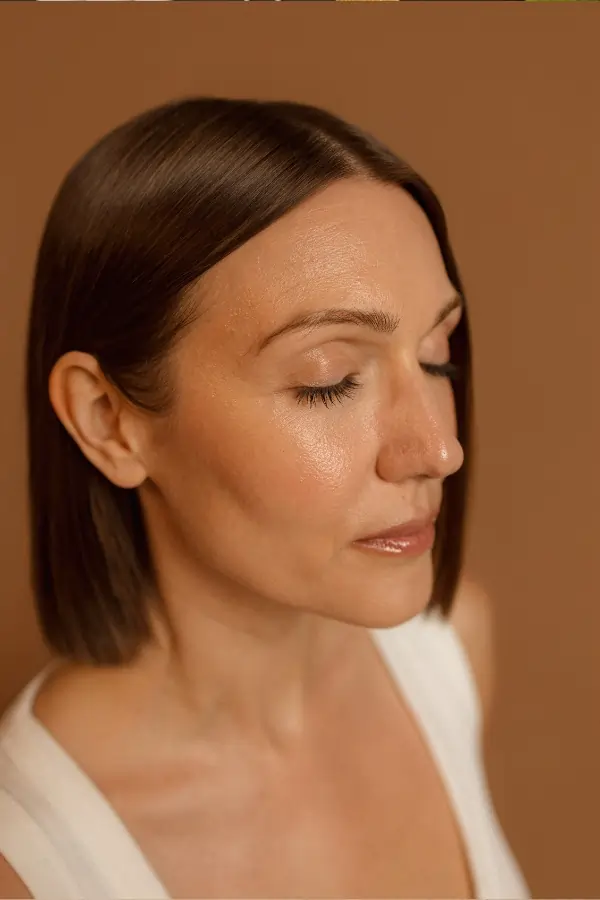
The first noticing is usually a moment, not a slow realization — a candid photo, a video call, or a side-by-side with a sibling where the face suddenly looks flatter, softer, or less you. Some of that may reflect lasting change in skin collagen; some may be temporary shifts from sleep, hydration, or stress.
That moment is where most search journeys start. Naming it can help.
The “visual mismatch” moment
For many women, the change clicks in a single moment — a candid photo, a Zoom call under harsh overhead light, or a side-by-side with a sibling or friend.
What follows is often surprise first, then questions, then a scramble for explanations. That pattern is common, not a sign something’s wrong.
What the words mean: a quick translation
Everyday descriptors map to specific things happening in the skin. Here’s a simple translation between how people describe what they see and what may be going on underneath.
What you notice vs. what’s happening underneath.
A simple translation: the everyday words people use about their skin, and what may be quietly shifting in the layers beneath.
Collagen is the main structural protein that gives skin its firmness and structural integrity1,3. Elastin is the partner protein that helps keep skin firm and bouncy1,3. Together, collagen and elastin fibers act as the structural support of the skin.
Structural change vs. temporary appearance shifts
Not every change in the face is structural collagen loss. Dehydration, poor sleep, stress, and recent weight changes can all affect facial appearance day to day — sometimes mimicking what reads as losing collagen1.
The trick is to read what your face is doing over time, not in a single tired-Tuesday mirror moment.
How can you tell if your skin is losing collagen? Common signs to know
Common signs of collagen loss in the face may include fine lines and wrinkles around the eyes or mouth, a softer or less defined jawline, thinner skin, uneven texture, dullness, and small changes in volume around the cheeks or under the eyes1,3. These visible signs vary widely by person and life stage.
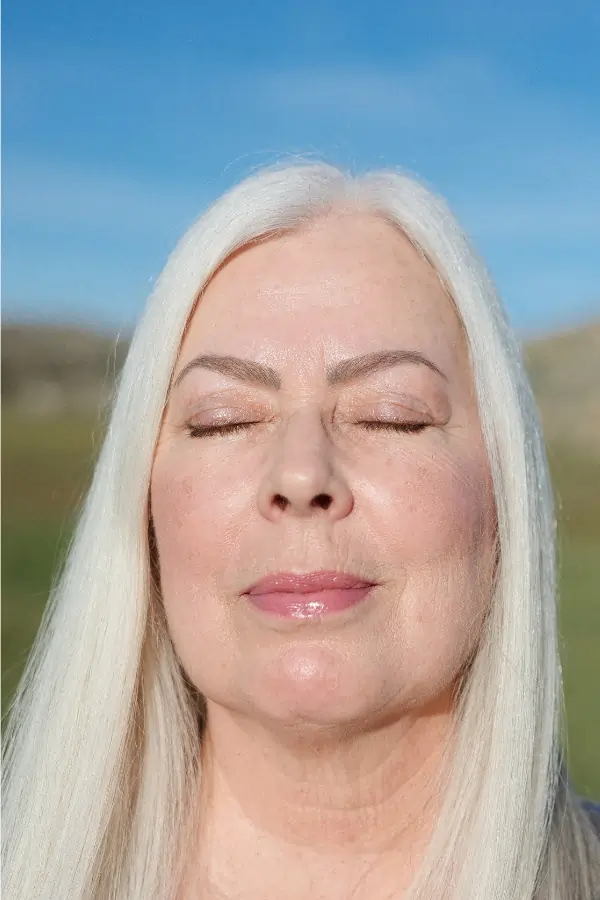
When skin begins to show common signs — some early, some more noticeable — the checklist below covers what people describe most often:
- Fine lines and visible wrinkles — often where wrinkles start, around the eyes, mouth, or forehead. Some lines may linger at rest, even when the face is relaxed3.
- Sagging skin and softer contours — a less defined jawline or slight hollowing under the eyes1,3.
- Thinner skin with a crepey feel — skin that feels more delicate, looks slightly translucent, or feels almost papery in some spots1,3.
- Drier-feeling skin and less plumpness — collagen helps skin hold moisture, so a drier or less plump feel can show up alongside other changes1,3.
- Uneven texture — a surface that feels rougher or looks less smooth than it used to1,3.
- Dullness or less radiance — a tired-looking complexion as cell turnover slows1.
- Pores that look more prominent — as their supporting structure weakens, pores can appear larger over time3.
- A “flatter” overall look — a broader change in face shape, not just a single wrinkle.
The National Institute on Aging notes that visible changes in aging skin are part of normal aging, with timing and intensity varying by person1.
What causes collagen loss in the face? An evidence-informed look
Collagen loss in the face is shaped by a mix of factors — a gradual decline in collagen production over time, sun exposure, hormonal changes including the perimenopause runway, and lifestyle habits like sleep, balanced eating, and stress1,7. Some are part of normal aging; some may be influenced by daily habits. For a deeper look at the habits and factors often discussed around collagen support, Brello also has a guide on how to prevent collagen loss.
Natural age-related collagen decline
Collagen levels in the human body gradually slow over time, often starting in the mid-20s3,4. Some sources cite a steady annual decline; this is widely repeated, but personal experience varies4.
The change tends to feel slower at first and more visible later, especially as it stacks with sun exposure and hormonal shifts1,7.
Why might my face seem to be losing collagen suddenly?
For many women, the change feels less like a slow drift and more like a sudden phase shift — often around the perimenopause runway, when hormones can fluctuate before periods fully stop5,6.
Perimenopause is the years-long window leading into menopause5. Estrogen plays a role in skin elasticity and firmness, so visible changes may feel more rapid here than the simplified “starts in your 30s” line suggests5,6. Cautious framing matters: this varies widely by person.
Sun exposure and UV rays
Sun exposure is one of the most consistently identified factors in premature skin aging1,7. UV exposure and UV rays can damage collagen and elastin in the deeper skin layers over years of cumulative exposure, affecting skin cells that produce collagen — a pattern commonly called sun damage1,7.
The American Academy of Dermatology and the Skin Cancer Foundation consistently include daily sunscreen as part of a healthy skin routine8,9.
Sleep, balanced eating, stress, and glycation
Day-to-day lifestyle habits — sleep, what’s on your plate, hydration, and stress — can all play a role in how skin looks over time. Poor sleep and a poor diet may both contribute to gradual collagen breakdown1.
This connects to a process called glycation, where excess sugar may interact with proteins like collagen in the body10,11. A pattern of eating matters more than a single meal.
What daily lifestyle habits may support healthy skin?

Lifestyle habits that may support healthy skin include daily sunscreen, steady hydration, balanced eating with vegetables and protein, consistent sleep, and gentle stress management1,8. If you’re also wondering how these habits connect to firmness and bounce, Brello’s guide on how to regain elasticity in skin explains the topic in more detail. None of these can reverse collagen loss on their own, but together they may support skin appearance over time1. Results vary by person and life stage.
Small steps, repeated, tend to do more than dramatic overhauls.
- Daily sunscreen — broad-spectrum SPF as a steady habit, not just on sunny days8,9.
- Steady hydration — water through the day; some people notice their skin looks fuller when well-hydrated.
- Balanced eating — vegetables, protein, and foods rich in vitamin C as part of regular meals. Vitamin C is involved in collagen synthesis in the body, where amino acids act as building blocks12,13.
- Consistent sleep — regular sleep routines may support overall skin appearance.
- Gentle stress management — short walks, breath check-ins, or quiet time as small, repeatable steps.
This is the place where steady progress wins over perfection.
Common mistakes when reading signs of collagen loss
Common myth-vs-fact mistakes include assuming every visible change is structural collagen loss, expecting collagen creams to fully restore lost collagen, and treating supplements or bone broth as guaranteed fixes. Many of these are widely discussed online, but evidence is mixed and results vary widely from person to person.
A few pairings worth holding in mind:
- Myth: Collagen creams rebuild collagen in the deeper skin. Fact: Most topical collagen molecules are too large to reach the deeper skin layers and tend to sit in the superficial layer14. Ingredients commonly discussed in this context include retinol and vitamin C, with results that vary13.
- Myth: Bone broth is a guaranteed way to add collagen to the skin. Fact: Bone broth comes up often in skin-and-aging conversations; current evidence on its effect on facial collagen is limited15.
- Myth: Sugar alone “destroys” collagen. Fact: A pattern of high sugar intake — and a poor diet overall — may be a factor in glycation over time10,11. Isolated foods are rarely the whole story.
- Myth: Every visible change is structural. Fact: Some changes may be temporary shifts from sleep, hydration, stress, or recent weight changes1.
A different way to think about signs of collagen loss
A growing conversation reframes signs of collagen loss as expected tissue change to understand and support, not a personal failure to fix. Skincare may play a supportive role in skin appearance, but much of the trajectory is shaped by genetics, hormones, and time1. Both “slow it down” and “understand and support” are valid lenses — and the cultural pull toward a youthful look or youthful-looking skin doesn’t have to be the only frame.
You can take care of your skin and still let your face age. Both can be true at the same time.
For many Brello Members, that calmer framing — small steps, steady progress, no fix-it pressure — feels more sustainable than chasing youthful reversal. That same mindset also connects to Brello’s broader approach to healthy aging tips, where the focus stays on steady support instead of perfection. What matters is finding language that fits how you actually want to think about it.

Take The
First Step
with Brello
Final Thoughts
Signs of collagen loss in the face are part of a normal arc, not a personal failure. Some changes may be lasting structural shifts; others may be temporary — a tired week, a missed glass of water, a stretch of stress.
Reading what your face is doing over weeks, not a single mirror moment, can help separate the two. Daily sunscreen, balanced eating, steady hydration, and consistent sleep may support healthy skin over time. For a broader look at everyday skin-support habits, Brello’s guide on how to improve skin health offers a helpful next step.
Small steps, repeated, tend to do more than dramatic overhauls. Find the framing that fits you.
Frequently asked questions
At what age does skin start to lose collagen?
Collagen production gradually slows over time, often beginning in the mid-20s, though visible signs vary widely3,4. Hormonal transitions like perimenopause may shift the experience for many women in their late 30s and 40s5,6. Age alone is not the whole story.
Is what I’m noticing actually collagen loss, or could it be something else?
Some changes may be temporary shifts from sleep debt, dehydration, stress, or recent weight changes1. Others may reflect lasting structural change in skin collagen. Reading what your face is doing over a few weeks — not a single tired Tuesday — can help separate one from the other.
Can you reverse collagen loss in the skin?
Some collagen change is part of normal aging and is not fully reversible1,2. Daily lifestyle habits like sun protection, balanced eating, and consistent sleep may help support healthier-looking skin over time1,8. Results vary widely from person to person.
Are there foods or drinks that help with collagen?
Bone broth and balanced eating with vegetables, protein, and foods rich in vitamin C are commonly mentioned in skin-and-aging conversations13,15. The evidence on specific foods is mixed15. A steady eating pattern is more useful to think about than any single food or drink.
Does daily sunscreen really help support skin over time?
Daily sunscreen is one of the most consistently recommended supportive habits in skin care8,9. The American Academy of Dermatology and the Skin Cancer Foundation point to daily broad-spectrum SPF as part of healthy skin routines, both for younger people and older ones8,9.
What about cosmetic dermatology and in-office treatments?
Cosmetic dermatology and in-office treatments come up often in conversations about facial appearance and aging skin. These categories are outside the scope of this lifestyle-focused guide; treatment options vary widely, and any reference here is informational only.
When should I take changes in my skin more seriously?
If changes feel sudden, distressing, or hard to live with, reaching out to a trusted source for support can help — whether that’s a friend, a family member, or another resource you trust. Calm, slow noticing is fine. So is asking for a second opinion when something feels off.