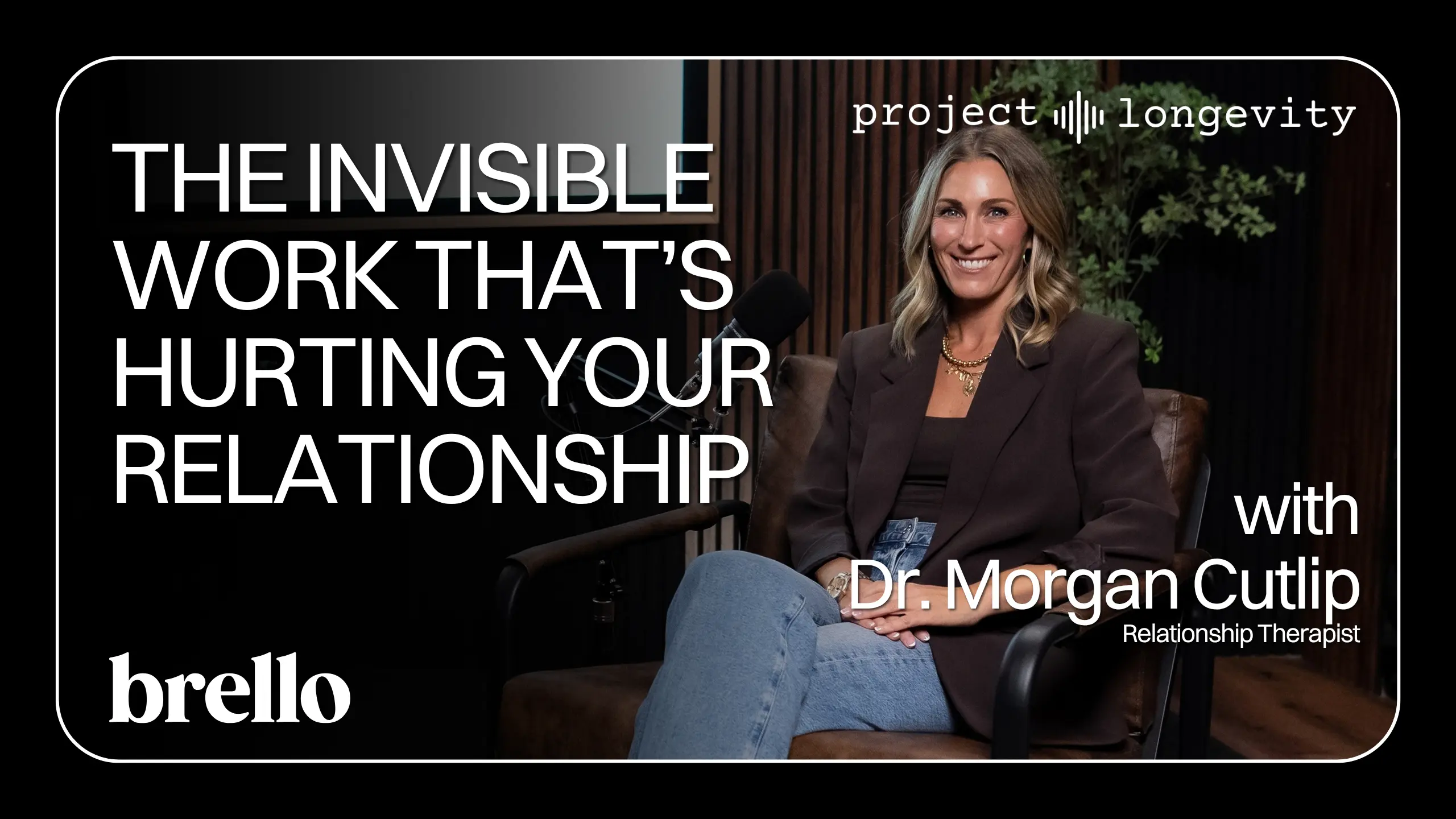
In Episode 6 of Project Longevity, sponsored by Brello Health, host Caulen Foster sits down with Sandra Mason — the reality TV standout who captured hearts on one of television’s most-watched reality dating series with her warmth, authenticity, and confident approach to love later in life. Chosen from a pool of roughly 35,000 applicants, Sandra brought to the screen the same qualities she brings to this conversation: humor, candor, and a refusal to let a number define what her life can hold.
But Sandra’s story in front of the camera didn’t start there. It began decades earlier — lip-syncing Motown hits on a high school stage, appearing with her husband on one of television’s original couples game shows in 1969, and winning big as a game show contestant in 1988. Today, the Atlanta-based “Southern gal” is a passionate voice for healthy aging, emotional wellness, and embracing new chapters at any age.
What unfolds over the episode isn’t a lecture on longevity science. It’s something arguably more valuable: lived wisdom from a woman in her 70s who is happier, busier, and more socially connected than many people half her age — and who can explain, in plain language, exactly how she does it.
Prefer listening instead? Tune in to Project Longevity: Season 1, Episode 6 with Sandra Mason on Spotify, Apple Podcasts, Amazon Music, and other major podcast platforms.



From High School Stages to Reality TV: Sandra’s Remarkable Story
Caulen opens the episode the way he does with every guest: where are you from, where are you now, and where are you going? Sandra’s answer spans six decades of showing up — on stages, on game shows, and eventually on one of the most-watched reality experiments in recent memory.
She grew up on the West Coast but calls Atlanta home now. Her public journey started in high school, performing Motown lip syncs on stage. In 1969, she and her husband appeared on one of the era’s classic couples game shows — what she playfully calls the first generation of reality television. Nearly two decades later, she competed on a legendary TV game show, where she won what she describes as a big chunk of change and got a behind-the-scenes peek at its famous hosts before the cameras rolled.
Then life did what life does: motherhood and a corporate career slowed things down in front of the camera. It wasn’t until her recent reality TV chapter that Sandra stepped back into the spotlight — one of only about two dozen women selected from 35,000 applicants.
The takeaway: Sandra’s life is proof that chapters don’t close just because time passes. Sometimes the most visible ones come last.
The Operative Word in “Aging” Is Doing
When Caulen asks Sandra how she thinks about aging and longevity, she gives one of the most memorable reframes of the season. The operative part of the word “aging,” she says, is the suffix: -ing. And -ing means doing.
Gardening, volunteering, exercising, cleaning, dancing — whatever the activity, the point is motion. Sandra contrasts this with what she sees as the modern default: sitting, often with a phone as our primary connection to the world. In her words, “Sitting is the antithesis of longevity.”
Her instinct is backed by research. Studies of middle-aged and older adults have found that sedentary time is associated with poorer health outcomes and lower odds of “successful aging” — independent of how much structured exercise a person gets.1 In other words, a morning workout doesn’t fully cancel out an afternoon on the couch.
The takeaway: Longevity isn’t a state you achieve. It’s a verb you keep conjugating — gardening, connecting, moving, doing.
For Every Hour She Sits, Sandra Moves for Two
Sandra doesn’t count steps or track macros. She follows one personal mantra instead: “For every hour of the day that I sit, I must be doing something for two hours.”
It’s a strikingly simple ratio, and it does something most health advice fails to do — it makes movement the default and stillness the exception. Rather than scheduling activity into a sedentary life, Sandra schedules rest into an active one.
That inversion aligns with what public health guidance encourages for older adults: at least 150 minutes of moderate-intensity aerobic activity each week, plus muscle-strengthening and balance activities — and beyond that, simply moving more and sitting less throughout the day.2 Sandra’s two-for-one rule turns those recommendations into something you can actually feel in a day’s rhythm.
The takeaway: You don’t need a tracker to know if you’re moving enough. Ask a simpler question: is your day mostly doing, or mostly sitting?
Four Simple Pillars Hold Up a Long Life
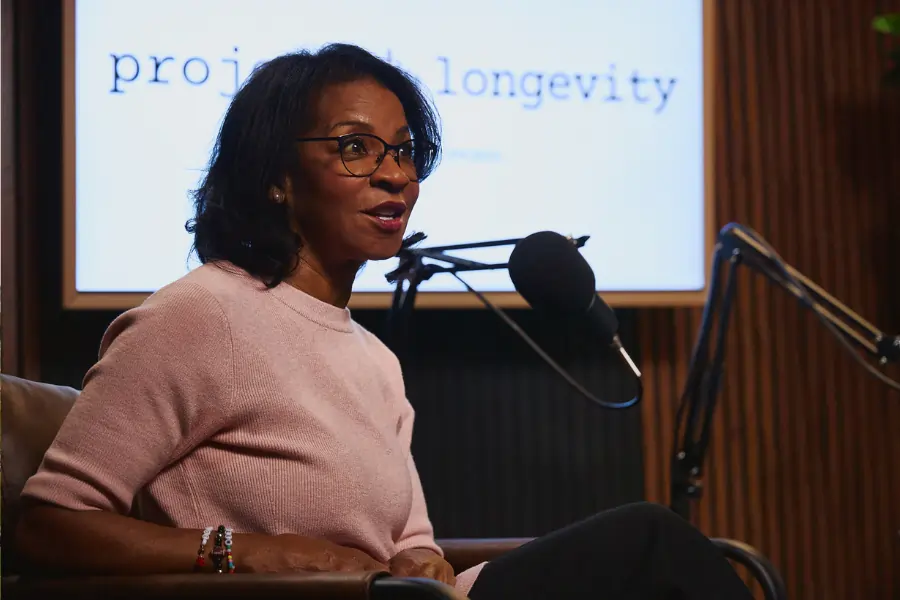
When Sandra distills longevity down to its essentials, she lands on four things: sleeping well, limiting alcohol, taking medications as prescribed, and exercising.
None of these will surprise anyone — and that’s exactly the point. Each pillar is supported by decades of evidence. The CDC recommends that adults get at least seven hours of sleep per night — seven to eight for adults 65 and older — noting that adequate sleep supports heart health, metabolism, mood, and memory.3 On alcohol, the guidance is equally clear: drinking less is better for health than drinking more.4 And medications only work when taken correctly — regularly, at the right dose, as directed — which is why health agencies emphasize adherence as a cornerstone of managing chronic conditions.5
What makes Sandra’s framing valuable isn’t novelty. It’s that she treats these four behaviors not as chores but as acts of loyalty — to herself, and to the friends and family who, as she puts it, need her around.
The takeaway: The foundations of a long life are boring on purpose. Sleep, moderation, medication, movement — done consistently, they outperform every trend.
Loneliness Can Be a Silent Killer — Connection Is the Antidote
When Caulen asks how Sandra stays so sharp, her first answer isn’t a supplement or a brain game. It’s people. Maintaining social connections, she says, is as essential to longevity as movement — and its absence is dangerous. One of her strongest lines of the episode: loneliness “can be a silent killer.”
The science agrees with her. The CDC reports that social isolation and loneliness increase a person’s risk for heart disease, stroke, type 2 diabetes, depression, and anxiety.6 Research compiled by the National Institute on Aging links them to cognitive decline, weakened immunity, and even earlier death.7
Sandra’s prescription is refreshingly practical: don’t just avoid sitting alone — avoid sitting, period. Even group time, she notes, should involve doing: quilting, stitching, sewing, anything that keeps hands and minds engaged in a multi-person environment.
Caulen points out that across every episode of the podcast so far, no guest had named social connection as a longevity pillar — making Sandra’s emphasis one of the most distinctive contributions of the season. If Sandra’s emphasis on connection resonated with you, our guide on why social wellness matters goes deeper into the science behind it.
The takeaway: Connection is not a soft factor in longevity. It’s a hard one — and it’s something you build the same way you build strength: with regular reps.
Staying Sharp Starts With Hobbies and Human Contact
Beyond social ties, Sandra credits her cognitive sharpness to a steady rotation of hobbies — activities that keep her mind active and her calendar full. Television is fine as entertainment, she says, but it can’t be the whole day.
Here, too, her instincts track with research. The National Institute on Aging notes that higher social engagement — visiting neighbors, volunteering, staying involved in community life — is associated with better cognitive health in later life.8 Ongoing NIA-supported research also suggests that participatory arts like singing, theater, and visual arts may support older adults’ cognitive function, well-being, and independence.9
Sandra’s version of this doesn’t require a formal program. She fills her days with projects, contact lists of friends to check in on, “make-believe grandkids,” and even a make-believe dog. The specifics are playful; the underlying pattern — stimulation, purpose, and human contact — is serious business.
The takeaway: A sharp mind isn’t preserved in isolation. It’s exercised through hobbies, laughter, and the people you make time for.
“Why Not?” — The Two Words That Open New Chapters
Caulen asks where Sandra’s fearlessness comes from — the willingness to audition for a national television show in her 70s. Her answer is a decision-making framework anyone can borrow.
When facing a new opportunity, most people ask “why?” — why should I do this, why would I want to? Sandra flips the question. She asks “why not?” And if she can’t come up with a viable, sensible reason against it, she goes for it. That was exactly the calculus behind her return to television.
Caulen calls it one of the most unique pieces of advice he’s heard on the show, and it’s easy to see why. “Why?” demands justification for action. “Why not?” demands justification for inaction — and most of the time, there isn’t a good one.
The takeaway: The next time an opportunity makes you hesitate, change the question. If “why not?” has no good answer, you have yours.
A Healthy Life Doesn’t Require a Rigid Routine
For all her discipline about movement, Sandra is quick to say her daily routine “is really not routine.” She’s retired, which means she can let her body rest as long as it needs — she trusts her nervous system to tell her when she needs sleep. She isn’t a coffee person; a decaf for the taste is as far as it goes.
What she does have is momentum. She knows what her hobbies need from her that day, how many people she wants to connect with, and that her hours must lean toward doing rather than sitting. The structure comes from the two-for-one rule, not a calendar.
Caulen draws out the insight: many people never start healthy habits because they believe they need a rigid regimen first. Sandra had one during her working years — and respects why Caulen has one now — but her golden years run on a simpler operating system. Make sure what you do is healthy, viable, and getting you somewhere. Then just do it.
The takeaway: A regimen is one path to consistency, not the only one. Pure, daily action counts just as much as a color-coded calendar.
The “Why Not” Changes as You Age — and That’s Okay
One of the most thoughtful stretches of the conversation comes when Caulen, approaching 40, asks how Sandra’s perception of life and longevity has changed over the decades.
Her honesty is disarming. At Caulen’s age, she never thought about longevity — life was too full of husband, kids, job, and groceries. Now, she says, the concept has a wall, a limit, and it lives “in the loop” of her decisions. Sometimes the answer to “why not?” is simply: because it wouldn’t advance my life, or because my doctor wouldn’t approve.
She also seizes the moment to celebrate that Caulen sees his doctor regularly — because in her experience, men often avoid checkups, not wanting bad news. Preventive care, she reminds listeners, is exactly that: preventive.
The takeaway: The “why not” filter matures with you. What stays constant is the willingness to ask the question honestly at every age.
Taking Care of Yourself Isn’t Selfish, It’s Essential
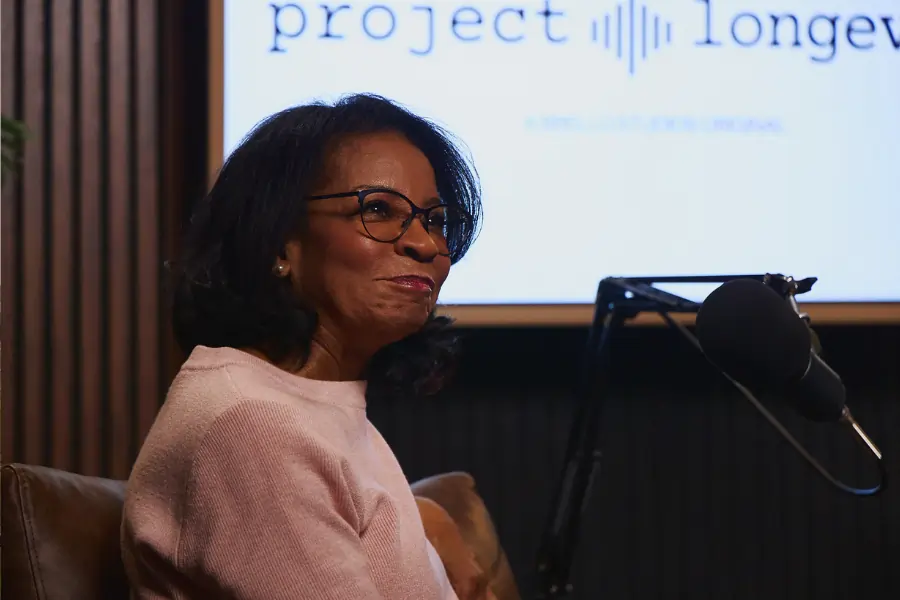
Now that her kids are grown, Sandra admits her life is largely about herself — what she’ll eat, what she’ll do, who she’ll connect with. And she refuses to apologize for it. In her words: “If you don’t take care of you, no one else is going to.”
Her second point lands even harder: if you don’t take care of yourself, who will take care of the people you love? Your people need you.
Caulen connects this to a pattern he’s noticed among the Brello community and past guests: people justify their health almost exclusively through others — staying healthy for the kids, for the spouse, for some future obligation. Sandra’s framing restores the missing first step. Self-care isn’t the opposite of caring for others; it’s the prerequisite.
The takeaway: Being healthy for yourself and being present for your people aren’t competing goals. The first makes the second possible.
Getting Your Affairs in Order Is a Gift to the People You Love
Sandra jokes that she’s “immature about death” — she tries not to dwell on the inevitable. But she’s done something many people put off for decades: she has her papers and estate plan fully in place.
Her reasoning is pure empathy. When you pass, your loved ones will be busy mourning. The last thing they should have to untangle is the business of taking care of things without guidance. An estate plan, in her telling, isn’t paperwork about death — it’s a final act of care for the living.
It’s a striking pairing: a woman who refuses to dwell on mortality, yet has prepared for it more thoroughly than most. The two aren’t contradictory. Handling the practical side is precisely what frees her to live in the present.
The takeaway: You don’t have to be comfortable with death to be prepared for it. Covering the bases is how you protect the people who’ll miss you most.
Baby Steps Beat Big Leaps When Starting Something New
For listeners starting from zero, Sandra’s advice is gentle and specific: take baby steps, especially with anything physical. She’s watched friends announce a new gym habit, push through ninety-minute sessions on day one, and — as she colorfully puts it — kick their own tails so hard they ache for days and quit.
Your body is a machine, she says, and you can’t just ram at it. Public health guidance echoes her: for adults, and especially older adults, activity should be built up gradually, with effort scaled to your current fitness level.2
The same logic applies to confidence. When Caulen asks what she’d tell someone struggling to believe in themselves, Sandra doesn’t pretend to have a formula. Confidence may come from within, from childhood, from upbringing — but wherever it originates, the path forward is the same: just do it. Put your toe in the water and try.
The takeaway: Start smaller than your ambition wants you to. The habit that survives week one is the one that changes your life.
Divorce, Failure, and the Slinky That Goes Up
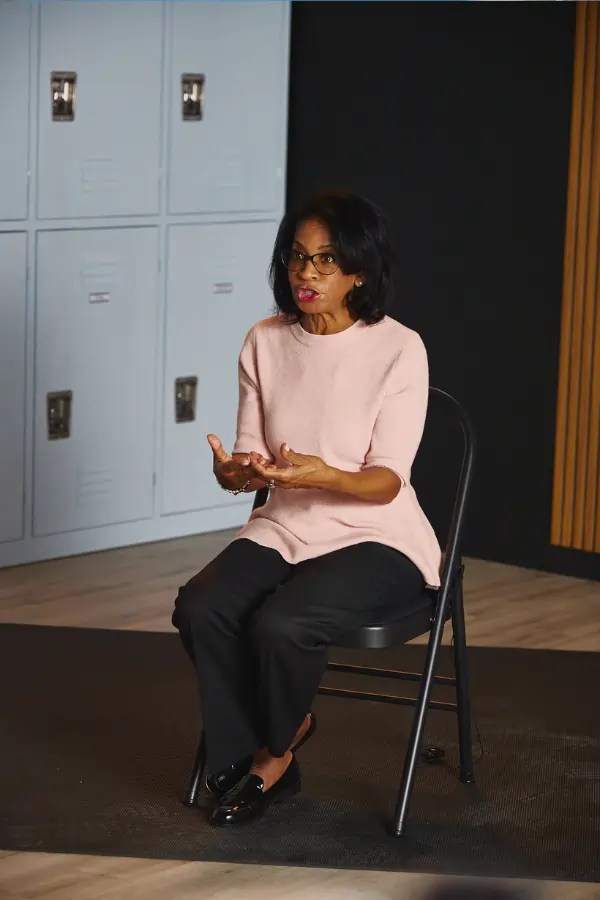
Caulen asks every guest about their biggest loss, and Sandra doesn’t hesitate: divorce. She describes it as mourning a relationship that was once the best thing she ever had — a grief millions of people know intimately.
Her healing wasn’t magic. It was time, mourning fully, and then pushing herself to get out and live life again. One of her most vivid images of the episode: being “the slinky that doesn’t go down, the slinky that goes up.”
From there, the conversation widens into failure itself. Sandra’s philosophy is blunt and freeing: failure is success, because now you know something you didn’t know. No one does everything well, she reminds Caulen — we fail at marriages, tests, jobs, even at raising perfectly behaved kids. We’re all trees that lose branches and leaves, and we regenerate that way. The next step is acceptance, and then using each failure as a step in healing — a new rule you set for yourself.
The takeaway: Resilience isn’t avoiding the fall. It’s mourning honestly, learning the lesson, and springing back up.
No Long-Term Plans — and Perfectly Happy
Asked about her plans for the future, Sandra names one near-term goal — travel, starting with her trip to Miami for this very recording — and then delivers a line only someone in her position could: she has no long-term plans, and she considers that the great privilege of being in her 70s.
She’s quick to clarify what that doesn’t mean. She’s not going to sit around and dwell. She’s going to get up and do something, embrace whatever comes her way, and stay happy — which, by her own account, she very much is.
Caulen, a self-described planner, admits the contrast hits home. Having tons of plans is a blessing, he says, but it can pull you so far into the future that you miss the present. Sandra’s presence — fully in the moment, fully engaged with the people in the room — is the nugget he says he’s taking with him.
For listeners who want more of that energy, Sandra can be found on Instagram at @SandraTheJoy — an account she famously didn’t know she needed until a producer insisted.
The takeaway: Presence is a longevity practice too. Plans serve the future; joy lives in the now.
The Bigger Picture
Across the hour, Sandra Mason never once uses the language of anti-aging. She doesn’t talk about turning back the clock, biohacking her way to a younger self, or fearing the years ahead. Instead, she models something rarer: aging as an active verb.
Her framework is deceptively simple — move twice as much as you sit, sleep well, drink less, take your medications, stay connected, keep your hobbies alive, and ask “why not?” when opportunity knocks. Behind each habit is the same conviction: your life belongs to you at every age, and the people who love you are counting on you to steward it well.
Perhaps the deepest thread in the episode is Sandra’s relationship with loss. Divorce, failure, the awareness of a horizon — she doesn’t deny any of it. She mourns, prepares, accepts, and then gets up and does something. That’s not avoidance. That’s the slinky going up.
For a podcast built on the science of living longer, Episode 6 is a reminder that the evidence and the lived experience point the same direction. Longevity isn’t only measured in years. It’s measured in -ing.
Enjoyed this conversation? Don’t miss the previous episode of Project Longevity, where registered dietitian Ana Reisdorf shares how protein, muscle, and everyday nutrition habits lay the foundation for the kind of vibrant later life Sandra is living — listen to Episode 5 here.