TL;DR Some people arrive at a health philosophy through theory. Ana Reisdorf arrived at hers by living every side of it. A registered dietitian of nearly 20 years, she began her career prepping patients for gastric bypass, spent years running a health and wellness marketing agency, and eventually became a GLP-1 user herself. Today she’s the founder of GLP-1 Hub, a YouTube channel and podcast the host describes as a trusted resource for people navigating these medications.
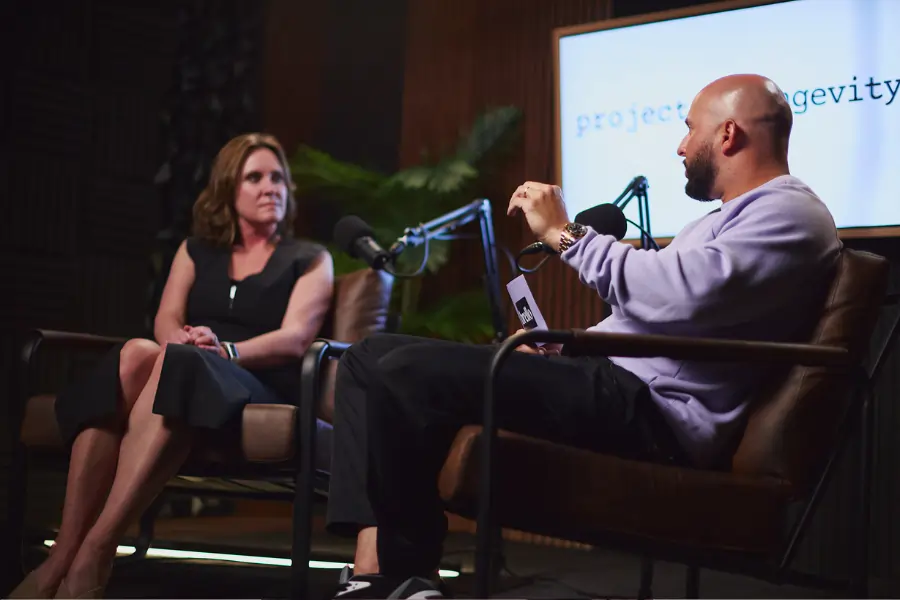
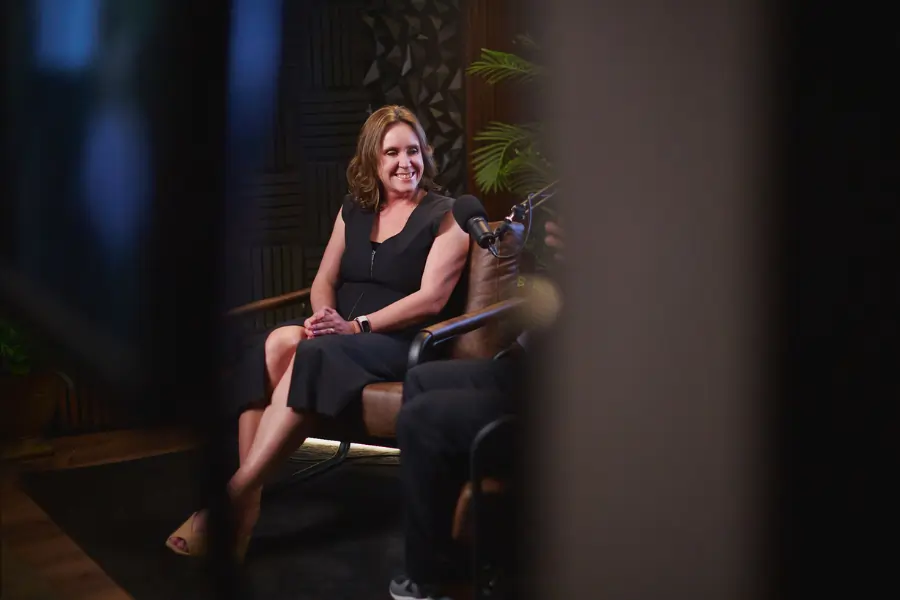
On this episode of Project Longevity, host Caulen Foster sits down with Ana for a conversation that is refreshingly honest about what these drugs can and can’t do. Her core message lands early and stays: GLP-1s are not the finish line. They are the opening — a rare, quiet window in which the cravings and “food noise” recede long enough for someone to finally build the habits that support a long, strong life.
What makes Ana’s perspective compelling isn’t just her credentials. It’s that she lost the weight, regained it, studied why, and came back with a framework rooted in lived experience as much as expertise.
Prefer listening instead? Tune in to Project Longevity: Season 1, Episode 5 with Ana Reisdorf on Spotify, Apple Podcasts, Amazon Music, and other major podcast platforms.



A career built on the question of why weight is so hard to keep off
Ana Reisdorf didn’t become a dietitian by accident. She became one to solve a personal puzzle — her own relationship with weight. Her early work in gastric bypass preparation taught her something that would shape the next two decades: handing someone a meal plan rarely changes the dozens of other factors driving their health.
Gastric bypass was revolutionary in its time, but Ana is candid about its limits. It’s an extreme, largely irreversible change to a person’s anatomy, and its results often fade. As she notes from her own master’s thesis research, durability is the recurring problem — the surgery shrinks the stomach but leaves the brain’s cravings untouched, so the pouch can stretch and the weight can return.
That gap — between mechanical fixes and the brain that actually drives eating — is exactly where her interest in GLP-1s began. The takeaway: restricting the stomach was never the same as changing the signal.
Why the real shift with GLP-1s happens in the brain, not the stomach

This is the distinction Caulen and Ana keep circling back to. Older interventions imposed portion control from the outside. As Ana describes it, GLP-1 medications work from the inside, acting on the brain regions that govern appetite and reward5.
That’s why so many users describe the same thing: the constant mental chatter about food simply gets quieter. The takeaway, in Ana’s telling: it’s less about willpower and more about that quieter signal.
Ana’s own “I did everything wrong” chapter
Ana is disarmingly honest about her first attempt. Having spent years in marketing rather than clinical practice, she came to the medication unfamiliar with it. She barely ate — the drug suppressed her appetite, so she let it — and assumed she could lose the weight, stop, and stay fine.
She gained it all back.
That failure became the foundation of everything she now teaches. It showed her that under-eating on a GLP-1 sets people up to lose muscle and rebound, and that the absence of hunger is not the same as the absence of nutritional need. The takeaway: even an expert can get it wrong, which is exactly why the lifestyle piece deserves more attention than the prescription.
The side effect nobody warned her about: confidence
Not every benefit shows up on a scale. For Ana, the biggest change was that she finally felt able to show up as herself. After 20 years in the field, she had never attended her profession’s annual conference — she never felt confident enough to be seen there.
This year she went. One of her most memorable lines is that it was like “a celebrity came to town.” Colleagues approached her in tears, thanking her for work she’d been doing for two decades. She came home and cried for days.
Caulen reframes it neatly as a kind of reverse imposter syndrome — the barrier between who she knew she was and how she’d let herself be seen finally dropped. The takeaway: weight is rarely just physical, and neither is the relief of changing it.
The medication buys a window — what you do with it matters most
Here’s the pivot at the heart of the episode. Ana describes GLP-1s as finally giving people the opportunity to do the hard things — the things that were nearly impossible when cravings and food noise ran the show.
With that noise quieted, there’s suddenly room to focus — the window to start building healthy habits that can outlast the prescription. And the things she focuses people on are almost boringly fundamental: eat enough, get protein, eat your fruits and vegetables for fiber, and — based on emerging concerns about nutrient intake when appetite drops sharply — consider a solid multivitamin.
She’s also refreshingly anti-obsession. She steers people away from compulsive calorie and macro tracking, which she sees as draining brain space better spent elsewhere. The takeaway: the medication clears the runway, but you still have to fly the plane.
Eat. Actually eat: protein three times a day
It sounds almost too simple, but it’s the message Ana repeats most: your body still needs food, even when the medication makes you not want it. Her anchor habit is protein at every meal, three meals a day.
This matters more on a GLP-1 than off it. Rapid weight loss of any kind can pull from lean tissue, and protein paired with movement is the best-established way to protect muscle while losing fat. Expert guidance for older adults — a group especially prone to muscle loss — recommends spreading protein across meals, with roughly 25 to 30 grams per meal to meaningfully stimulate muscle maintenance.1
Ana’s rule of thumb mirrors that: aim for protein at each meal, and reach for something protein-rich if you snack. The takeaway: appetite may be gone, but the requirement isn’t.
Easy protein for the days you don’t want to cook
Ana is realistic about a double bind many users hit — not only do they not want to eat, they don’t want to cook either. Her answer is to lower the friction as far as it’ll go.
Her go-to staples are shelf-stable and grab-and-go: flavored tuna packets (she’s partial to the buffalo one), meat sticks, and protein shakes she’ll sip throughout the day. She’s quick to add a caveat, though — shakes are a bridge, not a foundation. Living on three shakes a day instead of food isn’t the goal.
She also points out a cultural shift in her favor: even mainstream chain restaurants now offer high-protein menus. The takeaway: convenience and protein are no longer mutually exclusive.
How much protein, really?
When Caulen presses for numbers, Ana keeps it practical rather than prescriptive. As a general rule of thumb she points people toward roughly 100 grams a day, while stressing that it scales with the person — a large, active man needs considerably more; a petite woman, less.
Rather than chase a daily total, she thinks in meals: somewhere around 25 grams per meal, knowing some land closer to 40 and others closer to 18. A protein shake delivering 30 to 35 grams can quietly cover a third of the day.
The framing keeps the goal achievable instead of anxiety-inducing. If you want to go deeper on the numbers, our guide to how much protein to eat on a GLP-1 breaks the ranges down further. The takeaway: think in meals, not spreadsheets.
Movement that starts at the mailbox
Ana considers some form of strength training essential for anyone on a GLP-1, precisely because of the muscle-loss risk. But “strength training” doesn’t have to mean a barbell. From her gastric bypass days, she’s seen people start with chair workouts and a soup can for resistance.
For true beginners, she’s met people whose first goal was simply walking to the mailbox — then to a neighbor’s house, then a little farther. Progress, not intensity, is the point. And when someone is ready for actual weights, her advice is to invest in a single session with a trainer who can work around any limitations before turning to YouTube tutorials4.
It’s a generous reframe for anyone who feels like exercise “doesn’t count” unless it happens in a gym. The takeaway: the first rep is whatever movement you can do today.
Redefining longevity: the suitcase test
Ask Ana what longevity means and she doesn’t reach for biomarkers. She reaches for an image: she wants to be 80 years old and still able to “carry my suitcase all over the world.”
At 45, she figures she could easily live another four decades — so the real question is what those decades look like. Having once worked in a nursing home, she’s seen both outcomes up close, and she’s blunt that some are the result of choices that didn’t support the life people wanted. She wants to shift the conversation away from scale weight and toward body composition, muscle, and mobility — the things that actually keep someone out of that nursing home.
The takeaway: define the version of your future self you’re training for, then work backward.
Slower is the point: two to eight pounds a month
In a culture of dramatic before-and-afters, Ana’s healthy-loss number lands like cold water — and she knows it. She points to roughly two to eight pounds a month, depending on starting weight and other factors, even as she admits nobody wants to hear it3.
The danger of a fast, 20-or-30-pounds-in-a-month social media story, she explains, is that it usually isn’t quality weight loss. Some early drop is genuine — reduced inflammation and water weight — but pushing the scale as hard as possible tends to cost muscle and risk nutrient gaps. As Caulen puts it, it’s quality over quantity.
Her gentle reframe is one of the episode’s best: as she notes, you didn’t gain the weight in a month, so “you’re not going to lose it in a month.” The takeaway: the slow version is the one that lasts.
The regain reality — and what actually keeps weight off
This is where Ana is most clear-eyed. For many people, she says, the data suggests this is a long-term medication. In her experience, she notes, many people regain a large share of the weight they lost within about a year of stopping.
Why? Once the medication is gone, so is the blood-sugar control and the quieting of food noise. In her own case, the regain was subtle — not a dramatic return to old habits, but portions creeping up so gradually she didn’t notice until the scale did.
For those who do come off, she points to the maintenance playbook from researchers who study long-term success. The single most consistent habit among people in the National Weight Control Registry who keep weight off is about an hour of physical activity most days.2 Ana is honest that an hour every day isn’t always feasible in her own life as a business owner and mom — which is part of why she’s made peace with the medication as ongoing support. The takeaway: regain isn’t a personal failure; it’s biology, and the plan has to account for it.
Menopause, cortisol, and getting ahead of the curve
The conversation closes on a topic Ana says comes up constantly: weight during the menopause transition. As Ana describes it, it’s common — though, in her words, not necessarily “normal” — for women to gain weight as hormones shift6. Add the cortisol and stress load many women carry, and weight becomes harder to manage.
Ana has watched women use these medications proactively — not necessarily because they’re obese, but to smooth the transition into the next phase of life and keep weight from becoming the dominant issue. Caulen frames it well: it’s being proactive rather than reactive, preparing for the next chapter instead of scrambling through it.
The takeaway: the goal isn’t to fight aging, but to move through it with strength and agency intact.
The Bigger Picture
Thread Ana’s story together and a single idea emerges: GLP-1 medications are powerful, but they are a tool, not a transformation. What transforms is what happens in the window they open — eating enough, protecting muscle, moving daily, and building a vision of the future worth training for.
That’s also why her own arc resonates. She lost weight the wrong way, regained it, studied why, and rebuilt both her body and her business around what she learned. When Caulen asks about her biggest comeback, she doesn’t hesitate. One of her strongest lines is the simplest: “GLP-1 is my comeback story.” Her marketing agency had collapsed; GLP-1 Hub became the thing she built from the wreckage.
The longevity lesson underneath it all is quietly radical in a culture obsessed with speed: the number on the scale was never the point. Muscle, mobility, nourishment, and confidence are — and those are built slowly, on purpose, one ordinary day at a time.
Ana’s case for looking past the number on the scale picks up a thread from earlier in the series. If it resonated, listen to Project Longevity Episode 3: Dr. Lisa Folden on Body Acceptance next.