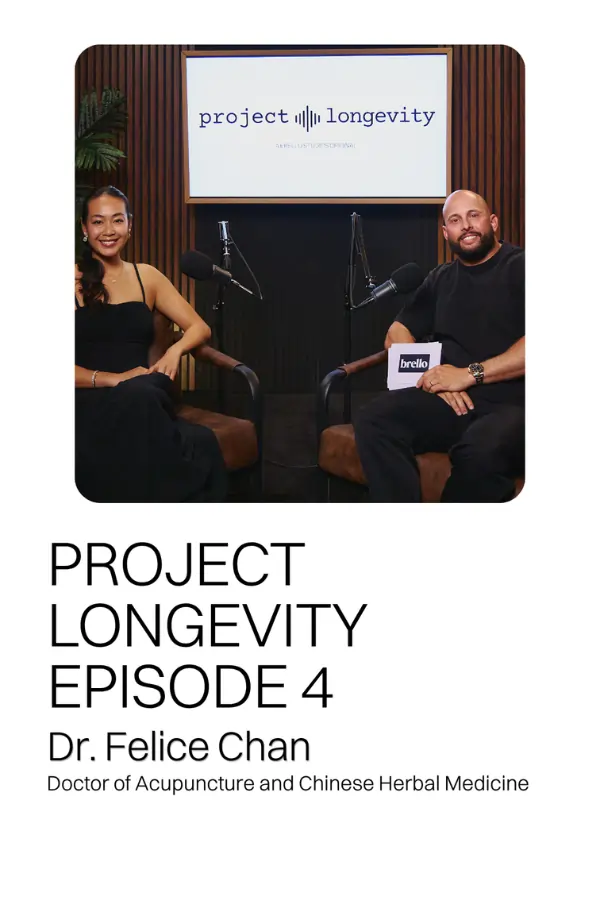
When Dr. Felice Chan was six years old, she knew she wanted to be a doctor. Growing up in Hong Kong, she was surrounded by the rhythms of traditional Chinese medicine—the way people ate, healed, and moved through illness. But the medicine she officially pursued was Western. She shadowed surgeons in Oakland hospitals, studied neuroscience in college, took the MCATs, and prepared for traditional medical school. Everything was on track. Then she met a child who couldn’t swim, couldn’t play with classmates, and was covered in debilitating eczema that no amount of steroid cream could fix. The only thing that helped him? Weekly acupuncture.
That moment became a turning point. Dr. Chan pulled her med school applications, told her immigrant parents she was changing paths, and moved to Los Angeles to study the medicine she’d grown up with but never formally learned. Today, as the founder of Felice Acupuncture, she blends neuroscience with ancient healing practices to help patients restore balance through acupuncture, herbs, nutrition, and a root-cause mind-body approach to longevity. In this episode of Project Longevity, Caulen sits down with Dr. Chan to explore what it means to heal from the inside out—and why your nervous system holds the key.
Her story isn’t just about switching careers. It’s about recognizing that health isn’t a problem to solve in isolated parts, but a balance to restore across the whole system.
Prefer listening instead? Tune in to Project Longevity: Season 1, Episode 4 with Dr. Felice Chan on Spotify, Apple Podcasts, Amazon Music, and other major podcast platforms.



From Neuroscience to Needles: Dr. Chan’s Unexpected Path
Dr. Chan’s medical journey began in a hospital, not an acupuncture clinic. She spent years shadowing her aunt, a radioneurologist at Kaiser in Oakland, watching surgeries and imagining her future in Western medicine. She studied neuroscience in college and was accepted into traditional med school programs. But during a transitional period working with pediatric patients, something shifted.
She worked with children suffering from severe eczema—kids who couldn’t participate in normal childhood activities because their skin was so inflamed and painful. The standard treatment was steroid creams, which many of the children had built resistance to. One young patient told her that weekly acupuncture was the only thing that calmed his body down. That statement lodged itself in Dr. Chan’s mind. She realized she wanted a form of medicine that addressed root causes, not just surface symptoms.
When she told her traditional Asian parents she was dropping out of Western med school to pursue Chinese medicine, the conversation was complicated. Her father took longer to understand. But her mother, who was studying career counseling at the time, treated her daughter as both client and family. The advice was simple: pursue what makes you happy. Dr. Chan moved to Los Angeles and never looked back.
The Holistic Difference: Why Eastern Medicine Looks at the Whole Person
The fundamental difference between Western and Eastern medicine, according to Dr. Chan, is compartmentalization versus integration. Western medicine excels at specialization—ENT doctors, cardiologists, neurologists—but Chinese medicine refuses to separate the body into parts. It treats the entire system as interconnected: mind, body, and spirit.1
Chinese medicine has been practiced for 5,000 years, and Dr. Chan believes its longevity speaks to its effectiveness.2 The core principle is balance. In Chinese philosophy, this is represented by yin and yang—the interplay between rest and activity, cooling and warming, contraction and expansion. When Caulen asks what sets Eastern medicine apart, Dr. Chan points to emotions as a major example. In TCM, emotions aren’t separate from physical health—they’re considered direct drivers of illness and imbalance.
Living in the Western world often means living in a state of “go, go, go.” Dr. Chan describes this as being stuck in the sympathetic nervous system—the fight-or-flight mode. The problem? You can’t heal when your body is in that state. Healing requires the parasympathetic nervous system, the rest-and-digest mode.3 And that’s where Chinese medicine steps in: it provides tools to bring the body back into balance so it can actually repair itself.
You Can Only Heal When Your Nervous System Lets You
One of Dr. Chan’s strongest lines in this conversation is this: “You can only heal in the parasympathetic rest and digest state.” It’s a statement that reframes everything from chronic inflammation to autoimmune conditions. If your nervous system is chronically activated—always on high alert—your body simply doesn’t have the resources to repair tissue, regulate hormones, or fight disease.4
Caulen, who identifies as a “go, go, go” person himself, asks how someone like him can encourage that shift. Dr. Chan’s answer is refreshingly practical. She doesn’t suggest overhauling your entire life. Instead, she recommends starting with what fits. She blocks one hour for acupuncture in her own calendar. She wakes up earlier to give her body a morning reset. She integrates nervous system regulation into her existing routine rather than treating it as an add-on.
The science supports this. Chronic sympathetic activation has been linked to increased cortisol, impaired digestion, poor sleep, and systemic inflammation—all of which accelerate aging and disease progression.5 The vagus nerve, which Dr. Chan mentions, is a key player in this process. It runs from the brainstem down into the abdomen and directly influences digestion, heart rate, and immune function.6 When you calm your nervous system, you activate vagal tone—and that’s when healing happens.
Simple Daily Practices That Shift Your Body Into Healing Mode
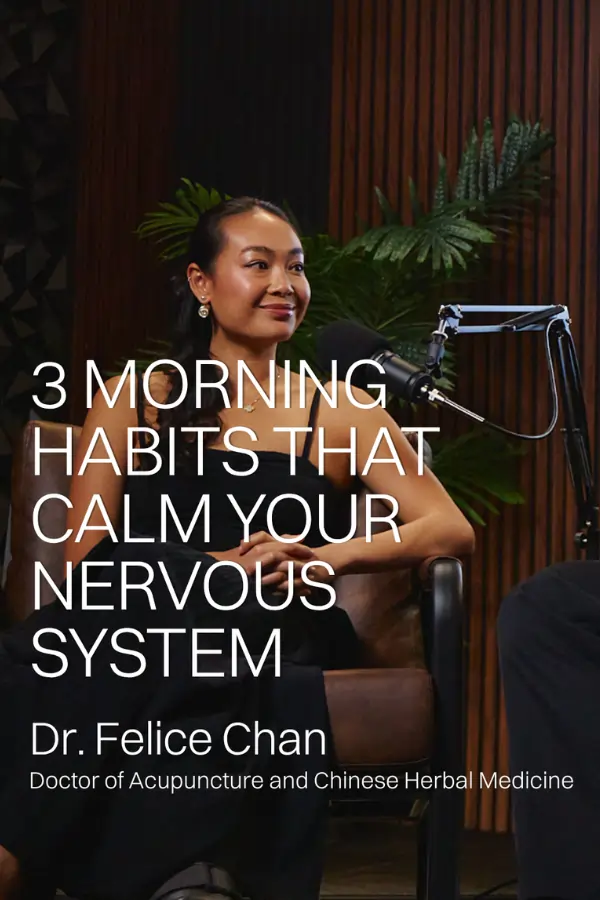
So how do you actually activate the parasympathetic state when you have kids, work, and a packed schedule? Dr. Chan offers a few entry points that take minimal time but create maximum impact.
The first is something she does every morning: drinking a hot cup of water. In Chinese medicine, heat nourishes the body. Hot water warms the digestive system, which TCM considers the source of energy and vitality. But beyond the physical effect, it’s also a meditative practice. Holding the cup, setting an intention, sipping slowly—it takes one minute, but it signals to your nervous system that you’re not in a rush.
Breathwork is another favorite. Dr. Chan emphasizes that it doesn’t need to be intense Wim Hof-style breathing. Just slow, intentional breaths while brushing your teeth, driving, or putting the kids to bed. The key is presence. You could be playing with your dog or walking outside, but if your mind is spinning through your work to-do list, you’re not actually resetting your nervous system.
When Caulen asks what to do if you have a restless mind that resists stillness, Dr. Chan offers a crucial reframe: meditation doesn’t have to be silent or motionless. You can listen to guided meditations while getting ready in the morning or driving to work. Sound frequencies—like binaural beats—can calm the nervous system without requiring you to sit cross-legged on a cushion.7 The goal isn’t perfection. It’s intentionality.
Meditation Doesn’t Have to Mean Sitting Still
Dr. Chan pushes back on the Western idea that meditation must involve silence and stillness. For people with busy minds—people like Caulen, who admits he’s tried breathwork but struggles to stay with it—this reframe is everything.
She introduces the concept of binaural beats: audio tracks with specific hertz frequencies that activate different brain waves. Alpha waves promote relaxation. Beta waves support focus. Delta waves encourage deep rest.8 You don’t have to close your eyes or stop moving. You just listen, and your nervous system responds to the frequency.
This ties into a broader principle in Chinese medicine: we are energy beings, and vibration affects us. That’s why sound bowl meditations work. That’s why acupuncture—which Dr. Chan calls “energy medicine”—can shift how you feel in a single session. Energy isn’t abstract in TCM. It’s measurable, it moves through pathways, and it can be regulated.
Acupuncture Demystified: Meridians, Energy Wells, and Hair-Thin Needles
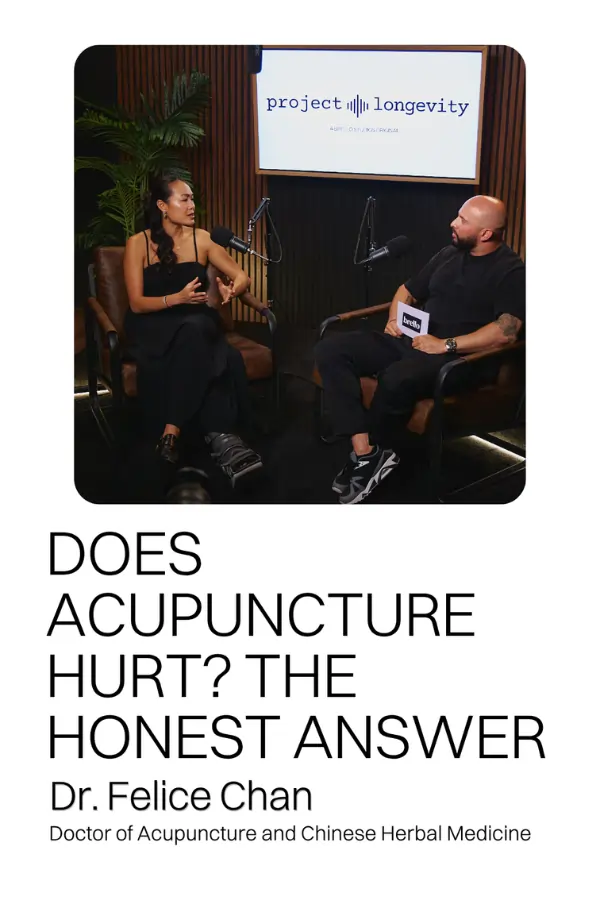
When Caulen admits his only reference for acupuncture is Eddie Murphy in The Nutty Professor covered in a thousand needles, Dr. Chan laughs—but she also takes the opportunity to demystify the practice.
Acupuncture works on the meridian system, a network of energy pathways that run throughout the body. These meridians connect to specific organs. For example, the liver meridian starts in the toes, travels up the leg into the abdomen, and ends at the eyes. There are 300 to 400 acupuncture points on the body, including the ears, and each point acts as an “energy well”—a place where Qi (energy) is most concentrated.9
Recent studies have confirmed that these meridian systems exist beneath the skin in the fascia, the connective tissue that holds trauma, tension, and energy.10 When you place a needle into an acupuncture point, you’re stimulating that energy well to increase the flow of Qi throughout the body. If you hold an electromagnetic frequency reader over an acupuncture point, it ticks faster—evidence of higher energetic activity.
And no, it doesn’t hurt. The needles are hair-thin—you can fit 20 to 30 acupuncture needles inside one hypodermic needle. Dr. Chan says if a needle does hurt, it’s often because it’s hitting a muscular knot or trigger point, which is therapeutic in its own way. But for patients who are nervous, acupuncturists can use even smaller, thinner needles.
What Acupuncture Actually Treats (And Why It Works)
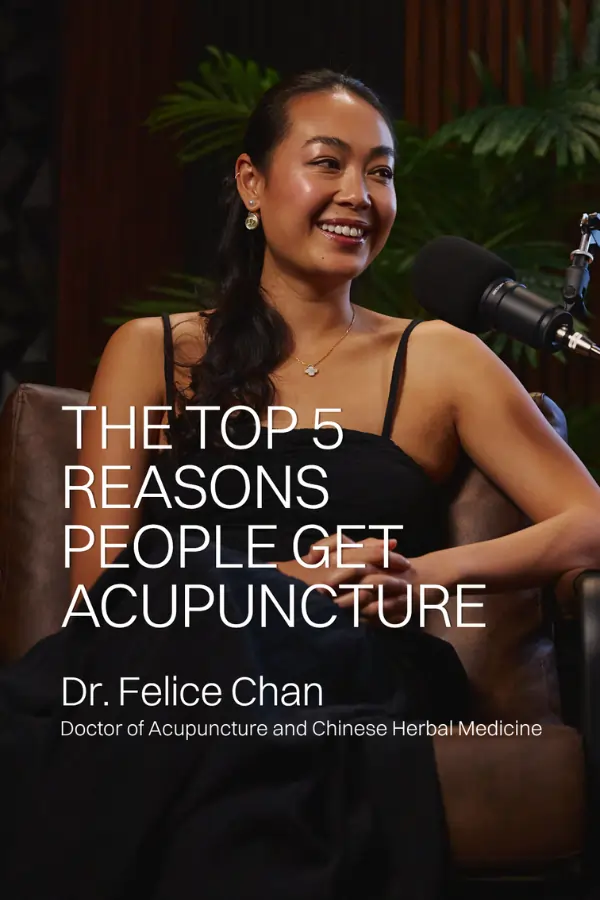
Dr. Chan sees patients for a wide range of conditions, but the top five include pain, women’s health issues (infertility, painful or irregular periods, menopause), autoimmune conditions, and gut imbalances like SIBO and dysbiosis. What ties all of these together? The nervous system.
Autoimmune conditions, for example, often develop when the body has been in sympathetic overdrive for too long. The immune system becomes dysregulated, attacking its own tissues. Acupuncture helps reset the nervous system, which in turn allows the immune system to recalibrate.11 For gut health, the vagus nerve connection is key—acupuncture can improve vagal tone, which directly impacts digestion and microbiome balance.12
Dr. Chan gets acupuncture once a week herself, and she considers it non-negotiable. It’s an hour to reset her entire system. She notices the effects in her digestion, sleep, mood, and menstrual health. Everything feels calmer. For people who are skeptical or unsure where to start, she recommends finding a licensed acupuncturist in your area and trying two or three practitioners to see who you vibe with. At the end of the day, it’s a partnership—and the relationship matters.
The Root and Branch Approach: Finding the Source of Symptoms
One of the most elegant metaphors in Chinese medicine is the root and branch theory. The branches are your symptoms—hot flashes, digestive issues, neck pain, irregular periods. The root is the underlying imbalance driving all of them. Most Western medicine treats branches. Chinese medicine goes after the root.
When a patient comes to see Dr. Chan, she spends at least 30 minutes gathering information. She asks about bowel movements, sleep patterns, nail health, diet, stress levels—everything. She examines the tongue and feels the pulse, both of which provide diagnostic clues. All of this helps her identify which organ systems are out of balance.
For example, if a woman comes in with perimenopausal symptoms—night sweats, hot flashes—Dr. Chan looks at the kidney meridian. In Chinese medicine, the kidneys govern longevity and are tied to hormonal regulation. If the patient also has loose stools, the spleen and stomach meridians might be involved, since those govern digestion. Once the root imbalance is addressed through acupuncture, herbs, and lifestyle shifts, the branch symptoms begin to resolve on their own.
It’s a fundamentally different approach than treating each symptom separately. And for patients who’ve been bouncing between specialists without relief, it often feels like the missing piece.
Two Herbs Worth Knowing: Ginger and Chrysanthemum

Chinese herbal medicine uses 300 to 400 herbs, and Dr. Chan is quick to note that formulations are individualized—typically mixing 10 to 15 herbs together for maximum effect. But there are a few herbs she considers food-as-medicine staples that most people can benefit from.
Ginger is one of her favorites. It’s warming, increases circulation, supports gut health, and benefits the microbiome. In Chinese medicine, health is about free flow—energy, blood, even emotions should move smoothly through the body. Ginger promotes that movement. However, because it’s hot and spicy in nature, it’s not ideal for people with acid reflux or lingering sore throats (common in menopause patients).
Chrysanthemum is the cooling counterpart. It’s a beautiful flower that enters the liver meridian, calms the nervous system, and supports detoxification. It’s often served during dim sum because it’s light and helps move heavy, fried foods through the digestive system. Dr. Chan describes it as gentle and balancing—the kind of herb most people can drink regularly without issue.
The takeaway? Herbs aren’t one-size-fits-all. What works for one person’s constitution might not work for another’s. That’s why working with a trained practitioner matters.
The Health Crisis That Changed Everything
Dr. Chan’s pivot to Chinese medicine wasn’t purely intellectual. It was personal. During her transition out of college, she was living the “work hard, play hard” lifestyle that so many young professionals embrace. But her body was inflamed. She sneezed 30 times every morning. She had debilitating adult acne. And one day, while out for a run, her throat started closing. Her eyes itched. She went into anaphylactic shock and spent the night in the hospital.
The doctors couldn’t identify the cause. They sent her home with an EpiPen and told her to carry it for the next three to four years. But Dr. Chan couldn’t accept that answer. She wanted to know why it happened—and more importantly, how to prevent it from happening again.
That health crisis became the catalyst for everything that followed. She changed what she ate, how she slept, and how she managed stress. She started practicing the medicine she now teaches. And the inflammation resolved. One of her strongest reflections from that time is this: longevity and health are about daily habits and balance. You can’t out-supplement or out-exercise a lifestyle that keeps your nervous system in chronic overdrive.
Prevention Over Emergency: The Future of Integrative Care
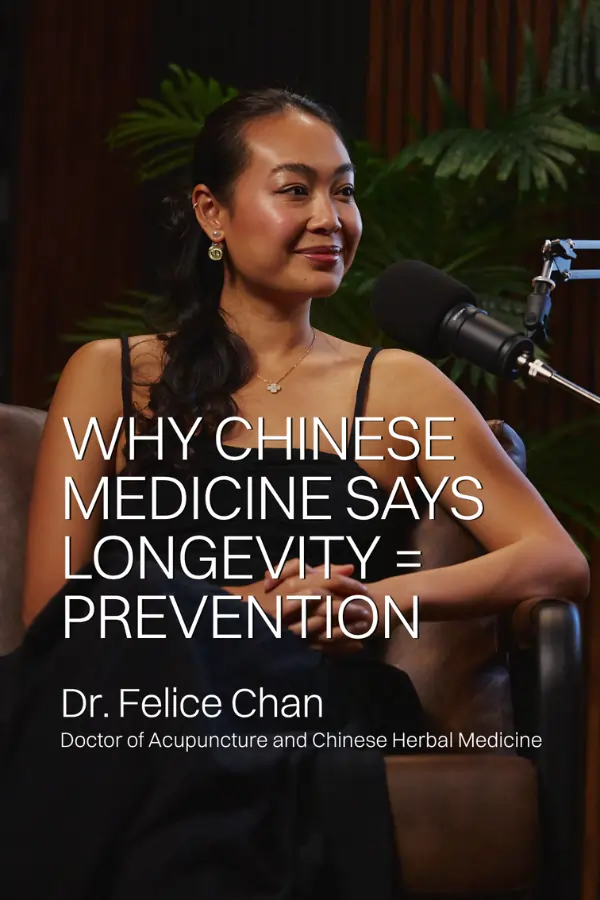
Dr. Chan is optimistic about the future of integrative medicine. She’s already seeing acupuncture incorporated into hospital systems and insurance plans. More patients are seeking out-of-network acupuncture coverage. The shift is slow, but it’s happening.
Western medicine, she says, excels at emergency care—surgeries, acute interventions, life-saving procedures. But Chinese medicine excels at prevention. And that’s where the future lies: integrating both systems so that people don’t get sick in the first place. Her doctoral thesis explored whether East and West could run in parallel or truly merge. The answer, she believes, is the latter.
Caulen points out the irony: they’re talking about the “future” of a medicine that’s been around for 5,000 years. Dr. Chan agrees. The knowledge has always been there. It’s just now being mass-adopted in the Western world. And for patients who’ve exhausted every other option, Chinese medicine often becomes the turning point—the thing that finally works when nothing else has.
Balance Is the Real Definition of Longevity
When Caulen asks Dr. Chan to define longevity, her answer is immediate: balance. Not perfection. Not constant calm. But knowing how to bring your body back to a grounded, regulated state when you need it most.
She doesn’t expect anyone to feel calm 100% of the time. Life doesn’t work that way. But she does encourage people to build practices that help their bodies remember what balance feels like. Whether that’s acupuncture, breathwork, hot water in the morning, or simply being present while playing with your kids—the method matters less than the intention behind it.
Longevity, in her view, isn’t about biohacking your way to 120. It’s about living in a way that supports your body’s natural ability to heal, regulate, and thrive. And that starts with your nervous system.
The Bigger Picture
Dr. Felice Chan’s story is a reminder that the path to health isn’t always linear—and sometimes the most powerful medicine is the one that’s been around the longest. Her journey from neuroscience to acupuncture wasn’t about rejecting Western medicine. It was about recognizing its limits and seeking a more holistic approach.
What makes this conversation so valuable is how practical it is. Dr. Chan doesn’t ask you to overhaul your life or adopt a rigid wellness routine. She offers simple, accessible entry points: a hot cup of water, intentional breathing, finding a practitioner you trust. She reframes meditation as something that can happen while you’re driving. She explains acupuncture in a way that makes it less intimidating and more curious.
At its core, Chinese medicine is about listening to your body and giving it what it needs to heal. For some, that’s acupuncture. For others, it’s slowing down long enough to let the parasympathetic nervous system take over. But for everyone, it’s about balance—the kind that doesn’t demand perfection, just presence.
If you’re interested in hearing more perspectives on whole-person health, check out Episode 2 with Blaire Molina on functional medicine and treating the body as an integrated system—a philosophy that echoes Dr. Chan’s holistic TCM approach. You can also explore Episode 3 with Dr. Lisa Folden, where Caulen sits down with a physical therapist and health coach to discuss movement, recovery, and sustainable wellness habits.