In Episode 2 of Project Longevity, Caulen Foster sits down with Blaire Molina, a functional nurse practitioner at Relive Health, for a conversation about how modern medicine is evolving and what it really means to take a proactive approach to your health.
Blaire brings more than 25 years of experience across both traditional and longevity medicine. She started her career as a critical care nurse, spent years in intensive care, and later moved into treating chronic conditions as a nurse practitioner. Over time, she found herself drawn toward something different: a model of care focused not on managing disease after it appears, but on helping people build the kind of health that prevents disease in the first place.
Throughout the episode, Blaire shares how functional medicine works, why biomarker testing matters, and how the basics, sleep, nutrition, movement, and stress management, continue to shape long-term health more than any single trend. Her message is steady and clear: longevity is built on foundations, not shortcuts.
Prefer listening instead? Tune in to Project Longevity: Season 1, Episode 2 with Blaire Molina on Spotify, Apple Podcasts, Amazon Music, and other major podcast platforms.



Blaire Molina’s Path From Critical Care Nurse to Functional Medicine Practitioner
Blaire’s career began in one of the most demanding environments in healthcare. She spent nearly a decade as a critical care nurse working in intensive care, where she saw firsthand how the body responds when it has reached its breaking point. After earning her master’s degree, she moved into traditional medicine as a nurse practitioner, treating chronic conditions like hypertension across both pediatric and adult populations.
That experience gave her a deep understanding of how disease develops, how it is treated, and where the conventional model often falls short. Over time, she began noticing a pattern. Many of the conditions she was treating could have been influenced earlier through lifestyle, habits, and a clearer understanding of what was happening inside the body⁷.
That realization shaped the next chapter of her career. Instead of continuing in a system focused mostly on treating disease after it developed, she shifted into functional medicine, where the focus is on prevention, optimization, and personalized care. Her perspective is grounded in years of clinical experience, which gives her insight into both the strengths and the limitations of traditional medicine.
The Moment That Sparked Her Shift Toward Prevention
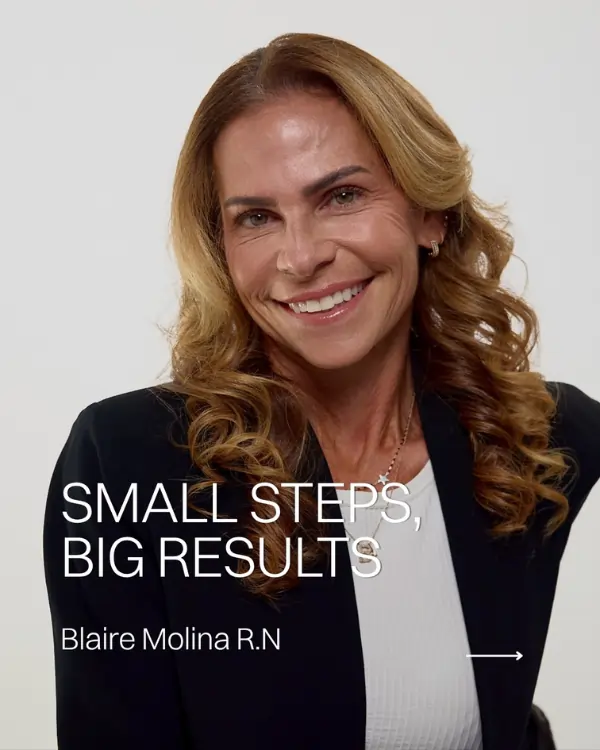
When Caulen asks what made her feel there had to be a better way, Blaire points to her time working in geriatrics and home health. She saw many people aging in ways that felt preventable. They were getting sick earlier than they needed to, living with a lower quality of life, and often feeling defeated by their own health.
What stood out most was that many of these patients had never been given clear guidance on the foundational habits that shape long-term health⁷,⁸. Sleep, nutrition, movement, and stress management were rarely discussed in depth. Care was often centered on reacting to disease rather than reducing the chances of it appearing in the first place.
That gap is what pushed her toward a more proactive model. As she explains, helping people optimize their health and prevent disease feels far more meaningful than only treating problems after they show up.
What Functional Medicine Actually Means
For listeners who are new to the term, Blaire offers a clear and approachable definition. Functional medicine starts with understanding your baseline. That includes biomarkers, hormones, vitamin levels, and overall metabolic health⁷. If you want a deeper look at how this whole-person approach works, our guide to what functional medicine is breaks it down in plain language.
From there, a practitioner can identify which areas of the body need support and look at the lifestyle factors that may be influencing them⁷. Nutrition, sleep, and stress are part of that picture. Once those areas are addressed, people often begin to feel meaningfully better, and care can be built on top of that improved foundation.
Her explanation reflects one of the central ideas in the episode: real progress in health usually comes from understanding the full picture rather than chasing isolated symptoms. Functional medicine takes a wider lens. It asks why something is happening, not only what to do about it once it has.
Why Comprehensive Biomarker Testing Is the Starting Point

One of the more practical parts of the conversation is when Blaire describes how someone can begin learning about their own internal health. She recommends working with a functional medicine practice or hormone specialist, since these providers tend to run more comprehensive panels than what is typically offered in traditional care.
In some cases, those panels can include 60 to 200 biomarkers⁷. That level of detail allows a practitioner to spot patterns that might not be visible through standard testing. It also gives the patient a clearer picture of where their body actually stands, rather than relying on broad assumptions about what is normal.
That depth of information is what makes personalized care possible⁶. Without it, recommendations tend to stay generic. With it, decisions can be guided by what is actually happening inside a specific person’s body.
The Key Biomarkers Worth Paying Attention To
Blaire highlights a few biomarkers that often deserve more attention than they receive in standard care.
The first is metabolic health, especially fasting insulin. She points out that fasting insulin is not commonly tested in traditional medicine, even though it can offer valuable insight into how the body is processing energy¹. Catching shifts early can help guide nutrition, movement, and other lifestyle decisions long before more serious issues appear.
She also brings up ferritin, which reflects iron stores and can be a useful indicator of inflammation². Hormone levels, including testosterone, estrogen, and progesterone, are also important for understanding broader patterns in how the body is functioning³. Vitamin D is another marker she mentions, since it plays a role in many of the systems that influence overall health⁴.
Her point is not that everyone needs every test. It is that knowing your numbers, especially the ones traditional medicine sometimes overlooks, can help you and your provider make better decisions over time⁶.
Understanding Hormonal Changes, Especially for Women
When the conversation turns to hormones, Blaire offers an honest and practical view. Some signs of hormonal change are easier to recognize, like hot flashes and night sweats, which often appear when estrogen levels begin to shift³.
Other symptoms can be more subtle. Fatigue, mood changes, anxiety, difficulty losing weight, and shifts in energy levels are all part of the broader conversation around hormonal health³. These signs can be easy to dismiss or attribute to stress, especially when they show up gradually.
Her perspective is helpful because it gives language to experiences many women have but may not always feel comfortable talking about. The earlier these signals are recognized and explored, the easier it becomes to make informed decisions about how to support the body through different stages of life.

The Transition From Traditional to Functional Care
Blaire describes a common experience among the patients she sees. Many of them feel like they are not getting answers in traditional settings. They have been told their results look normal even though they do not feel well. Over time, that disconnect pushes them to look for another approach.
When they walk into a functional medicine setting and see their health from a wider angle, the experience often feels like a turning point. Suddenly, the things they have been feeling are being acknowledged and explored, not minimized. That validation is part of why patients tend to stay engaged once they begin the process.
This pattern reflects a larger shift happening in healthcare. People are no longer satisfied with being told everything is fine when their daily experience says otherwise. They want clarity, context, and a plan that fits their individual situation.
Foundational Habits That Make the Biggest Difference
When Caulen asks Blaire what people can start doing right away, her answer is refreshingly grounded. She does not point to advanced therapies or expensive interventions. She points to the basics.
Sleep comes first¹⁰. Without quality sleep, it becomes very difficult to make progress in any other area of health¹⁰. Nutrition is next, with a focus on whole foods and reducing highly processed options when possible⁵. And movement matters, even when it looks simple. Walking, being outside, and staying active in small ways all contribute to long-term well-being⁹.
Her message reinforces something that comes up often in conversations about longevity. The basics are not boring. They are powerful. People often look for a more advanced answer when the most effective starting point is right in front of them.

Why Sleep Sits at the Top of the List
Sleep gets a special place in this episode for a reason. Blaire calls it the foundation of everything else, and the science supports that view¹⁰. Without consistent, quality sleep, the body has a harder time recovering, regulating hormones, managing stress, and processing nutrients¹⁰.
That is why she places it ahead of nutrition and movement when listing foundational habits. It is not that the others matter less. It is that sleep makes the others more effective¹⁰. When sleep is dialed in, healthier choices feel more natural. When it is not, even good habits become harder to sustain.
For anyone trying to figure out where to start, this is a useful insight. Improving sleep does not require a perfect routine. It can begin with small adjustments, like a consistent bedtime, less screen exposure before bed, or a calmer wind-down period.
The Role of Mental Wellness in Long-Term Health
Mental wellness is another theme that comes up in the conversation. Blaire emphasizes that there are many factors involved, and that no single solution works for everyone.
Lifestyle practices like mindfulness, movement, and stress management can be helpful¹¹. Nutritional choices and overall health patterns also influence how people feel day to day⁵. The point is not that one habit fixes everything. It is that many small, supportive practices add up over time.
That perspective fits with the broader theme of the episode. Long-term health is rarely about a single change. It is about building a life that supports your body and mind together, rather than treating them as separate systems.
What Often Holds People Back From Starting

Caulen and Blaire spend a few minutes on a question that comes up in nearly every wellness conversation: why do people wait to make changes?
Blaire points to two common reasons. The first is trust. Many people have always been told that everything looks fine, so they assume there is nothing more to address. The second is overwhelm. When someone is told they need to change their sleep, nutrition, movement, and stress habits all at once, it can feel like too much to begin¹².
Her answer is the same one that runs through the entire episode. Start small. Manageable steps create momentum. Once people begin to feel a little better, they often feel more motivated to keep going.
That is the quiet truth about long-term health. The first step does not have to be dramatic. It just has to happen.
Longevity, Biohacking, and Anti-Aging Are Not the Same
When Caulen asks Blaire to explain the difference between longevity, biohacking, and anti-aging, she keeps her answer simple and grounded. The most important thing is to focus on foundational health first. Once those basics are in place, people can explore additional approaches that fit their individual goals.
Her response is a useful reminder in a space where it can be easy to get distracted by trends. Advanced therapies and emerging tools have a place, but they tend to work better when the foundation is already strong. Without sleep, nutrition, movement, and stress management in place, even the most advanced strategies may not deliver the results people expect.
That order of operations matters. It is also part of why her message resonates. She is not dismissing innovation. She is pointing out that it works best when it is built on top of solid habits.
The Four Pillars of Health
Blaire offers a clear framework that captures much of her philosophy. She names four pillars of health: sleep, nutrition, movement, and stress management.
These pillars show up throughout the episode, and they reflect the way she approaches care with her own patients. Each one supports the others. Better sleep makes it easier to eat well. Better nutrition supports more energy for movement. Movement helps regulate stress. Managing stress improves sleep. The cycle reinforces itself when each pillar is given attention.
For anyone trying to simplify their approach to health, those four words are a useful anchor. They cut through the noise and give people a place to start without feeling overwhelmed.
What Longevity Means to Blaire Molina
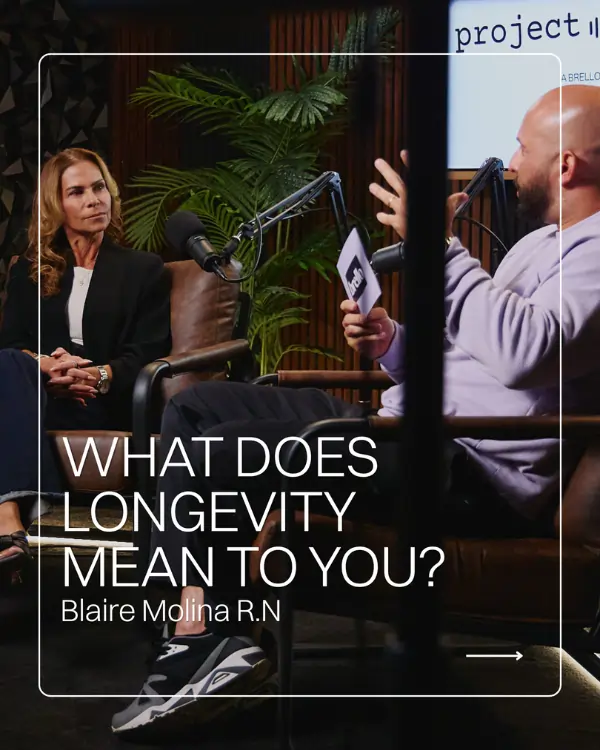
When Caulen asks Blaire what longevity means to her, her answer is direct. It is about taking a proactive approach to health and focusing on long-term well-being.
That definition fits the rest of the conversation. Longevity is not framed as an outcome you achieve at a specific age or through a single program. It is framed as a way of living that prioritizes prevention, awareness, and consistency.
She also points out that when people begin to understand what is happening inside their body, the change can be empowering. That awareness often becomes the spark that drives meaningful, lasting change. Once someone sees the connection between their daily habits and how they feel, the motivation to keep going tends to follow naturally.
The Bigger Picture
Episode 2 of Project Longevity offers a thoughtful look at what it really means to take a proactive approach to health. Blaire Molina brings a perspective shaped by decades of clinical experience and a deep belief that prevention, when done well, is far more powerful than treatment alone⁷.
Her message is consistent and grounded. Pay attention to your foundations. Understand your biomarkers. Know what your body actually needs. And remember that small, steady changes are often the ones that create the biggest results over time.
In that sense, longevity is not a single decision. It is a series of small ones, made consistently, with a clear understanding of what you are working toward.
New to the series? Start with Episode 1 of Project Longevity, where Tori Farrow shares her journey through chronic illness and the habits that shaped her healing.