TL;DR High protein dinners for small portions on a GLP-1 is a small plate built protein-first: a deck-of-cards portion of fish, poultry, tofu, or eggs, then vegetables, then a little starch or healthy fat. Many adults aim for about 20–30 grams of protein per meal, and needs vary. Cottage cheese, Greek yogurt, and lentils add protein in just a few bites.
Dinner used to be the big meal. Now you’re full after a few bites, the pot is still half full, and you’re wondering whether those bites are doing enough.
They can.
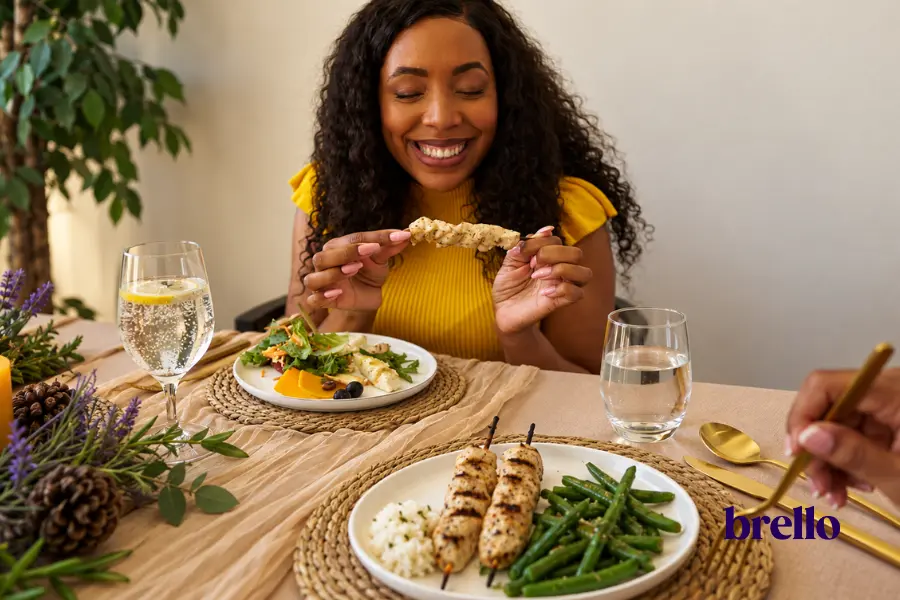
A high protein dinner for small portions on a GLP-1 is really about building a smaller plate protein-first: a deck-of-cards portion of fish, chicken, tofu, or eggs, then vegetables, then a little starch or healthy fat. Many adults aim for about 20–30 grams of protein at a meal, and needs vary from person to person1,2.
Below you’ll find a simple plate formula, the foods that carry the most protein in a few bites, dinner ideas that fit a small plate, and a way to cook one dinner for everyone at your table.
What Is a High Protein Dinner for Small Portions on a GLP-1?
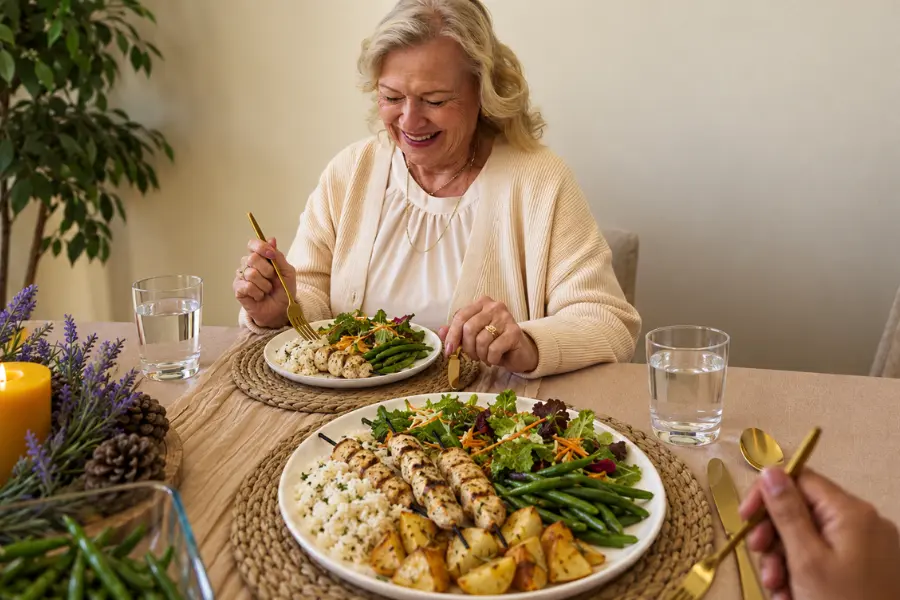
A high protein dinner for small portions on a GLP-1 is a small plate built protein-first: a palm-sized portion of fish, poultry, eggs, tofu, or cottage cheese, then vegetables, then a small spoon of starch or healthy fat. It is a food-first way to make a smaller dinner still feel like a real, nourishing dinner — and needs vary from person to person.
When the plate is small, the protein goes on first, and everything else fits around it. At Brello, we share educational information to support healthier routines — including what ends up on your dinner plate.
Who is this for?
Anyone who gets full sooner at dinner than she used to, and anyone cooking for a household with bigger appetites than her own. It is not a diet or a set of rules. Some nights the plate is smaller, some nights bigger, and both are fine.
How Much Protein Can Fit in a Small Dinner?
A small dinner can still land in a commonly cited general range of about 20–30 grams of protein1,2. A 3-ounce cooked portion of salmon, chicken, or tempeh — about the size of a deck of cards — gets most of the way there, and a few bites of cottage cheese, eggs, or Greek yogurt can add the rest4,5. Needs vary by person.
That range comes from general adult nutrition guidance, which spreads protein across the day rather than piling it into one meal1,3. It’s a compass, not a test — general guidance on how much protein a woman needs starts from body size, not a fixed plate.
Should dinner carry all your protein?
No. Dinner is often the meal where people get full soonest, so leaning on a high protein breakfast, lunch, and a snack takes pressure off the evening. Daily needs depend on body size and activity, so no single number fits everyone3 — for the bigger picture, see how much protein to eat on a GLP-1.
How Do You Build a Small, Protein-First Dinner Plate?
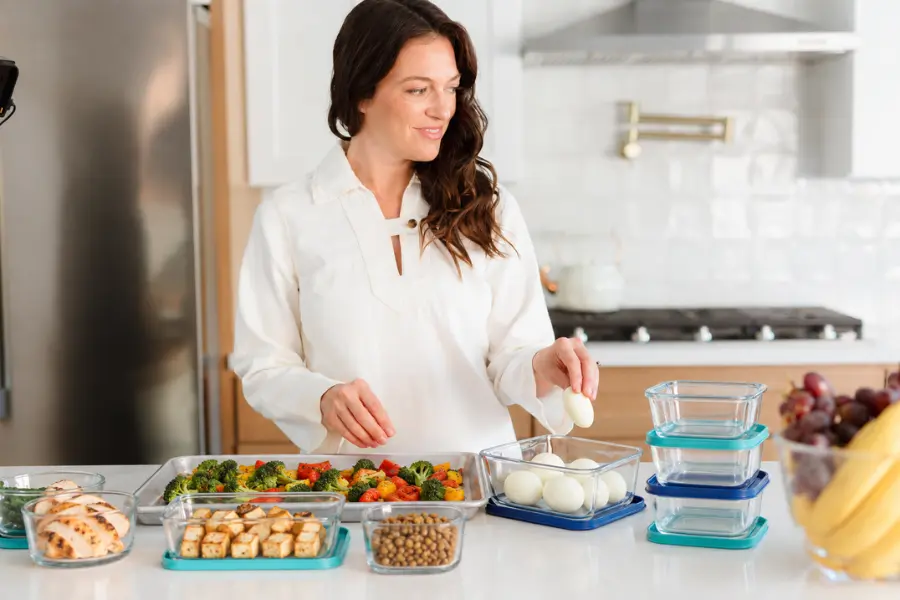
Build a small, protein-first dinner plate in four steps: choose one protein-dense anchor first (about 3 ounces cooked, or a cottage-cheese-and-egg combination), add fiber-rich vegetables, add a small spoon of whole grains or a healthy fat like olive oil or avocado, then finish with flavor — herbs, garlic, salsa, or a yogurt sauce. Use a smaller plate so it looks full.
Protein first is the whole method. Everything else rounds the plate out3,6.
The four-step small-plate checklist
- 1. Protein anchor: about 3 ounces cooked fish, poultry, tofu, or tempeh — or a half cup of cottage cheese with an egg.
- 2. Fiber-rich vegetables: a handful of broccoli, spinach, snap peas, or bell peppers.
- 3. A little starch or healthy fat: a spoon of quinoa, rice, or potatoes, or a drizzle of olive oil, a few avocado slices, or nuts.
- 4. Flavor: garlic, black pepper, fresh herbs, salsa, a squeeze of lime, or a spoon of Greek-yogurt sauce.
How do you make a small plate look full?
Use a salad plate or a small bowl instead of a dinner plate; the same portion looks generous on a smaller dish. Consider packing extras into tomorrow’s container before you sit down — leftovers become planned food, not a sign you didn’t finish.
Which Dinner Foods Give the Most Protein in a Small Serving?
The dinner foods that give the most protein in a small serving are fish, poultry, eggs, cottage cheese, Greek yogurt, tofu, tempeh, edamame, and lentils. A 3-ounce cooked portion of salmon or chicken, a half cup of cottage cheese, two eggs, or a half cup of lentils each add meaningful protein in only a few bites5.
Think of it as protein per bite: foods that pack protein into a few forkfuls do most of the work.
Protein per small serving
Approximate values from standard nutrition data; amounts vary by brand and preparation5.
| Food | Typical small serving | Approx. protein | Why it suits a small plate |
| Salmon, cooked | 3 oz | ~19–22 g | Tender and flaky; satisfying in a few bites |
| Chicken breast, cooked | 3 oz | ~26 g | Batch-cooks well; slices into small portions |
| Shrimp, cooked | 3 oz | ~20 g | Cooks in minutes; light texture |
| Canned tuna, drained | 3 oz | ~17 g | No cooking; works cold or warm |
| Ground turkey, cooked | 3 oz | ~23 g | Meatballs, tacos, or a skillet |
| Eggs | 2 large | ~12 g | Soft, warm, and simple |
| Cottage cheese, low-fat | ½ cup | ~12 g | Soft and spoonable; comfortable in small servings |
| Greek yogurt, plain | ¾ cup | ~16–17 g | Thick; doubles as a sauce base |
| Tempeh | 3 oz | ~16–17 g | Firm texture; marinates well |
| Tofu, firm | 3 oz | ~9–14 g (varies by firmness) | Mild; pairs with edamame for more protein |
| Edamame, shelled | ½ cup | ~9 g | Mixes into bowls and salads |
| Lentils, cooked | ½ cup | ~9 g | Soup- and bowl-friendly |
| Black beans | ½ cup | ~7–8 g | Tacos, skillets, and salads |
| Hemp seeds | 3 tbsp | ~10 g | A topper that adds protein without volume |
Simple swaps that add protein without adding volume
Spoon cottage cheese or Greek yogurt onto a bowl or soup, sprinkle hemp seeds over roasted vegetables, or slide a fried egg onto a pile of greens. Choose tempeh over tofu when you want more protein in the same space5.
What Are Some High Protein Dinner Ideas for Small Portions?
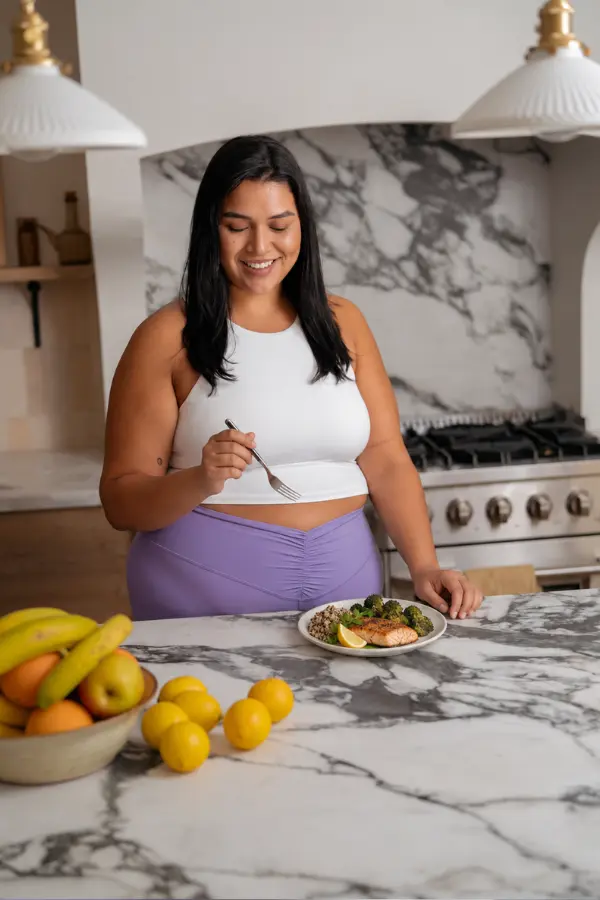
High protein dinner ideas for small portions include a salmon and broccoli sheet-pan plate, a savory cottage-cheese bowl, a two-egg spinach omelet, shrimp and cauliflower-rice stir-fry, a tofu and edamame bowl, turkey meatballs with spaghetti squash, and lentil soup with a Greek-yogurt swirl — each built protein-first and comfortable in a small serving.
Every idea follows the same pattern: protein anchor, small side, a little flavor. Amounts are approximate5.
Fish and poultry plates
- Sheet-pan salmon and broccoli: 3 oz salmon, roasted broccoli, a few potato wedges (about 19–22 g).
- Chicken and snap-pea stir-fry: 3 oz chicken, snap peas, bell pepper, ginger-lime sauce, a small scoop of rice (about 26 g).
- Turkey meatballs with spaghetti squash: three small meatballs, roasted squash, marinara (about 20 g).
- Shrimp and cauliflower-rice stir-fry: 3 oz shrimp, riced cauliflower, mixed vegetables, a splash of soy sauce (about 20 g).
Egg and dairy dinners
- Spinach and feta omelet: two eggs, spinach, a little feta, sliced tomatoes (about 15 g).
- Savory cottage-cheese bowl: a half cup of cottage cheese, cherry tomatoes, cucumber, olive oil, black pepper, herbs (about 12 g; add an egg for about 18 g).
- Greek-yogurt chicken plate: 3 oz sliced chicken, cucumber-yogurt sauce, warm pita triangles (about 28 g).
Plant-based small plates
- Tofu and edamame bowl: 3 oz tofu, a half cup of edamame, spinach, a spoon of brown rice, sesame dressing (about 18 g).
- Tempeh tacos: 3 oz crumbled tempeh, two small corn tortillas, salsa, shredded cabbage (about 20 g).
- Lentil soup with a yogurt swirl: a small bowl of lentil soup topped with Greek yogurt (about 14 g).
- Black-bean and egg skillet: a half cup of black beans, one egg, peppers, salsa (about 14 g).
How Can You Cook One Dinner for the Whole Household?
You can cook one dinner for the whole household by making a shared protein, a vegetable, and a starch, then building “one dinner, two plates”: a smaller, protein-first plate for yourself and regular plates for everyone else. Pack your extras before you sit down. It keeps the family at one table without a separate meal.
One meal, two plate sizes. Nobody eats “diet food,” and nobody cooks twice.
A worked example
Sheet-pan chicken thighs, roasted broccoli, and potatoes feed everyone from one tray; the plates just look different.
| Family plate | Your small plate | |
| Protein | 1–2 chicken thighs | one thigh, or 3 oz sliced (about 22–25 g) |
| Vegetable | a big scoop of broccoli | a handful |
| Starch | a pile of potatoes | three or four wedges |
| Flavor | garlic and lemon | the same garlic and lemon |
What if your household is picky?
Build-your-own dinners help: taco night, meatballs with two sauces, or an egg-and-toppings skillet. Everyone assembles her own plate, so the protein anchor stays the same while the extras change.
How Do You Prep Small High Protein Dinners Ahead?
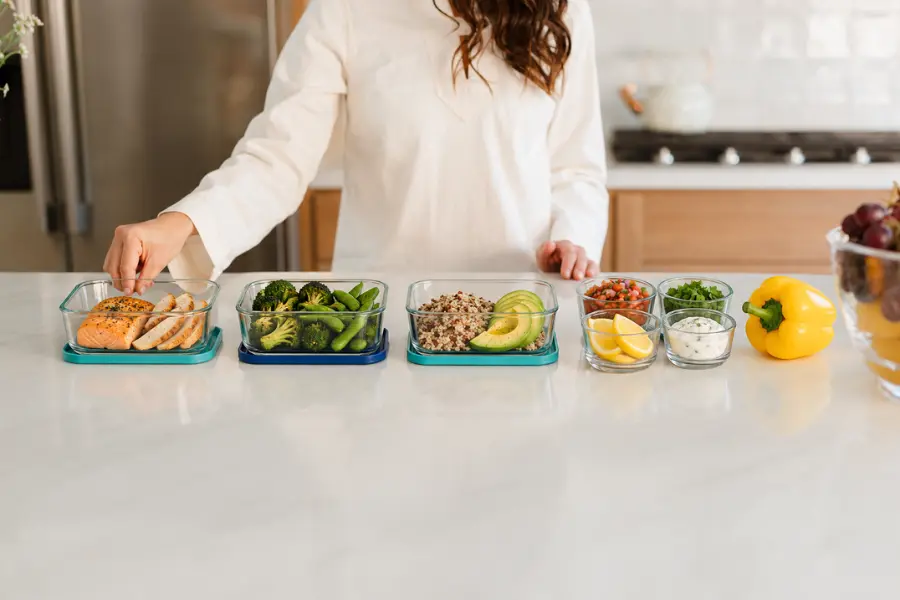
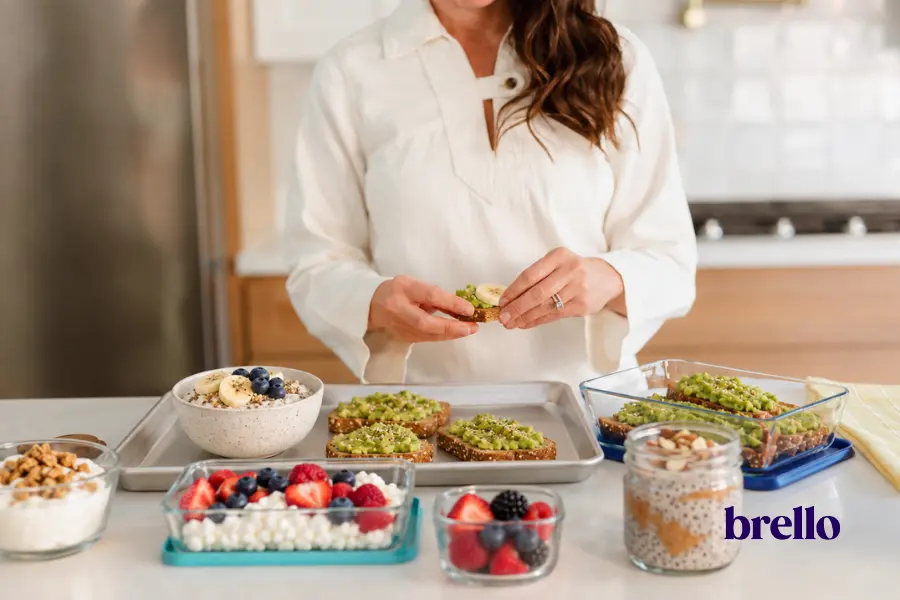
Prep small high protein dinners ahead by cooking two or three proteins in one session, portioning them into 3-ounce “protein packs,” freezing singles, and keeping vegetables and grains separate so you can build a small plate in minutes. Rotate formats — bowl, tacos, soup — so the same protein never feels like the same dinner twice.
Cook once, plate twice. Small-batch prep keeps small portions from becoming a week of the same leftovers.
The small-batch checklist
- Cook two or three proteins at once — a tray of chicken, a batch of lentils, a block of baked tempeh — the same way a Mediterranean-style meal prep works.
- Portion into 3-ounce packs and label them.
- Freeze half in single portions.
- Keep vegetables and grains in separate containers so plate size can change.
- Plan the remix: tonight’s plate, tomorrow’s bowl, Thursday’s soup.
Cook once, plate twice
One sheet of salmon becomes tonight’s plate with broccoli, tomorrow’s salad with lemon-yogurt dressing, and Thursday’s soup with spinach. Same protein, three dinners.
How Can a Small Dinner Still Feel Satisfying?
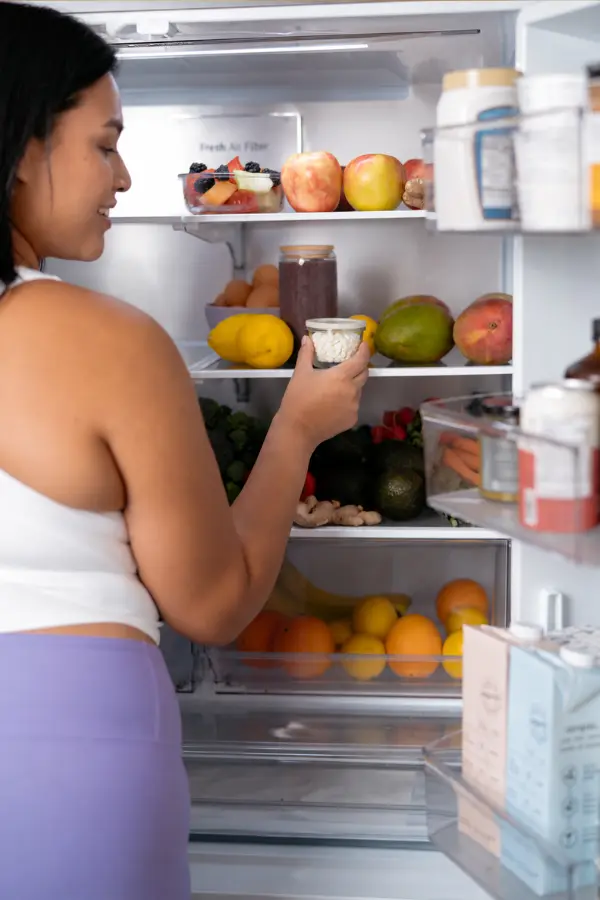
A small dinner can still feel satisfying when it is warm, flavorful, and has some texture to chew, and when you sit down and eat it slowly. Research on how people eat suggests textured food eaten at a slower pace tends to feel just as satisfying in a smaller amount — so flavor, warmth, and pace are part of the plan, not extras7,8,9.
Satisfaction is more than grams. A warm bowl with herbs and a little crunch can feel like dinner in a way a plain portion may not.
Flavor and format rotation
Change the outfit, not the protein: salmon can be a plate, a taco, or a soup. Garlic, black pepper, salsa, fresh herbs, citrus, and a yogurt sauce each turn the same anchor into a different dinner. Variety within the meal — a soft protein, a crisp vegetable, a creamy sauce — also tends to keep a small plate interesting8.
Slow down and sit down
Sit at the table, put the phone away, and take your time. Eating slowly gives a small plate room to feel like enough7,9. Stop when you’re satisfied, and let the leftovers be tomorrow’s lunch. Small plate, small steps, steady routine — the same way any healthy habit gets built.

Take The
First Step
with Brello
Final Thoughts
A smaller dinner doesn’t shrink your place at the table — it just changes what goes on the plate, and you get to decide that.
This week, try one thing: pick a single protein anchor, put it on a salad plate first, and build the rest around it. One dinner, one small plate, no rules beyond that.
Some nights the plate may be tiny and some nights it may not be, and both can be a good dinner. Small plate, steady routine, your table.
Frequently Asked Questions
How much protein can realistically fit in a small dinner?
A small dinner can often reach a commonly cited general range of about 20–30 grams of protein when it’s built protein-first. A 3-ounce cooked portion of fish, poultry, or tempeh, or a cottage-cheese-and-egg combination, gets most of the way there1,2,5. Needs vary.
Should I eat the protein first?
Many people find it helpful to start with the protein, since it’s the part of the plate doing the most work. It’s a habit, not a rule; in a mixed bowl, the protein still counts.
Is a protein shake an okay dinner?
Sometimes. On a low-effort night, a shake or a Greek-yogurt smoothie can stand in for a small plate. Most nights, food-first dinners offer more variety and satisfaction.
Is it okay that my dinner is small?
A small dinner can be a nourishing dinner when the bites count. Build it protein-first, keep it warm and flavorful, and let the rest of the day share the protein. No single plate size is right for everyone.
How do I order a small, high protein dinner at a restaurant?
Choose a protein and a vegetable as the center of the order, ask for sauces on the side, and box half before you start. Grilled fish, chicken, shrimp, or tofu with a vegetable side fits the formula almost anywhere.
What are some plant-based high protein dinners for small portions?
Tofu and edamame bowls, tempeh tacos, lentil soup with a yogurt swirl, and black-bean-and-egg skillets each fit a small plate. Pairing two plant proteins — tofu with edamame, or lentils with Greek yogurt — adds protein without much volume.