TL;DR How to regulate your nervous system starts with one shift: the goal is a flexible stress response, not constant calm. A regulated nervous system can rise for a busy day and settle afterward. Small daily habits do most of the work — a steady wake time, morning daylight, regular meals, movement, and safe connection — with breathing and grounding as in-the-moment helpers.
If you’ve been told to “regulate your nervous system,” you may have assumed it means getting calm and staying there. Real life doesn’t work like that — and neither does your body.
How to regulate your nervous system comes down to flexibility: a stress response that can rise for a full day and settle when the day is done. That kind of steadiness is built less by clever tricks and more by small, repeatable habits — when you wake, whether you see daylight, how you eat, move, and connect.
Small steps count.
What does it actually mean to regulate your nervous system?

Regulating your nervous system means building a stress response that can rise when you need focus and settle when the demand passes10. It is not the same as feeling calm all the time. Flexibility, not stillness, is the goal — and it grows mainly through small, repeated daily habits. Results vary from person to person.
A few things help that range grow:
- A body that gets steady sleep, food, water, and daylight.
- People and places that feel safe.
- Small practices you can repeat, not perform.
What your stress response is doing
Your stress response is a built-in shift that helps your body meet a demand, then return to rest. The autonomic nervous system is the part of your nervous system that manages this without you thinking about it2. One side leans toward action (“fight-or-flight”), and the other toward rest and digestion (“rest-and-digest”)2.
Both sides are meant to take turns. The trouble comes when the shift back to rest keeps getting delayed.
Why “dysregulated” isn’t a label you need
You do not need a label like “dysregulated” to start supporting your nervous system. It can make a normal, overloaded week sound like something broken inside you. It is more useful to notice patterns — wired at night, flat by afternoon — and treat them as information.
Patterns can change. Labels tend to stick.
Calm vs. regulated: what’s the difference?
Calm is a state; regulated is a capacity. A regulated nervous system can move up for a challenge, come back down afterward, and recover overnight10. Feeling flat, numb, or checked out is not the same as being regulated. That is why the goal is a flexible range, not permanent calm — a point nervous system educator Alyssa Brieloff makes in her Project Longevity conversation about the nervous system and motherhood.
A lot of advice aims only at getting you “down.” If you already feel heavy or blank, a gentle lift can be the more supportive move.
Calm vs. regulated at a glance
| Calm (a state) | Regulated (a capacity) |
| How you feel right now | How well you can shift and recover over time |
| Can be reached with a short pause | Built through repeated daily habits |
| Fades when the next demand arrives | Helps you meet the next demand and settle afterward |
| Can be confused with feeling numb or shut down | Includes being able to feel alert, engaged, and present |
| A nice moment | A steadier baseline |
What a flexible range looks like in a normal week
A flexible range looks like being able to rise to a busy Tuesday and still sleep on Tuesday night. Some people describe this as staying inside a “window of tolerance” — a zone where you can feel stress and still think clearly10. Heart rate variability, a measure researchers use to study this flexibility, changes with sleep, breathing, illness, and many other factors, so no single reading tells the whole story3.
What can it feel like when your stress response gets stuck?

A stress response can get stuck “on” — racing thoughts, tight shoulders, trouble winding down — or stuck “off” — heavy, foggy, flat, hard to start anything1. Many women notice both in the same week. These are common experiences, not a verdict, and they are a useful cue for choosing what to try next.
Stuck “on” and stuck “off”
Stuck “on” is being busy in your body after the day is over; stuck “off” is running on empty.
- Stuck “on” may feel like: a racing mind at bedtime, snapping at small things, a clenched jaw, scrolling to escape, waking early and wired.
- Stuck “off” may feel like: foggy mornings, dreading simple tasks, feeling detached in conversations, tired-but-not-rested, “I can’t care right now.”
- Mixed may feel like: tired but wired, restless yet unable to begin, pushing hard and then crashing.
Why this can feel harder in a full life
It can feel harder because the load is real. Caregiving, work, midlife sleep changes, and a mental to-do list that never closes all keep the stress response busy. In women’s online communities, a common frustration is that a one-minute breathing exercise gets offered as the answer to a life that is simply too full.
That frustration is fair. A small tool is one layer — and the other layers deserve attention too.
What daily habits support your nervous system over time?

The habits that support a flexible stress response are mostly unglamorous: a steady wake time, some morning daylight, regular meals and water, movement you can repeat, people who feel safe, and a wind-down before bed. These daily levers set your baseline. Breathing and grounding work better on top of them.
Anchor your wake time
A steady wake time is one of the most useful habits for a steadier nervous system. Research increasingly separates sleep regularity — keeping similar sleep and wake times — from sleep duration, and consistent timing appears to matter for mood and daily functioning4. Waking at roughly the same time most days, including weekends, gives your body clock a clear reference point4,5.
If bedtime is unpredictable, start with the wake time anyway; bedtime often follows.
Get some morning daylight
Daylight soon after waking is a timing cue for your body clock. Light in the morning and light late at night push your internal clock in opposite directions, which is why a bright morning and a dimmer evening tend to support a more reliable wind-down5. Cloudy daylight still counts, and there is no reason to look at the sun.
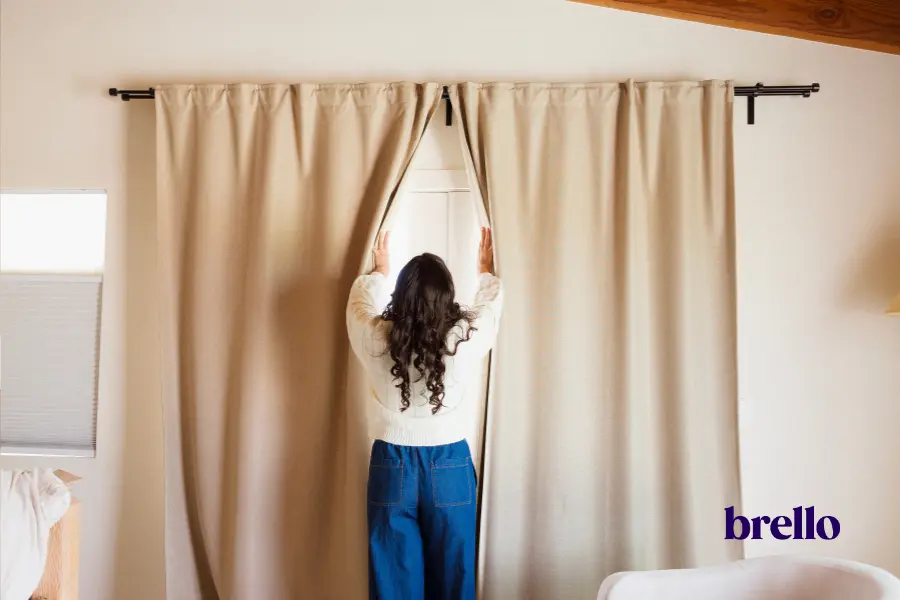
Consider coffee by a window or opening the curtains as soon as you are up.
Eat and drink on a rhythm
Regular meals and enough water give your body a steady supply to draw on, which can make stress easier to carry1. Balanced meals with protein, fiber-rich foods, and healthy fats can help the day feel more even.
Caffeine and alcohol timing also matter. Many people find an earlier caffeine cutoff and fewer late-night drinks support sleep, which supports everything else1.
Move in a way you can repeat
Movement you can repeat — a walk, stretching, yoga, dancing in the kitchen — supports a flexible stress response more than an intense workout you do once. Regular physical activity is linked with better sleep and mood in many studies6. The pace can match your day: brisk when you feel flat, gentle when you feel revved.
Lean on safe connection
Safe connection is a nervous-system habit, not just a nice extra — social wellness is part of how the body settles. Supportive relationships can shape how stressful something feels and how quickly you settle afterward, and public-health guidance now describes social connection as a real contributor to health and resilience7. This is sometimes called co-regulation — steadying alongside someone who feels safe.
Consider one or two “relational anchors”: a weekly walk with a friend or a standing call with a sister1. Choose people who leave you feeling more like yourself.
Give the day a shape
A predictable shape to the day lowers the number of decisions and transitions your body has to brace for. A routine is a scaffold, not a prison: a few stable anchors with room for normal life around them. A simple wind-down — dimmer lights, fewer notifications, a warm drink, tomorrow’s list written down — tells your body the day is closing5.
Daily levers at a glance
- Wake at about the same time most days.
- Get outside, or by a window, soon after waking.
- Eat regular meals; keep water nearby.
- Move in a repeatable way, at a pace that matches your day.
- Keep one or two dependable social touchpoints each week.
- Repeat a short wind-down before bed.
What can you do in the moment when you feel overwhelmed?

In the moment, the aim is to give your body a small, clear signal that the pressure is easing. Some people find a longer exhale, a slow walk, humming, or naming five things they can see helps them feel steadier. These are helpers, not the whole plan — choose what feels good to you.
Slow breathing with a longer exhale
Slow breathing with a longer exhale is one of the most studied relaxation practices, and many people find it helps them feel calmer in a stressful moment8,9. For example, some breathe in gently for a count of four and out for a count of six, a few times. If counting feels stressful, skip the counting. A few slower breaths with your shoulders dropped can be enough.
Grounding with your senses
Grounding means bringing your attention to what is around you right now. A common example is naming five things you can see, four you can touch, three you can hear, two you can smell, and one you can taste. Mindfulness practices like this are widely used to support stress and are linked with feeling less overwhelmed in some research1,8.
Gentle movement and shaking it out
Gentle movement can help a revved-up body settle. A slow walk, a few stretches, rolling your shoulders, or a tiny somatic routine that shakes out your hands and legs for a minute gives that alertness somewhere to go. Progressive muscle relaxation — tensing and releasing one muscle group at a time — is another well-known option8.
A note on cold water and “vagus nerve” tips
Cold water on your face, humming, and other “vagus nerve” tips help some people feel steadier and leave others feeling worse. Many of these tips are really just gentle ways to breathe, hum, or cool down, and the evidence behind the bolder claims is modest11. Some report a racing heart, dizziness, or feeling more on edge8.
If a practice makes you feel worse, that is useful information. Consider skipping it and choosing something gentler.
How do you match the tool to how you feel?
Start by noticing where you are: revved and scattered, flat and heavy, or somewhere in between. If you feel revved, reduce inputs and slow down. If you feel flat, add a little light, movement, or contact10. Then try the smallest version for a few minutes and check in again.
The same tool can feel supportive in one state and wrong in another.
“How I feel → what might help first”
| How I feel | What might help first |
| Revved and scattered — racing thoughts, tight body, too many tabs open | Fewer inputs, a longer exhale, a slower walk, one task instead of five |
| Flat and heavy — foggy, blank, hard to start, tired-but-not-rested | Daylight, standing up and changing rooms, a short brisk walk, music, water or a snack, a brief call with someone safe, one tiny action |
| Mixed — tired but wired, restless yet stuck | Name the pattern, drop all-or-nothing plans, alternate a small burst of activity with a small rest |
A gentle lift when you feel flat is not the same as pushing through: one dish, shoes on, curtains open — then a pause.
A three-step check-in
A three-step check-in takes about a minute and helps you pick the right support.
- Name the state. Am I too high, too low, mixed, or okay?
- Name what I need. Settling, a lift, food, water, movement, connection, or a smaller task?
- Try the smallest version. Give it a few minutes, then check in again before adding more.
Why might it not feel like it’s working?

Usually it is not you. A one-minute breathing exercise cannot undo a week of short sleep, skipped meals, and constant demands — the tool is simply too small for the load. Other times, a slow-down tool is mismatched to a flat state. What helps is smaller habits, better timing, and less pressure on yourself.
Women describing this online often say the trick worked for five minutes, then life came back. That is not failure — it is a sign the daily levers deserve more attention than the emergency tools.
Common patterns
- Crisis-only use. Practices only get tried at 2 a.m. or mid-meltdown, when attention is lowest. They help more when they are familiar from calmer days.
- Another task to fail at. Regulation becomes one more thing to do “right,” and missing it brings shame instead of relief.
- Chasing a score. Wearable readings such as heart rate variability move with sleep, illness, alcohol, and your cycle3. A single number is not a report card on your nervous system.
- Wrong tool, wrong state. More stillness when you are already flat; more activity when you are already fried.
What to try next: a simple weekly plan
What helps most is attaching the smallest version of a habit to something you already do — the same idea behind building healthy habits — and keeping a gentler version for bad days. Practices tend to stick when their timing is consistent — and the right window is whatever is reliable for you, not necessarily the morning.
A simple weekly plan might look like this:
- Every day: wake at about the same time; daylight within the first hour or two; one slower exhale after closing the laptop.
- Three days: a repeatable walk or stretch, attached to lunch or the school run.
- Once or twice a week: a dependable connection — a walk with a friend, a standing call.
- Every evening: a two-step wind-down — dim the lights, put the phone somewhere else.
- Bad-day menu: curtains open, water, one song, one small task. That still counts.
If you miss a day, resume at the next cue — there is no reason to restart on Monday.

Take The
First Step
with Brello
Final Thoughts
A steadier nervous system is less about mastering a technique and more about giving your body a life it can trust — regular mornings, real meals, people who feel safe, and permission to rise and rest.
This week, consider picking one lever and attaching its smallest version to something you already do: curtains open with the first cup of coffee, or one slower breath after closing the laptop.
Some days you may feel revved, some days flat. Both are information, not failure — and small steps still count.
Frequently asked questions
How long does it take to notice a difference?
There is no set timeline, and it varies a lot from person to person. Many people notice small shifts first — settling a little sooner after a hard moment, or sleeping more predictably — before anything feels dramatically different. Steady habits over weeks tend to matter more than any single practice.
Is nervous system regulation just a trend?
The label is new; most of the habits are not. Sleep, daylight, movement, and connection have a long history of support, while the evidence for some viral tricks is modest4,5,6,7,11. It can help to keep the useful parts and let go of the pressure to do it perfectly.
Does cold water help regulate the nervous system?
For some people, cold water on the face or hands feels grounding and steadying. For others, it feels jarring or makes them more on edge8. It is optional — if it does not feel good, a warm shower or a slower breath may suit you better.
What drink calms your nervous system?
No drink regulates your nervous system on its own. A warm, caffeine-free drink can be a helpful part of an evening wind-down because the ritual itself signals the day is closing. Staying hydrated during the day and easing up on late caffeine and alcohol may support steadier evenings.
Do I need a wearable or HRV score?
No. Heart rate variability readings shift with sleep, breathing, illness, alcohol, and your cycle, so one number can mislead3. If you enjoy a wearable, weekly trends are more useful than daily scores — and how you actually feel still matters most.
What are signs it’s working?
Signs are usually quiet: you notice you are revved or flat a little earlier, you settle a little sooner, and a rough day does not spill as far into the next one. Sleep may feel more predictable. Small, repeated wins are the pattern to look for.
What if daily habits don’t seem to be enough?
Daily habits support many people, but they are not the whole picture. If low mood, sleep trouble, or feeling flat lasts for weeks, it is worth talking it through with someone you trust rather than pushing harder alone. Reaching out is a form of support, not a setback.