Body neutrality is a mindset that shifts focus from physical appearance to what your body does [1]. It’s a middle ground between body positivity and body negativity, centered on respect and neutral observation instead of forcing “love your body.” The goal is to lower appearance pressure and make daily choices—food, movement, and self-talk—feel more grounded and realistic.
Body Neutrality is a way to relate to your body without having to love it or hate it. It’s for the days when “feel confident” content just makes you feel more aware of everything you want to change—so you try scrolling past it, but it sticks anyway [2].
Body neutrality shifts the focus from how your body looks to what it does and what matters to you [1]. Think of it as calling a truce: less judging, more respect, and more room to live your life.
In this guide, you’ll learn what body neutrality means, why it may help, and a few simple ways to practice it. This is for informational purposes and isn’t medical advice.
What is body neutrality?
Body neutrality is a mindset that helps you step away from judging your body’s appearance all day. Instead of forcing “body love” or falling into body hatred, you practice neutral respect. The focus shifts to what your physical body does and what you value [1]. Many people find it easier than staying positive 24/7.
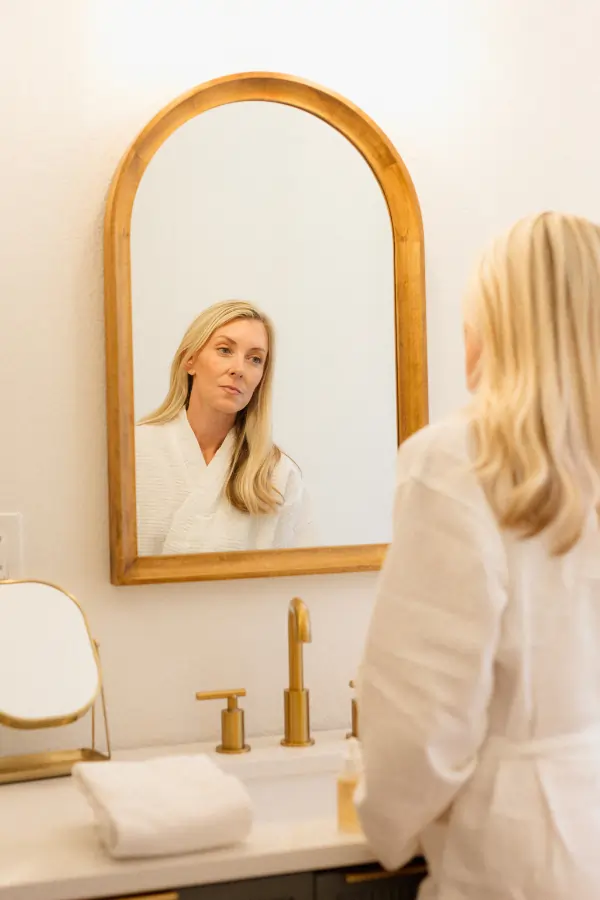
What does “body neutral” sound like in real life?
Body neutral self-talk sounds simple, steady, and believable—even on hard days. It avoids praise and avoids insults. It’s more like a factual note than a pep talk. Body neutrality often sounds like, “This is my body today,” or “My body helps me move through life.”
Here are a few examples you can borrow:
- “My body serves me in many ways, even when I feel critical.”
- “I’m noticing a harsh thought. I can let it pass.”
- “My arms help me hold and carry all the things I care about.”
- “I can wear clothes that fit my life, not punish my shape.”
- “I don’t need to feel positive to show myself respect.”
If a line feels fake, simplify it. Neutral is enough.
Is body neutrality a movement or a personal practice? (Body neutrality movement)
The body neutrality movement is a broader cultural shift that challenges appearance-first thinking. It overlaps with body image education and social movement conversations about beauty standards. Your personal practice is the daily version: what you say to yourself, what you follow online, and how you treat your body in ordinary moments.
You may see the term suggests two lanes at once:
- A public idea that pushes back on appearance pressure.
- A private tool that helps you live with more peace.
Both can exist. You can use the practice even if you never join the movement.
How is body neutrality different from body positivity?
Body positivity often centers positive body image and encourages celebrating bodies as beautiful [4]. Body neutrality aims to decenter appearance altogether. It’s less “I love how I look” and more “I’m done grading my body.” If positivity feels like pressure, neutrality may feel like a calmer, more realistic option.
A simple way to remember it:
- Body positivity: “Bodies can be beautiful.”
- Body neutrality: “Bodies are not a test.”
Many people move between the two depending on the day.
Where did the body positivity movement come from?
The body positivity movement has roots in fat acceptance and activism pushing back on size-based stigma [4]. Over time, it also became a popular online message about confidence and inclusion. In some spaces, that message stayed broad and supportive. In others, it drifted toward beauty-focused content again [4].
This history matters because it explains why some readers feel conflicted:
- They like the inclusion message.
- They feel tired of appearance still being the main topic.
Body neutrality can feel like a next step when you want less focus on looks.
When does body positivity turn into toxic positivity?
Body positivity can slide into toxic positivity when it leaves no room for true feelings [5]. If you feel bad in your body and the only “allowed” response is love, you may start judging yourself twice—first for your body, then for your feelings.
Signs it’s turning unhelpful may include:
- You feel guilty for not feeling positive.
- You force affirmations that feel untrue.
- You treat discomfort like a personal failure.
Body neutrality makes space for honesty. It says, “I can feel what I feel and still choose respect.”
Why can body neutrality feel more doable than “love your body”?
Body neutrality encourages a truce when “self love” language feels out of reach. It does not ask you to pretend you feel great. It asks you to stop escalating the fight. That shift can be relieving, because respect is often easier than constant positivity or constant criticism.
Think of it as lowering the volume. You may still notice thoughts about appearance. You just do not have to obey them.
What happens when your happiness depends on appearance?
When happiness depends on appearance, your body can start to feel like a daily report card [6]. You may spend more time scanning flaws than noticing life around you. That pattern can show up as body checking, comparison, or harsh self worth math [6].
This is not a personal weakness. Society rewards certain looks and repeats the message constantly.
Body neutrality offers a different idea: your value is bigger than beauty. Your life is not supposed to be a full-time body project.
How to “call a truce” without denying true feelings
Calling a truce means you stop arguing with every thought. You do not have to convince yourself you feel positive. You just choose not to spiral. It’s a quiet shift from “fight” to “notice.”
Here’s a simple truce script:
- “I’m having a judging thought.”
- “That thought can be here.”
- “I’m going to choose respect anyway.”
You may still feel discomfort. You are simply not turning it into hate.
What are the benefits of body neutrality for body image?
Body neutrality can support body image by reducing how often appearance becomes the main focus [1]. It may soften negative self talk and reduce body-checking habits. Instead of chasing a perfect feeling, you practice a steadier stance: respect, care, and neutral observation. Over time, that can feel more peaceful than constant extremes.
It also may help you relate to daily choices in a less punishing way.
What peer reviewed studies suggest (in plain language)
Peer reviewed studies on body image and media exposure often highlight a consistent theme: appearance-centered content can increase comparison and dissatisfaction [2]. In contrast, content that centers functionality and reduces objectification may support a more stable relationship with your body [1].
A few research summaries also suggest a difference in effects:
- Positivity content may lift mood in some cases [7].
- Neutrality framing may reduce self-objectification in some cases [1].
You do not need to memorize the research. The practical takeaway is simple: less appearance scoring often helps.
Why “function-first” thinking can lower self-objectification
Function-first thinking shifts attention from how your body looks to what it allows you to do [1]. That shift can reduce the “being watched” feeling many people carry. Instead of treating your body like an object, you treat it like a living part of your life [6].
Try small function prompts:
- “What did my body help me do today?”
- “What sensation am I noticing right now?”
- “What would respect look like in this moment?”
You are not forcing positivity. You are practicing matter-of-fact care.
How do you practice body neutrality day to day?
Body neutrality works best as small, repeatable practices—not big emotional breakthroughs. You notice an appearance-based thought, pause, and respond with something neutral and respectful. That simple loop can build over time. The goal is not perfect self-talk. The goal is fewer spirals, more steadiness, and more room for life.
Below are practical starting points you can try.
Self-talk swaps that don’t feel fake
Self-talk swaps work when they sound like something you would actually say. They also work best when they allow true feelings instead of fighting them. A swap is not a compliment. It is a redirect.
Try this pattern:
- Name the thought.
- Allow it.
- Choose respect.
Examples:
- “I don’t like how I look” → “I’m noticing that thought. I can still be kind to myself.”
- “I look awful today” → “Today is not a body-rating day.”
- “I can’t stand my shape” → “This is my body today. I can treat it with respect.”
If you want to dig deep, keep it gentle. One neutral line is enough.
Social media reset: unfollow what triggers body shaming
Your feed can shape your body image more than you realize [2]. If your scroll is full of “fix your appearance” messages, neutrality gets harder. A stigma-free reset can help. The goal is not perfection. It’s less exposure to unrealistic beauty standards and body shaming.
Consider unfollowing or muting content that:
- Treats bodies like problems to solve.
- Rewards only one kind of beauty.
- Triggers comparison or shame [2].
Consider adding content that:
- Shows diverse bodies living real life.
- Talks about comfort, boundaries, and respect.
- Centers interests beyond appearance.
This is a quiet way to protect your peace.
Movement for mood and function (not punishment)
Movement can be part of a body-neutral life when it is not used as payback. Body neutrality does not require any specific routine. It simply encourages choices that support your physical health without turning your body into a project [8].
A “menu” approach may help:
- A short walk for fresh air.
- Stretching for comfort.
- Dancing for fun.
- Rest when you feel worn down.
If you want a structured but low-pressure option, a somatic exercise routine can be a good fit — it focuses on how your body feels, not how it looks.
The question is: “What helps me feel more okay in my body today?” Not: “How do I change my body?”
Getting dressed: how to wear clothes without spiraling
Getting dressed can be a major trigger because it puts appearance front and center. Body neutrality helps by shifting the goal from “look perfect” to “feel comfortable.” You are allowed to wear clothes that fit your life, not your inner critic.
Try a neutral dressing rule:
- Choose comfort first.
- Choose function second.
- Choose style last.
Helpful swaps:
- “This outfit proves something” → “This outfit supports my day.”
- “I should hide my body” → “I can dress my body with respect.”
Small, practical choices can change the tone of your morning
What do you say when people bring up diets, body size, or your body?
When people talk about diets or comment on your body, it can pull you back into appearance stress fast. Body neutrality supports boundaries that protect your peace without starting a fight. You can redirect, opt out, or name what you prefer. The goal is low-drama clarity and respect.
You do not owe anyone a conversation about your body.
Boundary scripts for friends and family
Boundary scripts work best when they are short and repeatable. You do not need to debate. You just need a line you can say calmly.
Try one of these:
- “I’m not doing body or diet talk today.”
- “I’m working on a more respectful relationship with my body.”
- “Can we talk about something else?”
- “Comments about my body are not helpful for me.”
If someone pushes, repeat yourself. You do not need to explain more.
What to say when someone says “you look different”
Comments like “you look different” can sound positive, but they can still center appearance. Body neutrality gives you options that keep the moment simple.
Try:
- “Thanks. I’m focusing less on appearance these days.”
- “I’m working on body neutrality, so I try not to rate changes.”
- “I appreciate the thought. I’d rather talk about how I’m doing.”
You can keep your tone warm. Your boundary can still be clear.
How to handle “health concern” comments without shame
Sometimes people disguise body comments as “concern.” You can respond without shame and without turning it into a debate. A neutral response can protect your sense of safety.
Try:
- “I hear you. I’m focusing on respectful habits and overall wellbeing.”
- “I’m not discussing my body. I’m okay talking about my life.”
- “If I want support, I’ll ask for it.”
You get to choose what topics are open. That is part of respect.
Can body neutrality and body-size change goals coexist?
Body neutrality can coexist with personal goals when your self worth is not tied to appearance. The focus shifts from shame to care. Instead of judging your body as “good” or “bad,” you practice steady habits and let your body be a body. That approach may feel more sustainable than extremes.
This section is educational. It is not guidance for anyone’s plan.
A “healthy balance” way to talk about goals
A healthy balance frame avoids moral language and avoids body hatred. It keeps your attention on daily choices that support your life. It also helps you notice when you are slipping into harsh, all-or-nothing thinking.
Helpful language swaps:
- “I need to fix my body” → “I’m working on supportive routines.”
- “I failed” → “I’m learning what helps me feel okay.”
- “I have to be strict” → “I can choose consistency without punishment.”
Body neutrality encourages respect first. The rest can be flexible.
Signs you’re sliding back into diet culture
Diet culture often sounds normal because it is everywhere. But it can pull you away from neutrality fast. Watching for patterns can help you pause earlier.
Common signs may include:
- You feel bad after eating and start ranking foods [3].
- You avoid events because of how you might look [3].
- Your thoughts keep returning to appearance all day [6].
- You feel like you “broke” the day and want to restart [10].
If you notice these patterns, you can return to a truce. One respectful choice is enough.
What if body neutrality feels hard in certain bodies or seasons of life?
Body neutrality can feel harder when you face stigma, big life transitions, or a body that feels unfamiliar. That does not mean you are doing it wrong. It means context matters. Many people living in larger bodies, in midlife seasons, or in gender-diverse communities describe extra pressure from society’s expectations [11].
Neutrality can still be a steady step. It can be a place to breathe.
Living in larger bodies: body shaming and daily friction
Living in larger bodies can come with daily friction that has nothing to do with mindset. Body shaming, clothing limitations, and social judgment can make “just think differently” advice feel unrealistic [11]. Body neutrality does not deny that reality. It simply offers a way to protect your self worth inside it.
Helpful neutrality reminders:
- “My body is not a debate.”
- “I deserve respect, even when someone is unkind.”
- “I can choose comfort and dignity today.”
Neutrality does not erase stigma. It can help you stay grounded within it.
Postpartum and perimenopause: when your body feels different
Postpartum and perimenopause can change how your body looks and feels, sometimes quickly [12]. That can bring grief, confusion, or frustration—even if you also feel grateful for your life. Body neutrality makes room for those true feelings without forcing positivity.
Helpful scripts:
- “My body is moving through change.”
- “I can respect my body while I feel unsure.”
- “Comfort is a valid goal today.”
You can focus on support, rest, and stability without turning your body into a project.
A note for trans people and body neutrality
For trans people, body neutrality may help with some appearance stress. It may not address deeper dysphoria, and that difference matters [13]. Neutrality can still be useful as a day-to-day tool: a way to treat your body with respect while you navigate safety, social stress, and identity [13].
Supportive neutrality lines may include:
- “I can care for my body even when I feel discomfort.”
- “I don’t need to love every part of my body to show respect.”
A body-neutral approach can be one piece of a larger support picture.
How do you know if you need extra support around body image?
Sometimes body image distress becomes more than an occasional bad day. If thoughts about appearance are constant, or if food and movement feel driven by shame, extra support may help. This guide is educational, but you deserve support that matches your situation. That can include conversations with trusted people and, in some cases, professional support.
You do not have to carry it alone.
Eating disorders: what to watch for (high-level, non-diagnostic)
Eating disorders can look different from person to person, and this section is not a diagnosis tool. Still, it may help to notice patterns that feel intense or consuming. If food rules, fear, or rigid behaviors are taking up a lot of mental space, it can be a sign to seek support [3].
Examples of patterns people often describe:
- Feeling out of control around food [3].
- Strong guilt or shame after eating [3].
- Avoiding meals or social events because of body thoughts [3].
- Feeling stuck in rigid rules.
Organizations like NEDA offer educational resources and support pathways.
Where to start if you want stigma-free help
If you want a structured next step, Brello is a place to learn and take the first step toward a provider review. If you want to understand the process before starting, you can explore what that path looks like. For members who have been approved, Brello Rise includes fitness classes, nutrition resources, and wellness programming as part of their plan.
What to ask a healthcare provider (questions only):
- “What information do you consider in a provider review?”
- “What topics might we discuss during a visit?”
- “What are risks and considerations I should understand?”
- “What can I expect as next steps after the review?”
What’s a simple 7-day body neutrality starter plan?
A short plan can make body neutrality feel practical instead of abstract. For seven days, you try one small skill per day. Each skill supports the same goal: less appearance grading, more respect. You do not need perfect thoughts. You are building consistency with gentle repetition — and if you are wondering how long that process actually takes, the answer may surprise you.
Use this plan as a menu, not a test.
7-day table: one focus each day
This week is meant to be light. Keep each day’s practice under five minutes if you want. Small steps count.
| Day | Focus | One simple prompt |
| 1 | Neutral definition | “Body neutrality means I’m not ranking my appearance today.” |
| 2 | Self-talk swap | “I’m noticing that thought. I choose respect anyway.” |
| 3 | Function-first note | “My body helps me do ___ today.” |
| 4 | Feed cleanup | “Mute one account that triggers comparison.” |
| 5 | Comfort-first clothes | “I will wear clothes that feel comfortable.” |
| 6 | Movement menu | “I’ll choose movement that supports my day.” |
| 7 | Reflection | “What felt easier when I stopped grading my body?” |
If you want, repeat the week. Or pick two days that helped and stick with those.
What to do when you “mess up”
You will have days where you spiral. That does not mean body neutrality failed. It means you are human. The reset is simple: notice, breathe, return to one respectful choice.
Try this reset line:
- “I can start again right now.”
One kind moment counts. One neutral moment counts. That is how change often happens.

Take The
First Step
with Brello
Final Thoughts
Body neutrality isn’t about forcing positivity or pretending you feel great every day. It’s about stepping out of the cycle where your happiness depends on physical appearance, and practicing self compassion instead [1]. When you use simple, repeatable habits—neutral self-talk, boundaries around diet culture, and comfort-first choices—you may notice less negative body image thinking and more space for what matters. Positivity and body neutrality can coexist, too. If you want a structured next step, Brello may offer a path to a provider review.
Frequently Asked Questions
-
What is body neutrality in simple terms?
Body neutrality is a mindset that reduces focus on physical appearance. It helps you relate to your body with respect and neutral observation. It does not require body love. It also does not require body hatred [1].
-
Is body neutrality the same as body acceptance?
They overlap, but they are not identical. Body acceptance often emphasizes accepting your body as it is. Body neutrality emphasizes reducing how much appearance matters at all. Many people use both ideas together.
-
How is body neutrality different from body positivity?
Body positivity often aims for positive body image and celebration [4]. Body neutrality aims to step away from appearance grading. If positivity feels like pressure or toxic positivity, neutrality may feel more realistic. Both can be supportive in different moments.
-
Can body neutrality help with negative self talk?
In some cases, yes. Neutral language can interrupt harsh inner commentary. It helps you practice respect without forcing positive emotions. Over time, that may reduce how often negative self talk takes over [1].
-
Can body neutrality and body-size change goals coexist?
They can coexist when self worth is not tied to appearance [9]. Body neutrality centers respect and care, not shame. This is not guidance for any personal plan. It is a mindset framework that some people find steadier than extremes.
-
How do I handle diet culture talk with friends and family?
Short scripts can help. You can say, “I’m not doing diet talk,” or “I’m focusing on body neutrality.” Then change the subject. Repeating your boundary calmly can work better than debating.
-
Is body neutrality helpful if I’ve had eating disorders?
Some people find neutrality more doable than forced positivity. Others may need extra support. If eating disorder patterns are present, it may help to seek specialized guidance [3]. NEDA is one place to find educational resources.