TL;DR: The signs of a good GLP-1 program come down to three green flags: real resources and ongoing support, honest legitimacy and transparency, and reasonable, predictable delivery. Together they tell you a program will support you well after you sign up — not just send something to your door and leave you to figure it out.
If you already know the red flags of a GLP-1 program, the natural next question is what the signs of a good GLP-1 program actually are.
The good news: the green flags are just as clear. A trustworthy program does more than send something to your door — it supports you, operates openly, and gets your shipment to you on a reasonable timeline.
Below, we walk through three green flags to look for, so you can choose with confidence. (For the fuller picture, see our guide on how to choose a GLP-1 program.)
What should you actually look for in a GLP-1 program?
What to look for in a GLP-1 program comes down to the experience after you sign up, not just the medication — though what you eat alongside it matters too. A good program supports you, operates openly, and delivers on a reasonable timeline. Three green flags — real resources, legitimacy and transparency, and predictable delivery — make a trustworthy program easy to spot.
Most guides stop at “which option is right for you.” That leaves out the part you actually live with: what happens once you’ve signed up. Do you have support? Is the company upfront? Does your shipment arrive when it should?
Keep those three questions in mind, and a good program starts to stand out from a barebones one.
Green Flag 1 — Does the program offer real resources and support?

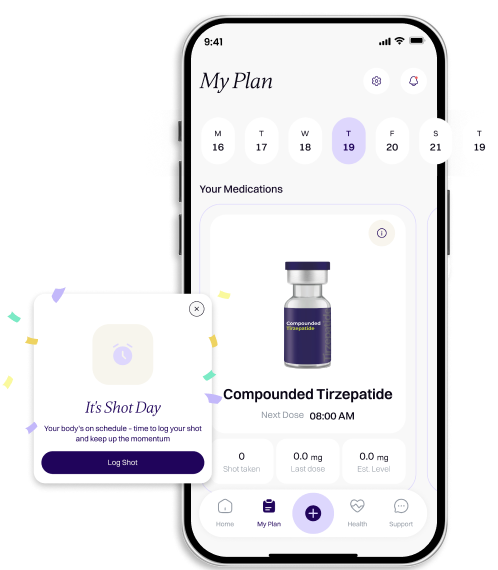
The best green flag is real support. A strong GLP-1 program gives you more than a package on your doorstep — think check-ins, a community, or an app to help you stay on track. Research on people using GLP-1 medications has linked more engagement with a program to better experiences, so support is well worth looking for1.
Support is what turns a product into a program. Structured, ongoing support is a recognized part of effective, well-run health programs, not a bonus feature2 — it’s the idea behind resources like Brello Rise, built to keep you engaged between check-ins.
Our CEO put it plainly:
“What resources besides your plan are you going to get? Do you get group meetups? Do you get a community? Do you get an app? If all you’re getting is something sent to your door and being told to just figure it out, you’re probably not going to get the guidance you’re looking for.” — Caulen Foster, CEO, Brello
What good support looks like
Good support shows up in small, steady ways. When you compare programs, look for signals like these:
- A community or group you can lean on
- An app or simple way to track your progress
- Regular check-ins, not just a one-time sign-up
- Clear answers when you have a question
- The sense that someone is in your corner, not just processing your sign-up
Green Flag 2 — Is the program legitimate and transparent?
A trustworthy GLP-1 program is upfront and stands behind what it provides. Regulators have warned about unregulated online sellers, so look for an established program that’s clear about what you’re getting, what it costs, and how it operates3. Transparency is a green flag; vagueness is not.
Legitimate programs don’t hide the important details. The FBI’s Internet Crime Complaint Center has cautioned people to steer clear of unregulated online sellers and suspiciously low prices3. A program that’s open about how it works is showing you a green flag.
How to tell a program is transparent
Transparency is easy to spot once you know what to look for:
- Clear information about what’s included and what it costs
- Straightforward answers about how the program works
- No pressure, no vague promises, no “just trust us”
- Easy-to-find terms, support, and contact options
Green Flag 3 — Are delivery timelines reasonable and predictable?
A good GLP-1 program tells you when to expect your shipment and delivers on time. Many reputable programs get your shipment to your door within a few business days once your plan is confirmed. A clear, predictable timeline is a green flag; long or vague waits are worth questioning.
You shouldn’t have to guess when something will arrive. Look for a program that sets a clear expectation up front and then meets it — and once your delivery does arrive, a good program makes the next step, like knowing where to give yourself the injection, just as easy to figure out. If a program can’t tell you roughly how long delivery takes, that uncertainty can be a sign of deeper issues behind the scenes.
A simple question — “how long does delivery usually take?” — can tell you a lot about how organized a program really is.
What are the green flags of a trustworthy GLP-1 program?
The green flags are simple: real resources and support, honest legitimacy and transparency, and reasonable, predictable delivery. A quick checklist lets you compare programs side by side, so you can see at a glance which one offers the experience you actually want.
| Green flag to look for | What it looks like |
| Real resources and support | Community, app, and regular check-ins — not just a package |
| Legitimacy and transparency | Clear about what’s included, what it costs, and how it works |
| Reasonable, predictable delivery | A clear timeline, often a few business days once confirmed |
| Feels like a partner | Someone in your corner, not just a sign-up to process |
Before you commit, it can help to ask yourself:
- Will I have real support and resources after I sign up?
- Is the program open and clear about how it works?
- Do I know roughly when my shipment will arrive?
- Does this feel like a partner, or just a product?
Start with those four, and the right program gets a lot easier to spot.

Take The
First Step
with Brello
Final Thoughts
Choosing a GLP-1 program feels easier once you know the green flags. When a program offers real support, operates openly, and delivers on a reasonable timeline, it’s showing you what “good” looks like.
Keep those three signals close as you compare your options. If a program feels like a partner — one that stands behind what it provides and stays in your corner after you sign up — that’s a strong sign you’re in good hands.
Take it one small step at a time. The right program should make the whole journey feel a little more supported — and if you find your motivation dipping along the way, that’s normal, too.
Frequently asked questions
What should a good GLP-1 program include?
Look past the medication to the experience around it. A good program includes real resources and support (like a community, an app, or check-ins), clear and honest information about how it works, and reasonable, predictable delivery. Those three green flags separate a supportive program from a barebones one.
Should a GLP-1 program offer community or an app?
It’s a strong green flag. Research on people using GLP-1 medications has linked more engagement with a program to better experiences1. A community, an app, or regular check-ins can help you stay consistent and feel supported, rather than left to figure things out alone.
How fast should a GLP-1 program deliver?
Many reputable programs get your shipment to your door within a few business days once your plan is confirmed. What matters most is that the program gives you a clear, predictable timeline. Long or vague delivery windows are worth asking about before you commit.
How do I know a GLP-1 program is legitimate?
Look for transparency. A legitimate program is clear about what’s included, what it costs, and how it works. Regulators have warned about unregulated online sellers, so choose an established program that’s open about its process rather than one that keeps the details vague3.
Which GLP-1 program is best?
There isn’t a single “best” program for everyone. The better question is what to look for: real support, legitimacy and transparency, and reasonable delivery. Use those three green flags to compare your options and choose the program that fits your goals.