TL;DR High-protein GLP-1 lunch ideas can be small, packable, and built from one simple formula: a protein anchor like Greek yogurt, tuna, or chicken, plus a produce side and an optional carb. Many meal plans center lunches around 25–35 grams of protein — packed cold, sized to finish comfortably, with a planned afternoon snack as backup.
It’s 8:40 a.m., the fridge is open, and nothing sounds like lunch. Here’s the reassuring truth: a high-protein lunch you can pack for work on a GLP-1 plan doesn’t have to be big, fancy, or decided fresh every morning.
Maybe some days the old go-tos feel like too much food. Maybe you’re tired of buying lunch you don’t really want. Either way, you’re not alone — and you don’t need a perfect meal-prep Sunday to change it.
Small lunch, steady protein, less thinking.
With one simple formula, a few make-ahead picks, and a backup plan for lighter days, these GLP-1 lunch ideas can become the calmest part of your workday routine. The content provided is for informational purposes only and should not be construed as medical advice; it is not a substitute for professional medical consultation, diagnosis, or treatment.
What Should You Pack for Lunch on a GLP-1 Plan?
A packed lunch can be small and still protein-forward. Consider one protein anchor — like Greek yogurt, tuna, or chicken — plus a produce side and an optional carb, in portions you can comfortably finish. A planned afternoon snack can cover whatever the lunchbox doesn’t.
That’s the whole approach. No elaborate recipes, no giant containers, no rules about cleaning your plate.
Practical GLP-1 lunch ideas suit real workdays: desks, meetings, commutes, and appetites that vary from one day to the next. It also looks like everyone else’s lunch, because it is — a normal lunch, sized for you.
At Brello, we share educational information to support healthier routines — including the everyday ones, like what goes in the lunch bag.
How Do You Build a Packable High-Protein Lunch?
Reusable GLP-1 lunch ideas take the guesswork — and the decision fatigue — out of packing: one protein anchor, one fiber or produce side, one optional carb for comfort, and something for flavor. Pack each part small and separate. If one piece doesn’t appeal at noon, the rest of the lunch still works.
Here’s the build-a-lunch checklist:
- Protein anchor: the part that carries the lunch
- Produce or fiber side: adds substance and color
- Optional carb: a little comfort and staying power
- Flavor: the reason you actually want to open the container
When lunch is on the smaller side, each bite does more of the work — so nutrient-dense picks in small amounts can go further than one big portion.
What goes in each part?
Anchors first: cottage cheese, Greek yogurt, hard-boiled eggs, chicken, tuna, lentils, edamame, or tofu all pack well. For the produce side, consider cucumber, carrots, berries, grapes, or a small salad. Carbs can stay simple — whole grain crackers, a small scoop of brown rice, or half a pita. Flavor is personal: hummus, avocado, a yogurt-based dressing, or a favorite hot sauce in a tiny container.
Mix and match. The formula stays the same; the ingredients rotate.
How Much Protein Should GLP-1 Lunch Ideas Have?
Many meal plans center lunches around 25 to 35 grams of protein — but that’s a planning range, not a rule2,4. National guidelines describe protein as a daily amount that depends on body size, and needs differ from person to person3,4 — here’s a closer look at how much protein women may need each day. A smaller lunch can share the work with snacks.
Some nutrition research describes roughly 20 to 40 grams per eating occasion as a common planning window2. Those numbers can be a helpful compass. They’re not a pass-or-fail test.
If a 30-gram lunch feels like too much on some days, a 15-gram lunch plus a protein snack later may land in a similar place. Consider what fits your day, not just the math — and for the bigger daily picture, here’s how much protein to aim for on a GLP-1 plan.
What Are Some High-Protein GLP-1 Lunch Ideas You Can Pack?
Packable, protein-forward GLP-1 lunch ideas include Greek yogurt bowls, tuna pouches with crackers, egg-and-cheese snack boxes, lentil soup in a small thermos, and half-wraps with turkey or tofu. Each one can be sized down to a smaller portion and packed the night before with a cold source.
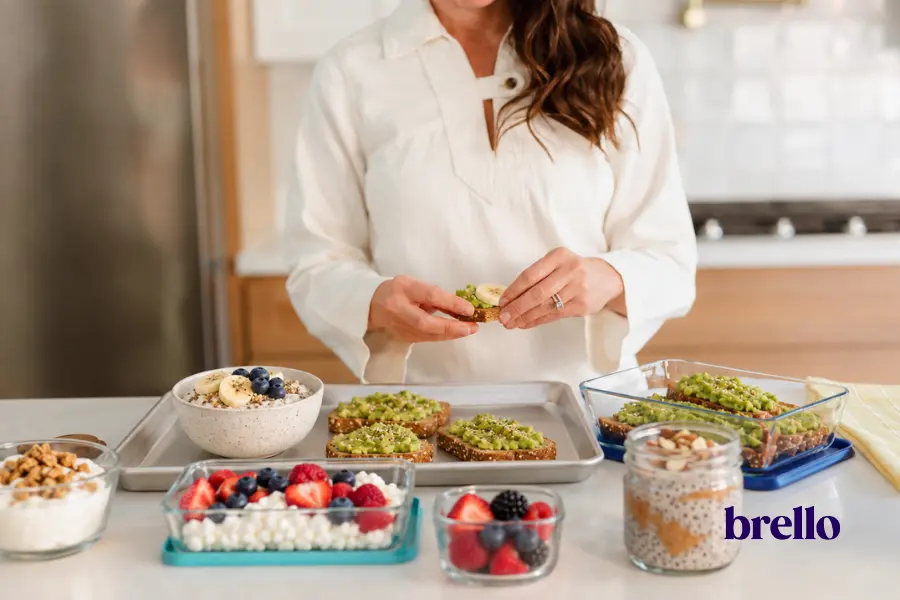
- Greek yogurt bowl: plain Greek yogurt with berries and a spoonful of chia seeds (about 18–20 g protein). Assemble it the night before; keep it cold.
- Tuna pouch kit: a tuna pouch, whole grain crackers, and cucumber spears (about 17–20 g). The pouch is shelf-stable until opened — helpful on no-fridge days.
- Egg-and-cheese box: two hard-boiled eggs, a cheese stick, and grapes (about 19 g). Boil a batch on the weekend and pack in one minute.
- Cottage cheese bowl: cottage cheese with pineapple and a few almonds (about 20–24 g). A popular, protein-rich pick that travels well in a small jar.
- Lentil soup thermos: a small thermos of lentil soup with roasted chickpeas on the side for crunch (about 15–18 g). Warm without a microwave.
- Half wrap: half a turkey-and-avocado wrap with veggie sticks and hummus (about 20 g). Half is a portion, not a compromise.
- Small chicken bowl: a modest scoop of chicken and brown rice with roasted broccoli (about 25 g). Dinner leftovers count — packing them is the whole trick.
- Savory snack plate: edamame, hummus, whole grain crackers, and raw veggies (about 15–18 g). A grown-up lunchable, no assembly required at noon.
Protein amounts are estimates and vary by brand and portion6.
What are plant-based GLP-1 lunch ideas?
Some plant-based GLP-1 lunch ideas include lentils, black beans, chickpeas, edamame, and tofu can anchor a meatless lunch all on their own. A lentil salad with feta, a black-bean-and-brown-rice bowl, or tofu bites with peanut sauce and shredded cabbage each pack plant-based protein with fiber built in.
What travels well without a microwave?
Cold-friendly GLP-1 lunch ideas may be the most reliable choice: yogurt bowls, egg boxes, snack plates, wraps, and grain salads. Tuna, salmon, and chicken pouches are shelf-stable until opened, and a small thermos can carry soup warm from the morning.
How Do You Keep a Packed Lunch Fresh Until Noon?
Perishable proteins — yogurt, eggs, chicken, cheese — are safest kept at 40°F or below1. USDA guidance suggests an insulated bag with two cold sources, and tossing perishable food that sits out more than two hours1. No fridge at work? Lean on shelf-stable picks like tuna pouches and roasted chickpeas.
A few habits keep the lunch bag trustworthy:
- Use an insulated bag, not just a tote.
- Add two cold sources — that can be two ice packs, or one ice pack plus a frozen water bottle.
- Refrigerate the packed lunch overnight so it starts the day cold.
- Keep “shelf-stable until opened” items (pouches, cans, jerky) sealed until you eat1.
One definition worth knowing: a “cold source” is anything that holds food at fridge temperature in transit — and the frozen water bottle doubles as cold water by noon.
What If You Can Only Eat a Little at Lunch?
A smaller lunch can still add up over the afternoon. Consider a two-part plan: a compact protein at midday, then a planned pairing later — fruit with cheese, yogurt with berries, or crackers with tuna. A small desk kit of backups helps on days the packed lunch doesn’t happen.
Part one, around noon: the protein anchor — a yogurt, an egg box, or a few bites of the bowl. Part two, mid-afternoon: a paired snack that finishes the job. It’s a plan, not grazing.
A desk kit might hold:
- A shelf-stable protein shake (about 20–30 g)
- A tuna or chicken pouch (about 14–20 g)
- Roasted chickpeas or edamame (about 5–7 g per serving)
- Jerky (about 9–15 g per serving)6
- Whole grain crackers and a favorite nut butter packet
Stopping when you’re comfortable is allowed — a page straight from intuitive eating principles. Saving the rest for later is a strategy, not a failure.
How do you remember lunch on a busy day?
Tie lunch to something that already happens: the end of a standing meeting, closing your laptop at 12:30, or refilling your water bottle. Research on how long habits take to form suggests new routines often take a couple of months to feel automatic — so a consistent cue may help more than willpower5. Small steps, steady progress.
How Do You Prep a Week of GLP-1 lunch Ideas Without Cooking Five Meals?
Ingredient prep is often more doable than full meal prep: cook or buy two proteins, wash and cut produce once, and keep one base like brown rice or crackers on hand. Lunches then come together in about two minutes — and the pieces can flex with your day.
A simple weekend reset:
- Pick two protein anchors for the week — one cooked (chicken, hard-boiled eggs), one grab-and-go (yogurt, cottage cheese, pouches).
- Wash and cut produce once, or buy it pre-cut.
- Cook or portion one base: brown rice, quinoa, or crackers.
- Stock three backups in your desk kit.
- Each evening, assemble tomorrow’s lunch from the pieces.
Rotate flavors, not systems. Same formula, different dressing, and week four feels as fresh as week one.

Take The
First Step
with Brello
Final Thoughts
Packing a lunch is a small act of looking out for yourself — deciding, the night before, that tomorrow’s version of you gets fed well without a fight.
This week, consider one low-stakes experiment: pack a single lunch tonight. One protein, one produce pick, nothing fancy.
Some days the lunchbox comes home empty; some days the desk kit does the work. Either way, showing up for the midday meal — at whatever size — is the routine quietly doing its job.
Frequently Asked Questions
How do you get closer to 40 grams of protein at lunch?
Stacking two protein sources may get you there: a chicken-and-rice bowl (about 25 g) plus a cheese stick and a yogurt closes most of the gap6. That said, higher targets aren’t right for everyone — daily needs vary, and snacks can share the load.
Are protein shakes okay as a packed lunch sometimes?
A ready-to-drink shake can stand in for lunch now and then, especially on days when solid food doesn’t sound good. Pairing it with fruit or crackers adds staying power. Shakes work best as one tool in the rotation, not the whole plan.
What can you pack when there’s no fridge at work?
Choose items that are shelf-stable until opened: tuna or chicken pouches, roasted chickpeas, jerky, nut butter packets, and crackers. An insulated bag with two cold sources can also carry yogurt or eggs safely from home — the fridge is helpful, not required1.
How do you keep packed lunches from getting boring?
Keep the formula, rotate the parts. Swap the anchor (yogurt one day, lentils the next), change the flavor element, or move between a bowl, a wrap, and a snack plate. Small changes read as variety without adding decisions.
Do protein needs differ from person to person?
Yes — protein needs depend on body size, activity, age, and goals, which is why per-meal numbers are planning ranges rather than rules3,4. If your lunches land in a consistent, comfortable place most days, the range is doing its job.