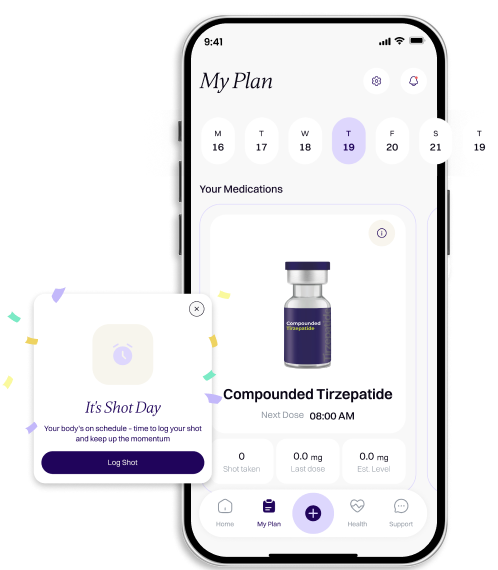
TL;DR: A beyond use date (BUD) is the date after which a compounded medication should no longer be used. Once you first puncture a vial, a shorter use-by window of 28 days begins, even if the printed date is later, so adhere to the earlier date — the beyond use date or the 28-day window — and the instructions on your label.
You’re holding your vial, and there’s a date on the label you’re not quite sure about. Maybe it says “Beyond Use Date,” or just “BUD.” A beyond use date is simply the point after which a compounded medication should no longer be used.
Here’s the part that surprises a lot of people. Once you first puncture a vial, a shorter countdown begins, even if the printed date is later.
Knowing how to read that date can help you feel confident about what to do next.
What is a beyond use date (BUD)?

A beyond use date (BUD) is the date after which a compounded medication should no longer be used2. It is assigned by the pharmacy that prepares your medication, based on the ingredients, how it should be stored, and safety guidelines. On your label, it usually appears as “BUD” or “Beyond Use Date.”
Think of it as a clear cutoff. After that date, a compounded medication is no longer considered suitable to use.
It is one of the most useful pieces of information on your vial, so it helps to know where to find it and what it means.
How is a beyond use date set?
A beyond use date is set using established pharmacy standards, not guesswork. Pharmacies follow United States Pharmacopeia (USP) standards for sterile compounded medications when assigning the date2,5.
A few things shape how long a BUD lasts:
- Storage conditions — whether it’s kept refrigerated or at room temperature.
- The type of medication and how it’s prepared.
- Contamination risk — how likely bacteria could grow once the vial is punctured.
Because these factors vary, the beyond use date is set by the pharmacy and isn’t something to recalculate or adjust at home.
The 28-day rule: why first puncture starts the clock
Once you first puncture a vial, a shorter use-by window of 28 days begins, even if the printed beyond use date is later1. That means a vial can have two clocks: the printed beyond use date and the 28-day window. Adhering to the earlier date — the beyond use date or the 28-day window — along with the instructions on your label, is the safest approach.
This is the piece most people miss. The printed BUD assumes the vial hasn’t been punctured yet. The moment you draw from it with a needle, the countdown that actually matters is the 28 days from first puncture.
A quick way to picture it:
- Day 1 is the first time you puncture the vial.
- The use-by window runs for 28 days from that day.
- If the printed beyond use date arrives sooner, that date applies instead.
Guidance from the U.S. Centers for Disease Control and Prevention (CDC) and USP points to this 28-day window for many punctured injectable vials, unless the label says otherwise1,5.
Why “it looks fine” isn’t the test
A vial can look completely normal and still not be safe to use after its beyond use date3. Changes like a loss of sterility or bacteria growing in the vial are invisible, so how the medication looks is not a reliable way to judge whether it’s still okay to use3.
That’s why the date, not the look of the vial, is the thing to go by.
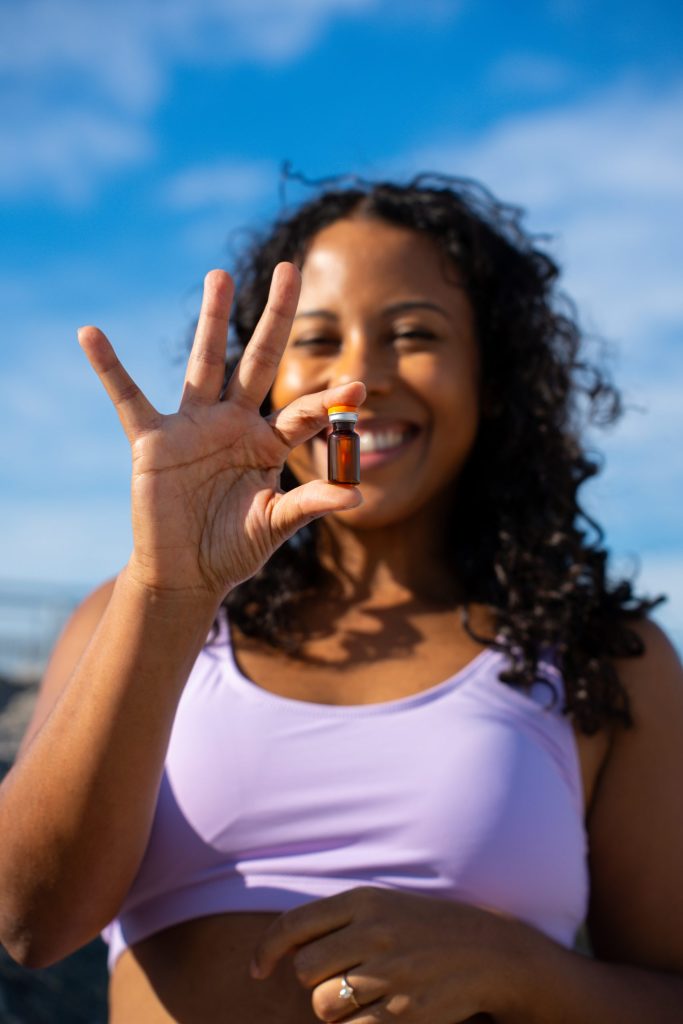
What if there’s still medication left in the vial?
Leftover medication does not extend the beyond use date or the 28-day window. It’s common to see extra liquid in a vial, and it can feel wasteful to let it go. But using medication past that point can raise the risk of contamination, so leftover product should not be used — it should be discarded rather than stretched to get a few more days1,3.
If you have unused medication that hasn’t yet reached its beyond use date or the 28-day window, that is a different situation from using a vial that is already past its date.
How to check your vial before each use
Before each use, a quick five-step check helps you catch a beyond use date or a storage problem early. It takes only a few seconds and can save you from using medication that is past its beyond use date or 28-day window.
- Find the label. Look for “BUD” or “Beyond Use Date.”
- Compare the date. If today is on or past that date, don’t use it — even if it looks fine.
- Check storage. Store your medication according to the storage instructions on the product labeling.
- Inspect the vial. Look for particles, cloudiness, discoloration, or damage1.
- When in doubt, don’t use it. If something seems off, it’s safer to set it aside than to use it.
Making this a small habit before each dose keeps the beyond use date front and center.
What to do with a vial past its beyond use date
If a vial is past its beyond use date, it should be discarded — even if medication remains. The date has done its job at that point, and the amount left doesn’t change it. What matters next is discarding it safely.
A few simple guidelines:
- Don’t toss vials loose in the trash or pour them down the drain or toilet.
- Do use a drug take-back location, which is the option many public health agencies recommend first4.
- Or use a local household hazardous waste program if a take-back site isn’t nearby.
Safe disposal keeps medication that is past its date out of reach and out of the water supply, and it closes the loop on the beyond use date.

Take The
First Step
with Brello
Final Thoughts
A date on a vial is really about staying in control of your own care — knowing what you’re using, and knowing when to let it go.
This week, find the beyond use date on your current vial and note the day you first punctured it. With both clocks in view, the next decision gets easier.
Letting go of leftover medication can feel wasteful. Choosing the date over a guess, though, is a small and steady way of looking after yourself.
Frequently asked questions
Can I use my medication after its beyond use date?
No. A beyond use date is the point after which a compounded medication should no longer be used. If your vial is past that date, it should be discarded, even if medication remains.
What happens once I first puncture my vial?
Once you first puncture a vial, a shorter use-by window of 28 days begins, even if the printed date is later. Adhere to the earlier date — the beyond use date or the 28-day window — and the instructions on your label.
Can I use my vial if there’s still medication left?
Leftover medication does not extend the beyond use date or the first-puncture window. If your vial is past its date, it’s safer to discard it than to use the remaining amount, since contamination isn’t something you can see.
Where do I find the beyond use date on my vial?
Look at the label on your vial or packaging. It is usually printed as “BUD” or “Beyond Use Date,” often near the storage instructions.
What does a beyond use date mean on a compounded injectable?
It’s the date after which that compounded injectable should no longer be used. For many injectable vials, a 28-day window from first puncture also applies — so adhere to the earlier date, the beyond use date or the 28-day window, and the instructions on your label.