Strength Training for Women Over 50 is not just a fitness trend. It is a vital practice to reclaim the structural integrity of your body. Using simple tools like body weight, resistance bands, or light dumbbells, you can build a foundation of resilience. This supports you in every decade of life.
If you have ever bought dumbbells and thought, “Am I doing this right?” you are not alone. For many women, starting small is the best path. Focusing on alignment and breath first can make strength training feel safer and more manageable.
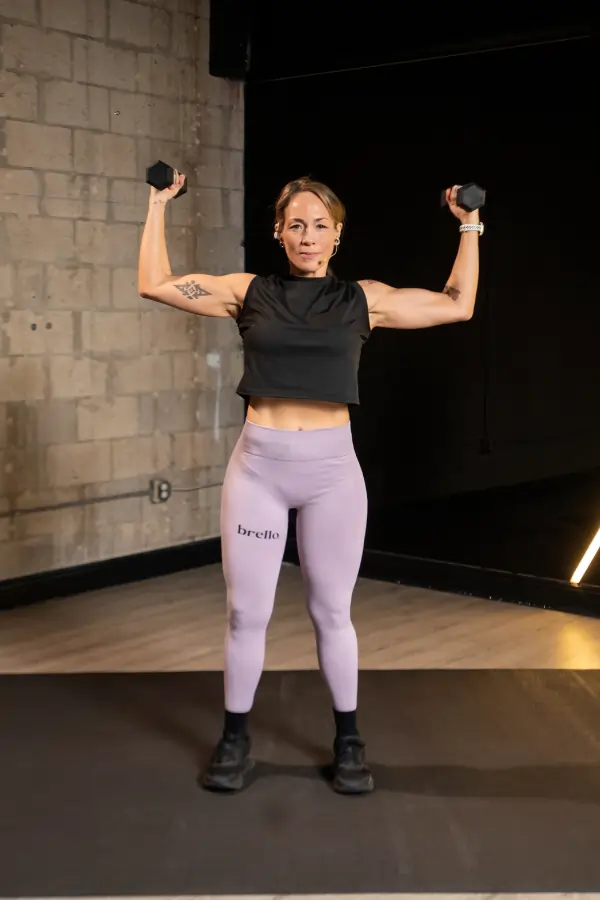
The best place to start is not a complex, high-intensity routine. It is developing a relationship with your body. You learn to move with control. It’s about knowing how to engage your core (your “powerhouse”) and protect your joints.
For women over 50, strength training can play a key role in overall health. It can support bone strength, joint function, and everyday energy.1 This is not just about lifting weights. It is about building a stronger foundation for the years ahead.
What does strength training look like, and how do you start?
Strength training for women over 50 is about practicing movements that challenge your body using resistance you can control. A sustainable practice starts simply. Choose a routine that works your major muscle groups, keep your reps steady, and focus on proper form before adding weight.
A functional strength training approach focuses on movements that support daily life. The goal is not just appearance. It is also about carrying groceries with less strain, climbing stairs with more stability, and moving with greater confidence.
What counts as strength training?
You do not need big machines. Resistance can come from many places. Here is how different tools help you build specific fitness levels:
| Tool | Best For… | Examples |
| Body Weight | Learning control and stability. Great for beginners. | Wall push-ups, Chair sit-to-stands, Planks. |
| Resistance Bands | “Opening” your posture and engaging muscles without heavy joint pressure. | Band rows, Band presses, Side-steps. |
| Light Dumbbells | Building bone density. The weight puts a healthy load on your bones. | Overhead presses, Rows, Farmer’s carries. |
Why simple is better
A simple routine is easier to repeat. In movement, repetition builds mastery. Many women quit because a plan feels too complicated. When you start with light resistance and clear steps, it feels safer. You can return to the mat, fix your form, and keep building resilience.
- Pick a plan you can repeat with confidence.
- Use the same starting position each time to build muscle memory.
- Change one thing at a time—like your speed—instead of changing the whole workout.
What benefits can strength training support after 50?
Strength training supports the overall quality of your daily life. It makes common movements feel steady and easy. This practice can be especially helpful for supporting bone health and balance after 50.
Muscle Mass and Daily Life
Think of muscles as the scaffolding that holds your skeleton up. Your body needs these muscles to stand, climb steps, and move. Training these patterns makes daily life easier.
- Legs: The pillars of independence (standing up, walking).
- Hips: The center of movement (bending, picking up items).
- Core: The “Powerhouse” of the body. It provides posture and balance support.
Bone Density and Balance
Bone density and balance go hand-in-hand for older adults. Stability is the key to staying active. Strength training is a vital part of a holistic approach. It includes balance practice and steady movement to reduce fall risk.3
Core stability—or a strong center—acts as your anchor. When your core is strong, your arms and legs can move freely and safely.
How often should you train?
The goal is long-term consistency, not a deadline. Many beginner plans start with two strength training sessions per week, with rest days in between.2 This gives your body time to adapt. It gives you space to practice proper form without feeling rushed.
A Simple Schedule
A two-day schedule is great for women who want structure without burnout.
| Schedule Type | Description | Best For… |
| Option A (2 Days) | Day A + Day B, with rest days in between. | Beginners building a new habit. |
| Option B (3 Days) | Day A + Day B + a lighter “flow” day. | Those who feel steady and want more movement. |
Recovery vs. Pain
It is important to know the difference between “good soreness” and “bad pain.”
- Soreness: Feels like a general stiffness or dull ache in the muscle. This is normal.
- Joint Pain: Feels sharp, specific, or “pinchy.” It may change how you walk.
Pain is information. If you feel sharp pain, pause. Check your alignment. If it continues, talk to a healthcare provider.
Essential Equipment for a Home Studio
You can build a strong body with minimal equipment. A sturdy chair, a resistance band, and light dumbbells are all you need.
The Home Studio Setup
| Item | Purpose | Key Moves |
| Sturdy Chair | Acts like a ballet barre. Use it for balance and support. | Sit-to-stands, Supported step-ups, Incline push-ups. |
| Resistance Bands | Mimics Pilates springs. Great for posture. | Rows (pulling back), Chest openers. |
| Light Dumbbells | Adds load for bone health. | Carries, Overhead presses. |
Form Tip: When using dumbbells, keep your palms facing where it feels natural. Aim for a steady shoulder position—kept down and back. Do not rush.
How do you choose weights?
“Heavy enough” looks different for everyone. Choose weights that feel challenging near the end of a set while still allowing proper form.
If your form breaks down—like arching your back—the weight is too heavy.
The Control Test
Pick a weight you can move with total control. Near the last few reps, it should feel harder. However, you should still be able to keep your starting position.
Quick Checks:
- Alignment: Stays true through the last rep.
- Shoulders: Stay relaxed and down.
- Control: You can lower the weight slowly without dropping it.
When Joints Complain
If your joints hurt before your muscles get tired, listen to them. Adjust the exercise.
- Shorten the range: Don’t go as deep into a squat.
- Slow down: Move slower to find control.
- Add support: Use a wall or chair.
The 6 Pillars of Functional Movement
A full body strength training routine can cover the basic human movement patterns. These six pillars support everyday movement, balance, and control.
| Movement | Why We Do It | The “Helpful Form Cue” |
| 1. Squat | The art of sitting and rising independently. | “Trust your legs. Plant your heels firmly.” |
| 2. Hinge | Picking things up safely without hurting your back. | “Send hips back. Keep spine long like a table.” |
| 3. Push | Opening heavy doors or lifting yourself up. | “Gliding shoulders down. Zip up the core.” |
| 4. Pull | Fixes the “slump” of daily life. Strengthens the back. | “Squeeze shoulder blades to open the chest.” |
| 5. Carry | Walking with groceries or luggage. | “Walk tall. Balance a book on your head.” |
| 6. Core | Stabilizing your center for balance. | “Engage the powerhouse. Draw navel to spine.” |
Form Tip: Place your feet shoulder width apart (or hip-width) to feel grounded. Keep knees soft, never locked.
A Simple Beginner Routine
A beginner routine should be short and repeatable. A simple plan may include 5–7 exercises across two days. This can remove some of the guesswork so you can focus on control and consistency.
Day A: The Foundation
Focus: Squat, Push, Pull, Carry
- Chair Sit-to-Stand: 8–12 reps. (Trust your legs).
- Wall Push-Ups: 8–12 reps. (Keep a long line).
- Resistance Band Rows: 10–12 reps. (Open the chest).
- Farmer’s Carry: 20 steps. (Walk with a tall spine).
- Supported Core Hold: Hold for 20 seconds. (Engage deep abs).
Day B: Balance & Length
Focus: Hinge, Legs, Balance
- Supported Hinge: 8–12 reps. (Flat back).
- Step-Ups: 6–10 reps per leg. (Control the switch).
- Incline Push-Ups: 8–12 reps. (Use chair for support).
- Dumbbell Row: 8–12 reps. (Squeeze shoulder blade).
- One-Leg Balance: Hold 10–20 seconds. (Use wall for safety).
Note: Rest as needed between sets. Aim for controlled reps, not speed.
Smart Progression and Injury Prevention
Progress is a practice of patience. A safe approach is to change just one thing at a time. This helps you build endurance without getting hurt.
The Progression Ladder
Think of progress as a ladder. Don’t skip steps.
- Refine: Add 1–2 reps with perfect control.
- Endure: Add a second set to build stamina.
- Load: Add a small amount of weight only when your form is perfect.
What if you stall?
If you feel tired or stuck, change the quality of the movement.
- Do fewer reps, but do them slower.
- Switch from weights to bands for a week.
- Use more support (like a wall).
What if it hurts? (The Swap Map)
Joint pain can be confusing. Often, you just need to modify the move to make it safer. Use this “Swap Map” to find a better version for your body.
| If this hurts… | Try this swap… | Why? |
| Deep Squat | Chair Sit-to-Stand | The chair limits how low you go and adds safety. |
| Lunges | Step-Ups | Step-ups are more stable and easier on the knees. |
| Floor Push-Ups | Wall Push-Ups | Reduces the weight on your shoulders and wrists. |
| Fast Reps | Slow Reps | Removes momentum and protects joints. |
Simple Self-Checks:
- Does the pain change how you walk?
- Is it sharp or “pinchy”?
- Does it get worse with each workout?
If you answer “yes,” pause and talk to a healthcare provider.
What to ask a doctor:
- “Are there movements I should avoid?”
- “What warning signs should I watch for?”
- “Would physical therapy help my joints?”
Weight Gain and Body Changes
It can be surprising to see the scale go up when you start lifting. This is often just water retention as your muscles repair. It does not mean anything is “wrong.”
What to track besides the scale
Focus on your daily capability. It can help to track how the body performs, not just what the scale says. You might also notice that movement helps improve mood and energy levels.5
| Instead of Weight… | Track This |
| Strength | Can you do one more rep with good form? |
| Function | Is climbing stairs easier? |
| Posture | Can you sit taller without getting tired? |
| Mood | Do you feel more vibrant after a session? |
Protein: Nourishing Your Structure
Protein is the building block for your body. It supports recovery—the time after the workout when you actually get stronger.4
Simple Food-First Targets
You don’t need strict diets. Just try to include protein with every meal.
- Breakfast: Greek yogurt or eggs.
- Lunch/Dinner: Chicken, fish, tofu, beans, or lentils.
- Snacks: Nuts, seeds, or a little cheese.
If you have kidney concerns or digestion issues, ask your doctor about the best protein plan for you.
What to expect in the first few weeks
The first few weeks are for discovery. Feeling “awkward” is normal. You are learning a new language with your body.
Common Concerns:
- “Am I doing this right?” -> Use a mirror or a trusted video guide.
- “I’m sore.” -> Mild soreness is normal. Sharp pain is not.
- “I don’t have time.” -> A 15-minute session is enough.
Tiny Routines:
If you are busy, try a “Tiny Routine.”
- Pick 2 moves (like Squat + Push).
- Add 1 carry.
- Do 1 set of each.
- Done in 10 minutes.
Brand Moment: Brello is a place to learn. You can start a provider review if you want support. We can discuss your routine and what to expect next.

Take The
First Step
with Brello
A Simple Next Step
The best next step is small. Choose two short sessions this week. Use body weight or light dumbbells.
Write down what you did. This gives you clarity. When the routine feels steady, add a few reps. If your history makes starting unclear, talk to a healthcare provider to ensure your foundation is solid.
Frequently Asked Questions
-
Is it safe to start strength training after 50 if I have never lifted weights before?
For many women, yes. Starting with simple, controlled movements and light resistance can be a practical way to build confidence and consistency. The Physical Activity Guidelines for Americans recommend muscle-strengthening activities as part of a healthy routine for older adults, alongside aerobic and balance-focused movement.2
-
Can women over 50 still build strength and support muscle health?
Yes. Strength training can still support muscle function, physical independence, and overall health after 50. Even a beginner routine with manageable resistance can be meaningful when done consistently over time.2
-
Is walking enough, or do I still need strength training?
Walking is a helpful form of physical activity, but it does not replace strength training. The Physical Activity Guidelines recommend including muscle-strengthening activity in addition to aerobic movement, and exercise research in older adults also supports movement strategies that help with balance and fall prevention.2,3
-
What if I have osteopenia or osteoporosis?
Strength training may still be part of a healthy routine, especially because muscle-strengthening and weight-bearing activity can help support bone health. If you have osteoporosis or concerns about bone loss, it may help to speak with a healthcare provider about the safest way to begin.1,2
-
Can strength training support balance and fall prevention after 50?
It may help. Strength work can support the muscles and movement patterns involved in stability, and exercise programs for older adults have been associated with reduced fall risk, especially when balance is part of the overall approach.2,3
-
How often should women over 50 do strength training?
A common starting point is two days per week, especially for beginners. The Physical Activity Guidelines include muscle-strengthening activity at least two days per week as part of a well-rounded adult activity pattern.2
-
Does strength training support mood and emotional well-being?
It may. Research on resistance exercise has found an association with improvements in depressive symptoms, which suggests strength training can support more than physical health alone.5
-
Do women over 50 need to pay attention to protein when they start strength training?
Protein can be an important part of supporting muscle health and recovery, especially in older adults. A food-first approach may be a practical place to start, and protein intake is commonly discussed as part of healthy aging and maintaining muscle over time.4